Divi WordPress Theme


Top 10 Things To Do in Singapore

10. Grab a bite at a Hawker Food Market

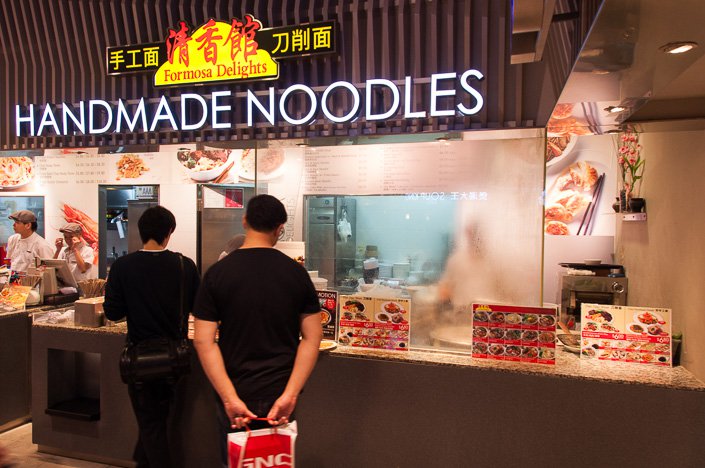
Singapore is a foodies heaven! You can find all kinds of Asian and Western food here! The best place to go is to do as the locals, and head to one of the many Hawker food markets. Another good deal when it comes to food is to head into one of the many Shopping Malls and visit a Food Court, where you find plenty of different Asian food for a low price.

hiibk
waam4
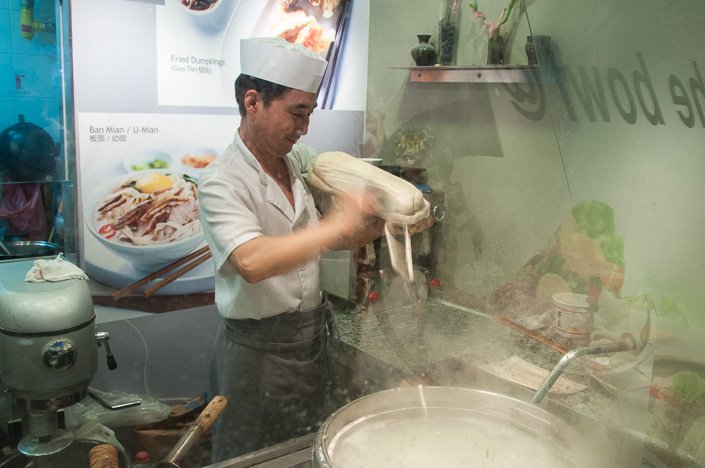
A chef is making hand-made thick noodles. Yummy! 🙂

9. Have a Singapore Sling at The Raffles Hotel

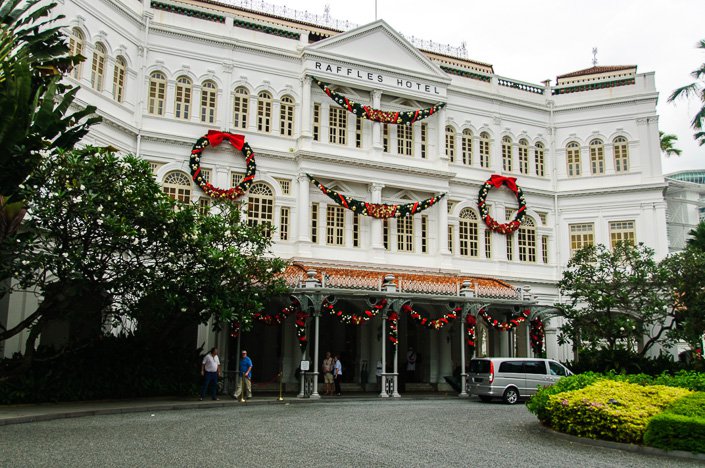
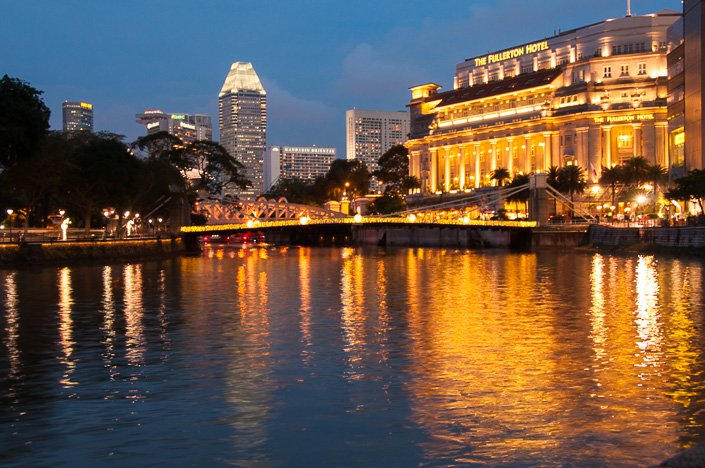
The Raffles Hotel in Singapore is legendary, and it’s probably the world`s most famous hotel! It’s more than a hotel, it’s an icon, where all kinds of celebrities have visited. It dates all the way back to 1887, and it`s beauty and elegance is still breathtaking.

It’s an expensive place to stay, but it’s we’ll worth to step inside and have a Singapore Sling at the bar!

If you want to stay at this excellent hotel, click here for the latest prices.

jiaev
The stunning and historic Raffles Hotel

bximj
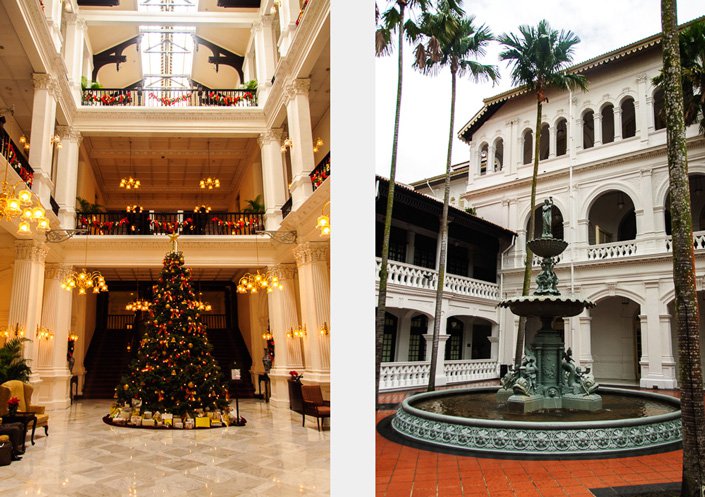
The Raffles Hotel is beautiful, both on the inside and outside. Well worth a visit!

8. Chill out at Clarke Quay

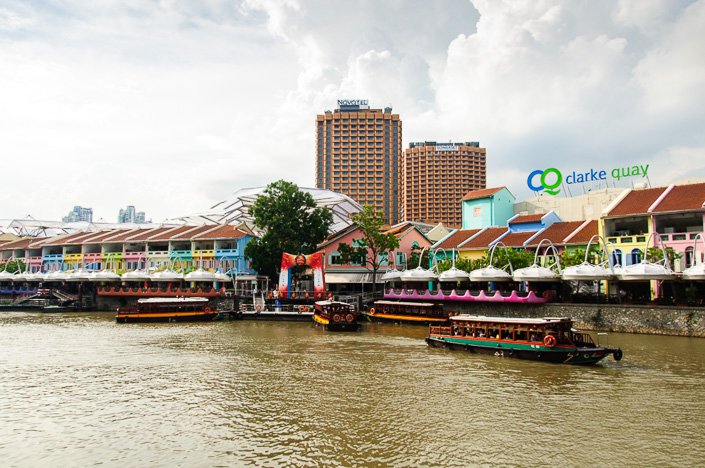
The colorful Clarke Quay next to the Singapore River is packed with restaurants, cafes, and bars. Head down here in the evening and fill up your stomach! They have something for everyone, from Western to Asian food.

It is also the perfect place to go for a romantic riverside stroll, as well as people-watching.

eimo4
The colorful Clarke Quay, full of cozy cafes, pubs, and restaurants.

0qpbb
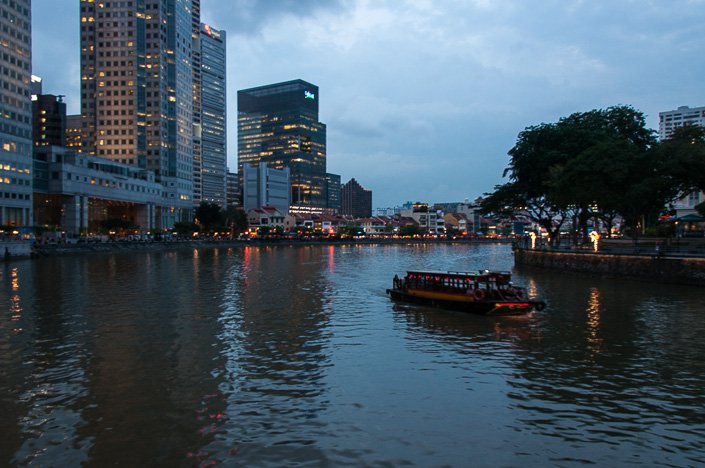
It is also possible to take a boat trip on the Singapore River, from Marina Bay and Clarke Quay.

3729y
The Marina Bay is beautiful in the evening!

7. Dream yourself away in “Avatar” at Gardens By The Bay

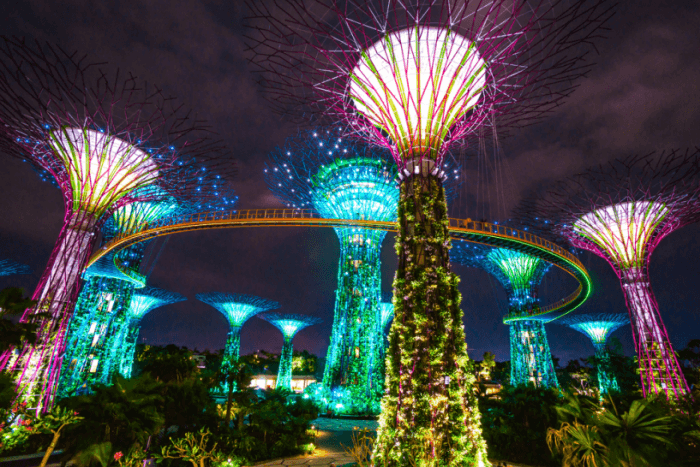
Gardens by the Bay is two big bio-domes, “Cloud Forest” and “Flower Dome”, containing an exotic range of flora and fauna from all over the world. The coolest and main attraction is, however, the amazing “Supertrees”. These are huge flashy and shimmering “trees”, 50 m high, that dazzle to lights and music! Pretty stunning, and as close as you are going to get to Avatar!

zm6ew
The Supertrees at Garden by the Bay.

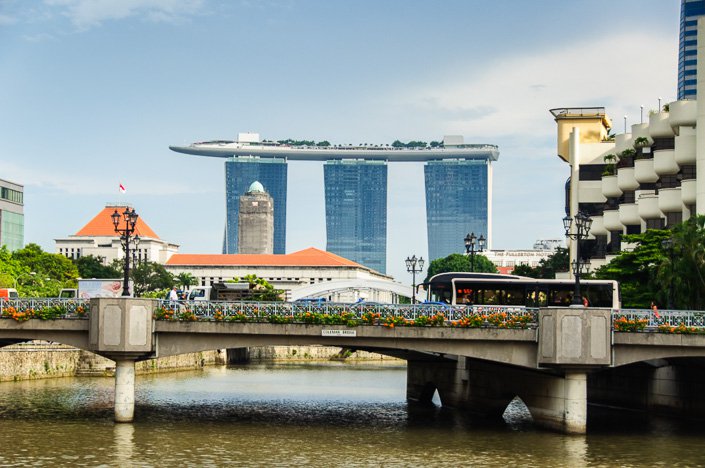
6. Visit Marina Bay Sands, the stranded ship on top of the building

When walking around in the streets of Singapore, there is no way you can avoid spotting the amazing and crazy Marina Bay Sands. It looks like a massive ship has been stranded on top of three buildings!

r43bo
Marina Bay Sands Hotel

Although it is a hotel, it is so much more as well! You will find restaurants, cafes, and bars here, as well as a Sky Park (the world`s highest rooftop infinity pool), theaters doing shows every evening, casino, shops, and museums. The shopping mall is so vast that it has its own canal where you can go on a gondola ride! Pretty crazy! It is Singapore`s answer to Las Vegas for sure!

If you want to stay at this luxury hotel and swim in the infinity pool with impressive view over Singapore, click here for the latest prices.

5. Soak up the busy Little India

Walk around Little India, and soak in all the smells of spices, food, and flowers, as well as the noise and Indian atmosphere. Step into one of the many Indian temples and shrines, and grab some Indian food or do some shopping at the shopping mecca Mustafa where you will find all kinds of clothes, jewelry, and souvenirs from India.

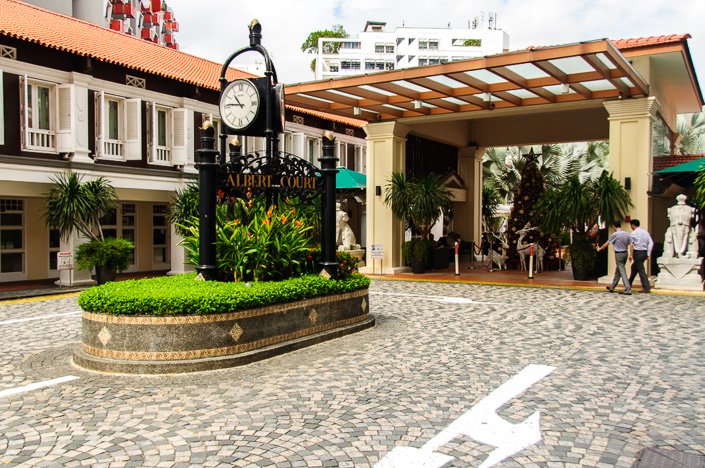
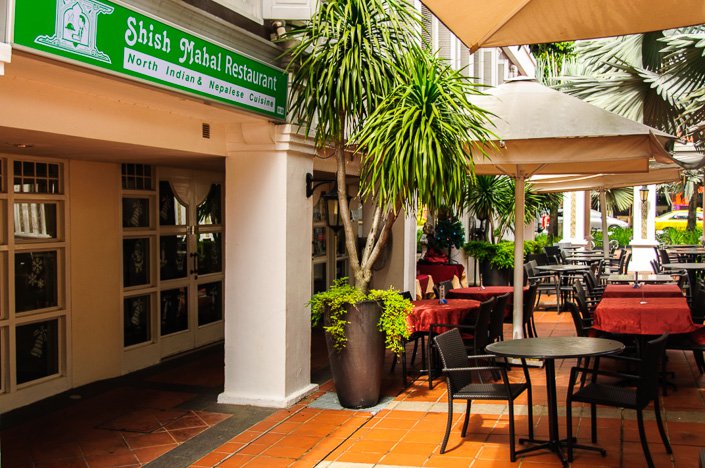
We recommend eating at the cozy Albert Court, which has some Indian restaurants with excellent food!

We have also stayed in this area, at the cozy and colonial styled hotel Village Hotel Albert Court. A very nice hotel with great service. Click here for the latest prices.

fzcll
The cozy Albert Court has plenty of excellent Indian restaurants.

j4pew
4. Stroll around in Chinatown

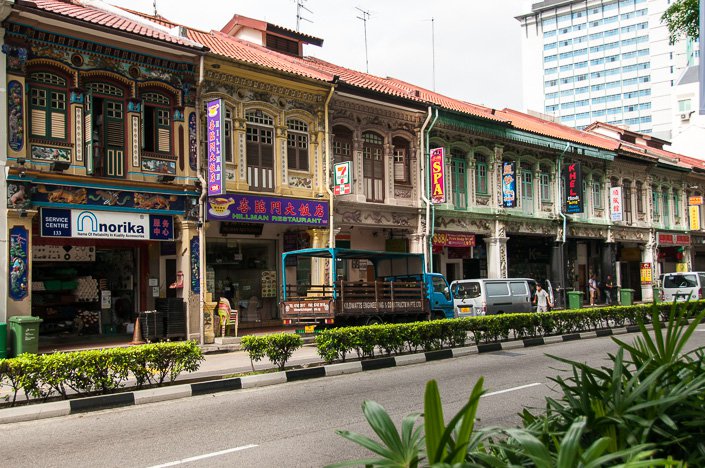
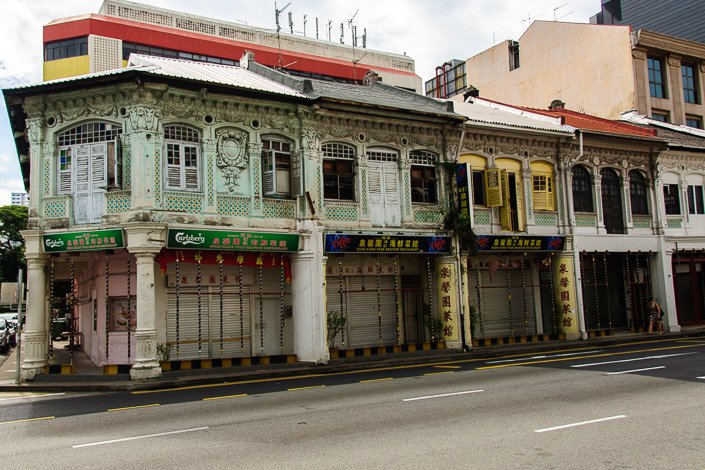
Walk around Chinatown and admire the beautiful and colorful small houses among all the big skyscrapers. Watch the locals play Chinese chess, and grab some Chinese food.

t39v9
Colorful houses in Chinatown.

hx9ol
One of Chinatown’s many beautiful old houses.

3. Wind down at the Botanic Garden

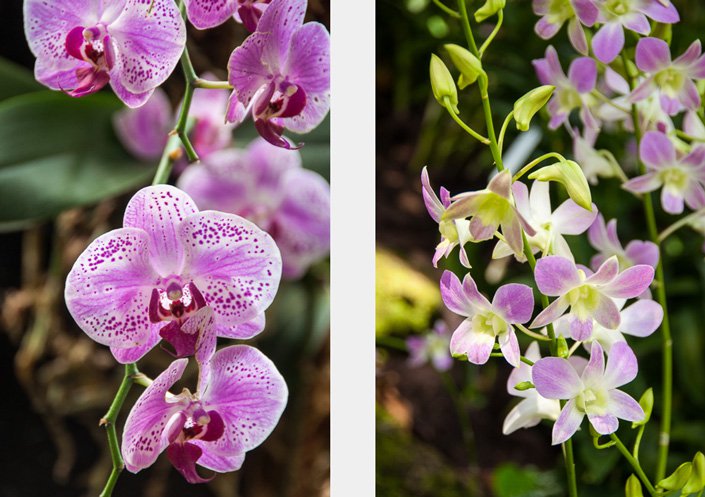
If you need a break from the busy and noisy city, head over to the Botanic Garden. It is a beautiful and calm oasis of green and lush nature, where the best part is the Orchid Garden.

Read more about our visit to the Singapore Botanic Garden.

mjhqf
Beautiful orchids at Singapore Botanic Garden.

2. Take a walk on the wild side at Singapore Zoo

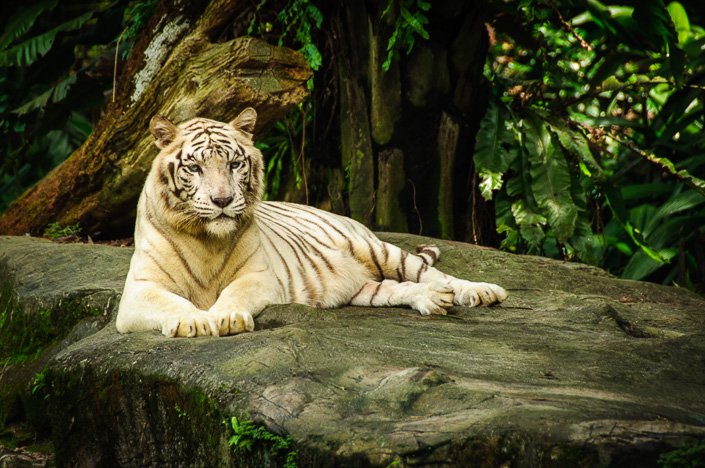
The Singapore Zoo is divided in two; The Singapore Zoo and the River Safari, but are located just next to each other with only a 1-minute walk apart. The Singapore Zoo is also open in the evening (7:30 pm till midnight every day) and is then called Night Safari. Singapore Zoo is one of the world`s best and nicest zoos and well worth a visit!

Read more of our visit to the Singapore Zoo and River Safari.

lznof
The stunning White Tiger in Singapore Zoo.

1. Shop till you drop

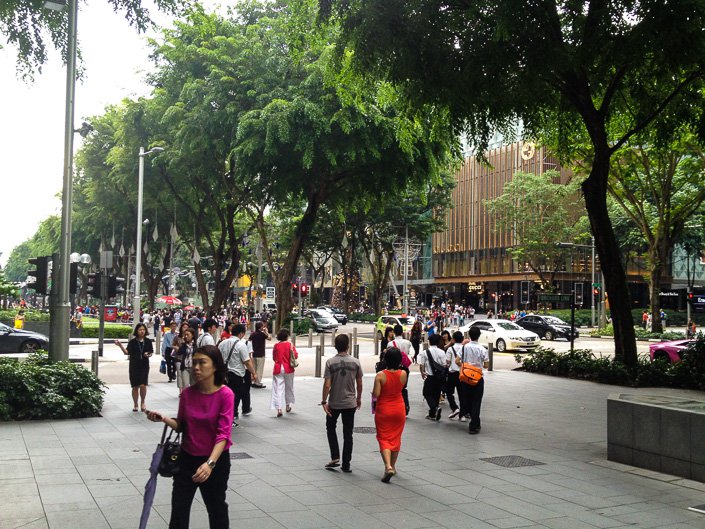
Singapore is a shopper`s bonanza! The city has an endless number of gigantic shopping malls, so dig out your credit card and go crazy!

The main shopping area is along Orchard street where the shopping malls seem to form an endless string on both sides of the road. Here you will find just about any fashion brand imaginable. There is also quite a few electronics and camera stores along here. We actually bought our first DSLR here back in 2005.

szwwy
The shopping in Singapore is crazy.

One of our favorite shops to visit in Singapore is the Kinokuniya bookstore inside the Ngee Ann City shopping mall. It is one of the largest bookstores in the world and it’s great fun to wander around looking their huge selection of books and magazines.

If you want to do some hardcore electronics and computer shopping then head for Sim Lim square close to Littel India.

The End

We enjoyed our week in the posh and modern Singapore. Although the shopping, food, sightseeing and parks are great, and the city is and clean, it lacks a bit of “charm” and personality in our opinion. It is a part of Asia, but it does not feel very Asian.

It is very easy to get around in Singapore, as the public transportation system is excellent (both buses and metro) and there are plenty of taxis everywhere. Most people also speaks good English, so it is an easy place to be a tourist.[……]

Read more

12 Best Travel Experiences in Vietnam voted by bloggers from around the world

Vietnam is a country of diverse beauty. Besides its awe-inspiring mountains, lush green national parks, and white-sand secluded beaches, the country also surprises visitors with mouth-watering food, warm hospitality, and delightful culture.

With so many things to see and do in Vietnam, first-time visitors might find it challenging to select an ideal itinerary. “I only have 4 days in Vietnam. Where should I go? What should I see?”, asked many travelers whom I have consulted while I was working at a travel agency here.
m0par
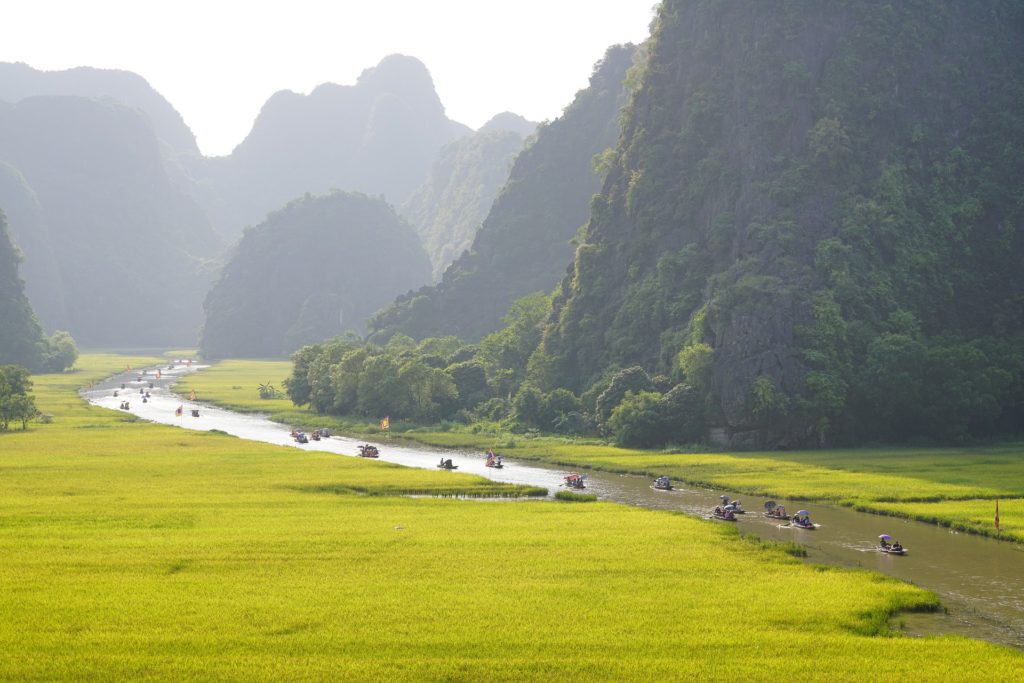
Visiting Tam Coc by boats in Vietnam

To help travelers make the most of their time in this beautiful country, 12 bloggers from all over the world have collaborated on this article to suggest the best travel experiences in Vietnam. If you are looking for some Vietnam travel inspirations as well, check out this list and note down the experiences that you find most interesting!

Are you ready to discover what Vietnam has to offer? Fasten your seatbelt and start your journey to discover the 12 best travel experiences in Vietnam!

Hiking in Sapa

Suggested by Ella from ManyMoreMaps

Visiting Sapa in the far north was one of my best travel experiences in Vietnam during my three-week trip there. Sapa is the perfect place to get away from the hustle and bustle of the larger cities. You can marvel at

the picturesque landscapes, slow down and then do some great hiking.

Hiking in Sapa – one of the best travel experiences in Vietnam

Many visitors arrive in Sapa by overnight train or bus from Hanoi, and there are lots of tour operators in the town you can book a hiking tour through. I spent one night and two days in Sapa, and stayed in a gorgeous hotel overlooking the iconic rice paddies. However, there is accommodation for any budget, including an array of homestays for a more

authentic experience.

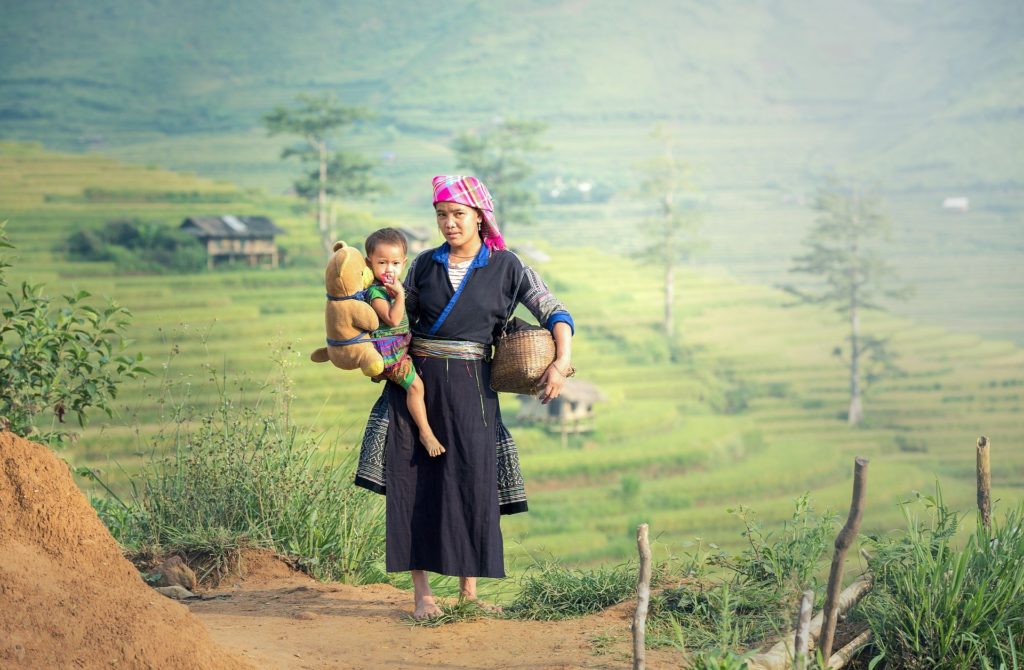
I booked two days of trekking, which involved walking along the Muong Hoa valley to Y Linh Ho and the Lao Chai village. This is where the indigenous people of the H’Mong live. It was fascinating to meet these people and learn about their age-old customs and traditions, and marvel at their colorful traditional dresses. Outside the villages, the hiking tour also took us to breath-taking waterfalls and through mile after mile of rice paddies.
5kp4t
A H’mong woman and her baby in Sapa

Hiking in Sapa is such a unique experience in Vietnam as it gives you a real taste of the northern highlands. This area of the country is completely different from anywhere else in Vietnam and is an absolutely unmissable stop on any Vietnam itinerary.

Joining a Cooking Class in Hoi An

Suggested by Caroline Keyzor from CKTravels

Joining a cooking class in Hoi An is one of the best travel experiences in Vietnam

Vietnam is a food lover’s dream with many affordable and delicious dishes available from all manner of street food vendors and restaurants.

One fun food-related activity to do when visiting Vietnam is a cooking class and we enjoyed a half-day experience with a highly rated company called Hoi An Eco Cooking Class. The school is located in the countryside just outside Hoi An old town and is surrounded by water coconut palms.

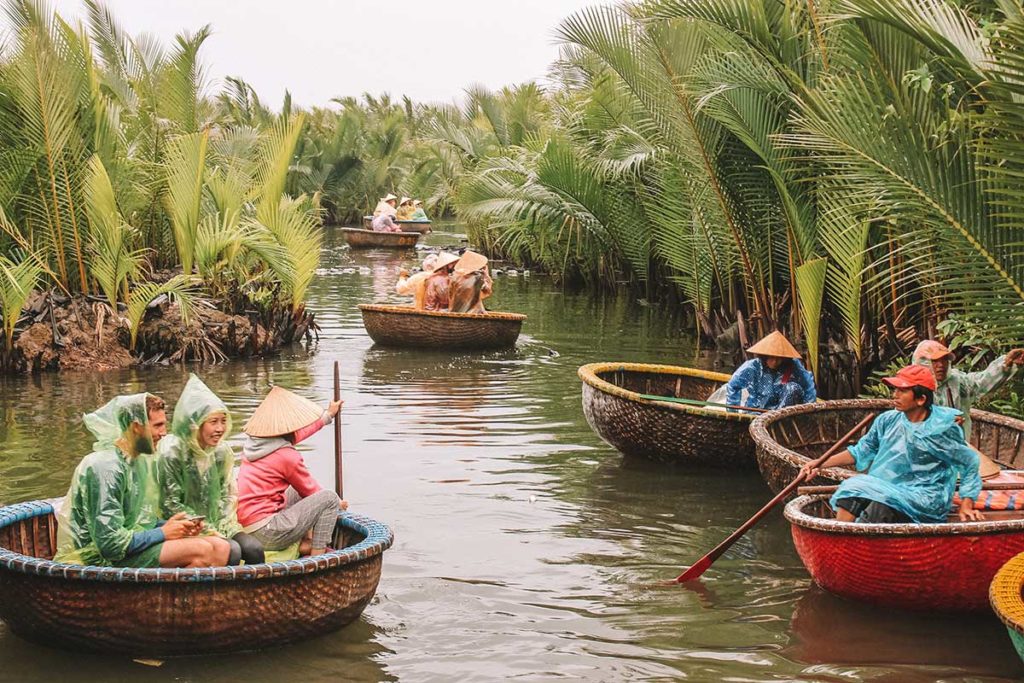
As part of the cooking class, you get the chance to ride through the palms in one of their traditional bamboo basket boats whilst fishing for purple crabs! This provided some great photo opportunities and was really good fun!
6uelq
Riding to Hoi An Eco Cooking Class in traditional bamboo basket boats

As the school is located a bit further out of the main town, transport to and from your hotel is provided and a quick visit to a local fresh market is included on the way there. The tour guide gave us a brief overview of the different and exotic Asian ingredients, then once we arrived at the school we were given a demonstration of some traditional Vietnamese cooking techniques including how to make our own rice paper rolls!
40g55
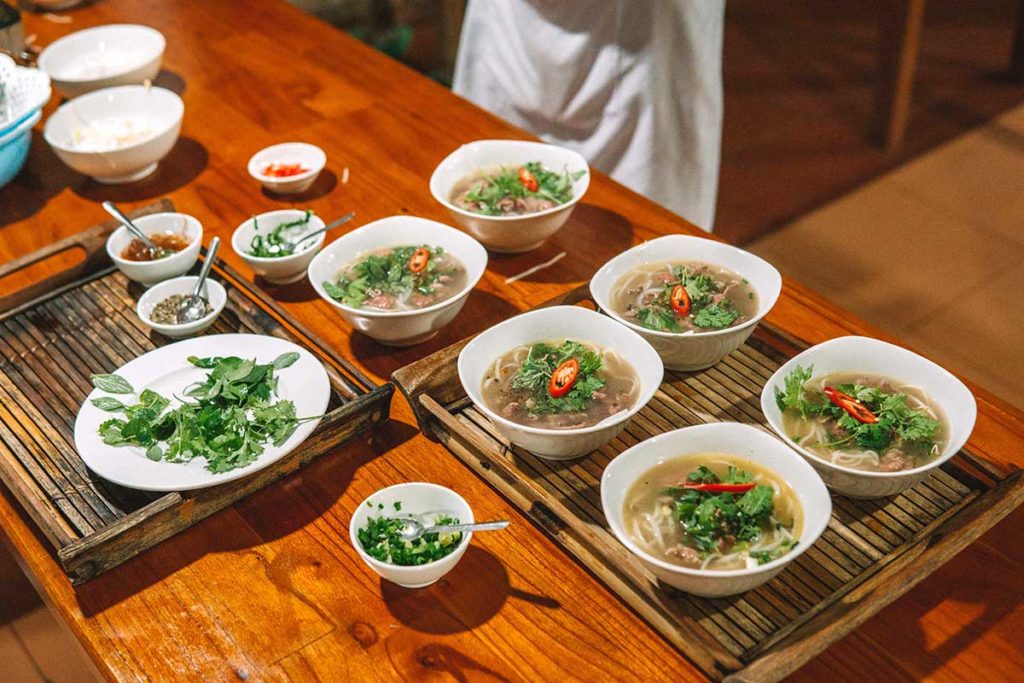
The amazing food that we learned to make at the Hoi An Eco Cooking Class

The main part of the class is preparing and cooking 6 different dishes which included popular Vietnamese foods such as Phở BĂČ (beef noodle soup), fresh spring rolls, and BĂĄnh XĂšo (crispy pancake). The class was well staffed and the whole kitchen process worked well and ran like clockwork, plus food allergies are taken seriously and it was made clear how important it was not to mix-up your food and chopping boards.

Then in the end, you all get to sit down together and eat everything you cooked with an ice-cold beer – a great activity for foodies!

Exploring the Cu Chi Tunnels

Suggested by Delilah from Our Travel Mix
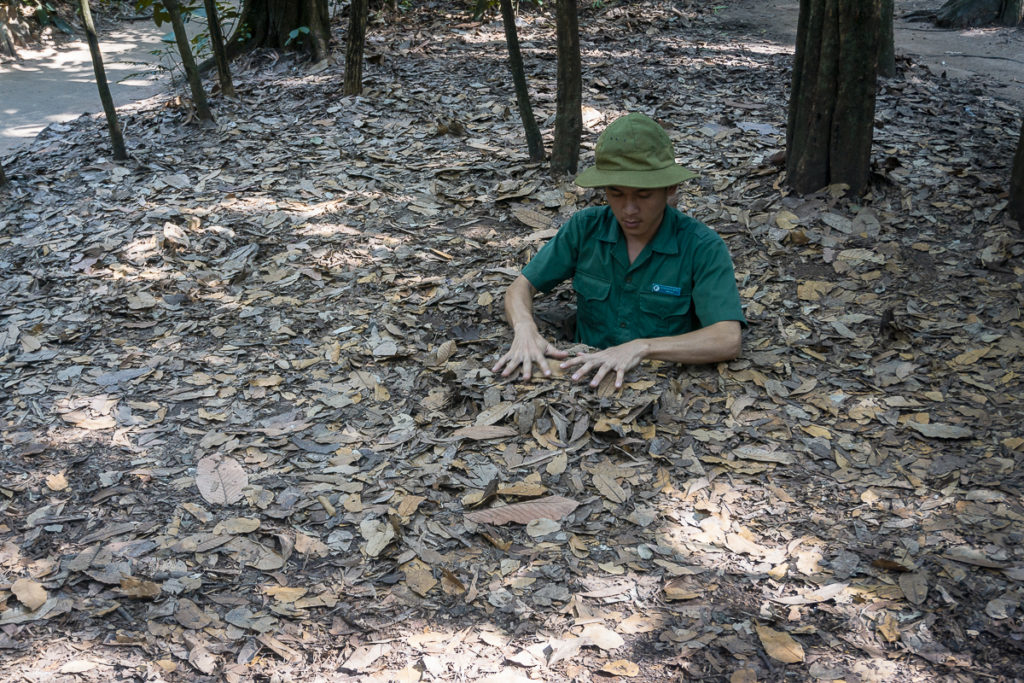
qhvdx
Exploring the Cu Chi Tunnels – one of the best travel experiences in Vietnam

One experience that really stood out to me during my first trip to Vietnam was exploring the Cu Chi Tunnels in Ho Chi Minh City.

The tunnels are one of the top attractions in Ho Chi Minh City and are a must-visit in Vietnam. The network of tunnels was fabricated by the Viet Cong, the communist troops during the Vietnam War from 1955 to 1975.

The Cu Chi Tunnels served multiple purposes, including a nexus for transport to and from the villages and a way to conceal and hide from American soldiers. Having the network of tunnels would have quite literally saved lives as the opposition would not have known of their whereabouts.
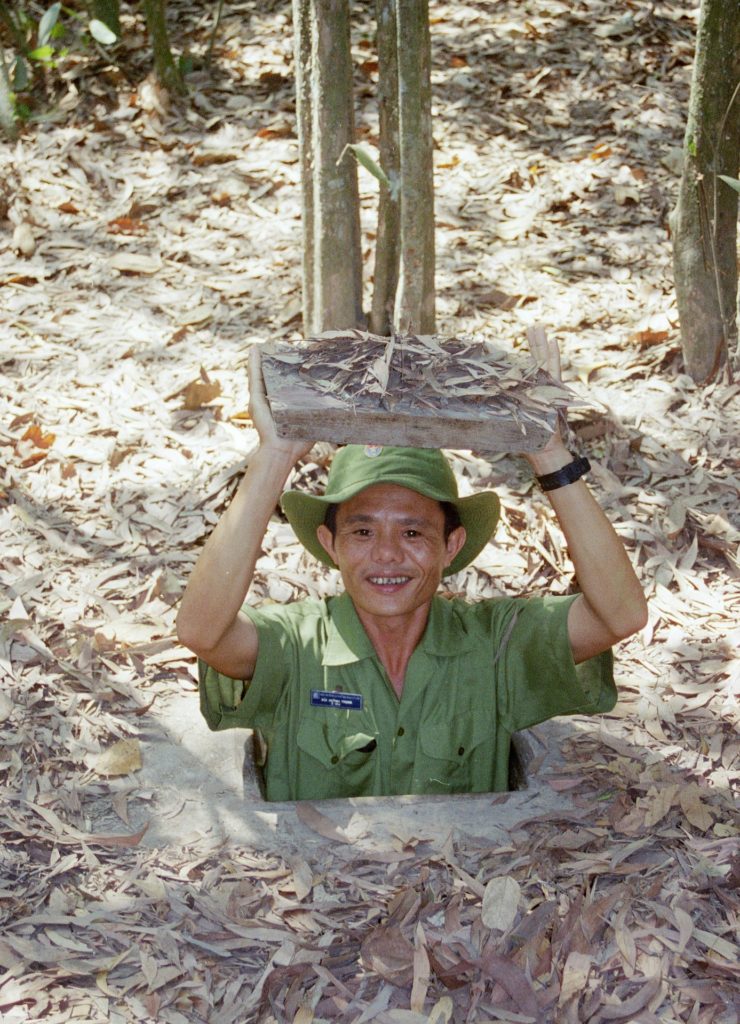
4nixz
I had learned about the Vietnam war in high school, but only a brief introduction. It wasn’t until I booked a trip to Vietnam that I started reading more into Vietnam’s history, and the more I read, the more I became intrigued.

Visiting the tunnels is a way to see what life was like for the Vietnamese soldiers during the Vietnam War. The tunnels are both short in height and narrow in width, making the experience quite claustrophobic. This was an eye-opener for me; not only did it provide me with a hands-on experience involving a part of history I find so interesting, but it also made me appreciate how fortunate I have been in my life, not having to endure a war or extreme hardships.

Visiting the Temple of Literature in Hanoi

Suggested by Stefanie from The Hidden Coconut
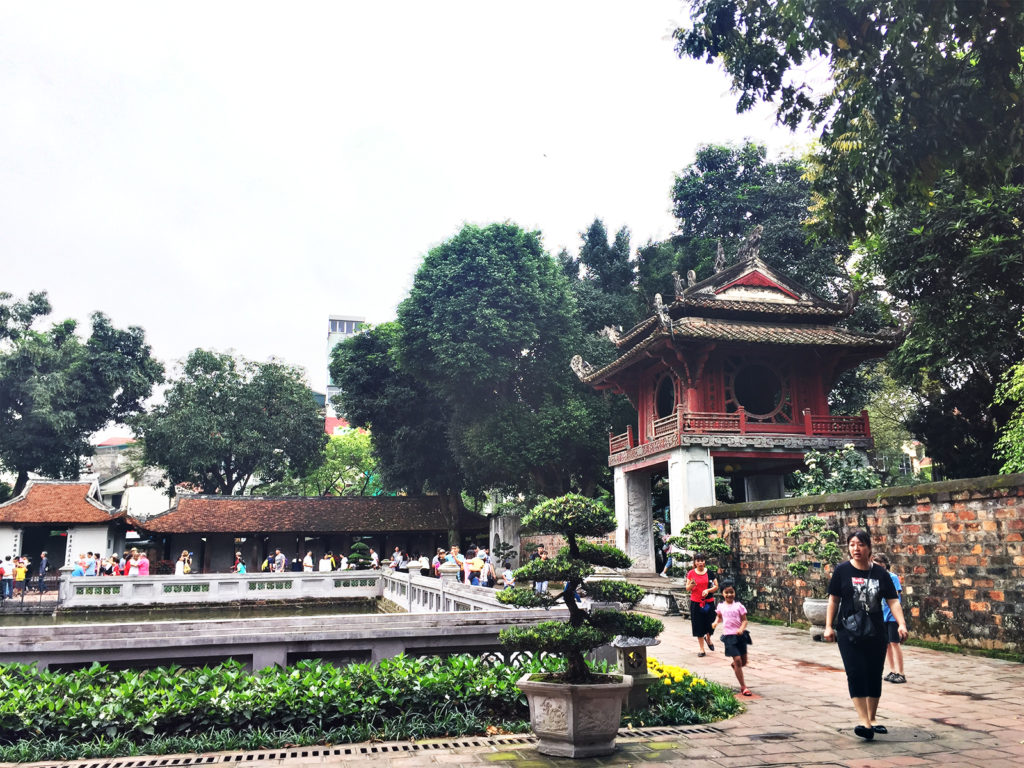
mxv2t
Visiting the Temple of Literature in Hanoi is one of the best travel experiences in Vietnam

One of my favorite things to do while traveling is visiting historical sites. I love learning about all the places you read about in books, in real life.

The Temple of Literature in Hanoi is tucked away by high walls just outside of the Old Town. Its original purpose was a university to study under Confucius. It was very prestigious and only accepted the brightest students and scholars.

When you visit the temple you’ll learn about the 5 different areas or gardens that act as levels in a student’s training. Students were required to complete all the training in order to move into the next area. The most popular area is the turtle pond, known as The Well of Heavenly Clarity. There are large statues of turtles that are engraved with the names of graduates from the school. It is believed to be good luck to rub the turtle’s head before an exam, but in order to preserve the statues, guests are no longer allowed to touch them.
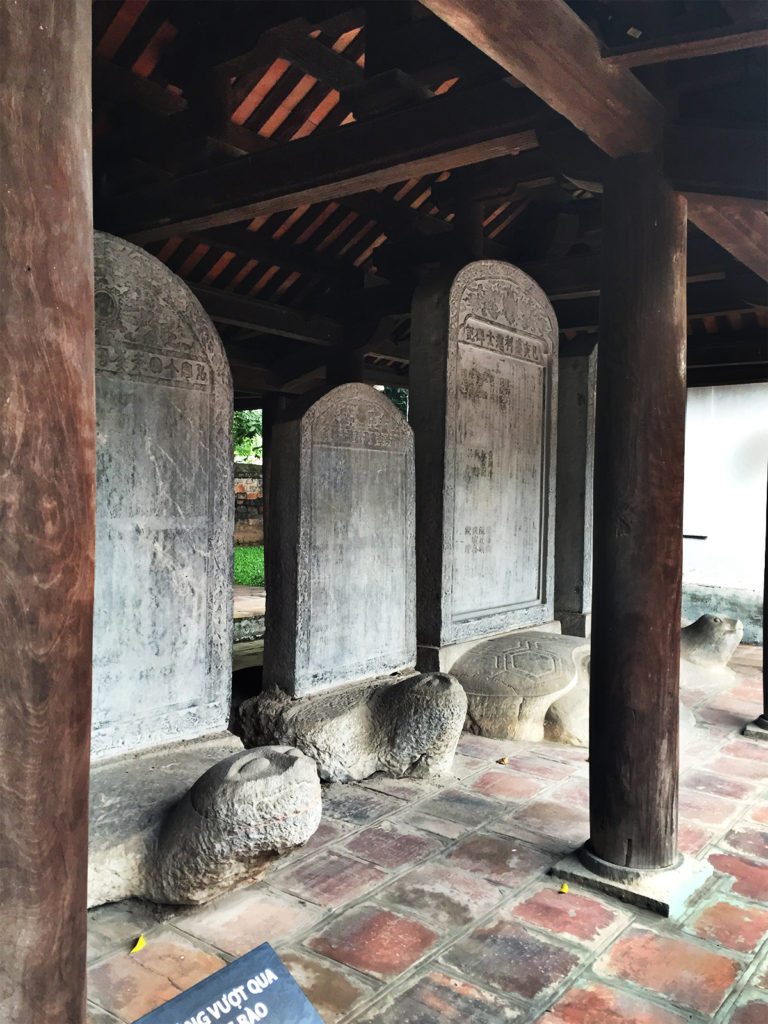
q6ow6
Statues of turtles carrying names of the school’s graduates

I happened to visit the temple near the end of the Vietnamese school year in April. So, many local graduates came to the temple to take their graduation pictures with their class. I also caught the attention of a little 8-year-old boy and his mother while I was sitting on a bench. He wanted to practice speaking English with me, and it made the visit to the temple quite memorable since I, myself, am an ESL teacher.

Escaping the crowds at hidden beaches in Quy Nhon

Suggested by Rose Munday from Where Goes Rose?

While Vietnam is a fantastic place to visit for culture and scenery lovers, there are some corners (Hoi An, looking at you) that have become mighty busy lately.

If you’re keen to escape the crowds and find peace, there’s nowhere better than Quy Nhon Vietnam, one of the best-kept secrets in Vietnam. This coastal area in Southern Vietnam is lesser-known to tourists so it’s the perfect place to observe colorful local life while relaxing on the beach and eating fresh seafood.

Exploring hidden beaches in Quy Nhon is one of the best travel experiences in Vietnam

Part of Quy Nhon juts off the mainland, creating a peninsular with a large sweeping cove. You can arrive in Quy Nhon city by bus or train but I’d advise swiftly catching a taxi over the water to a small beach town called Nhon Hai. Aside from a few Buddhist temples and local restaurants and street food stands, there’s not a great deal here – that’s the beauty of the place! You can swim, snorkel, relax on peaceful beaches and watch as the locals play football once the school and work day finishes.

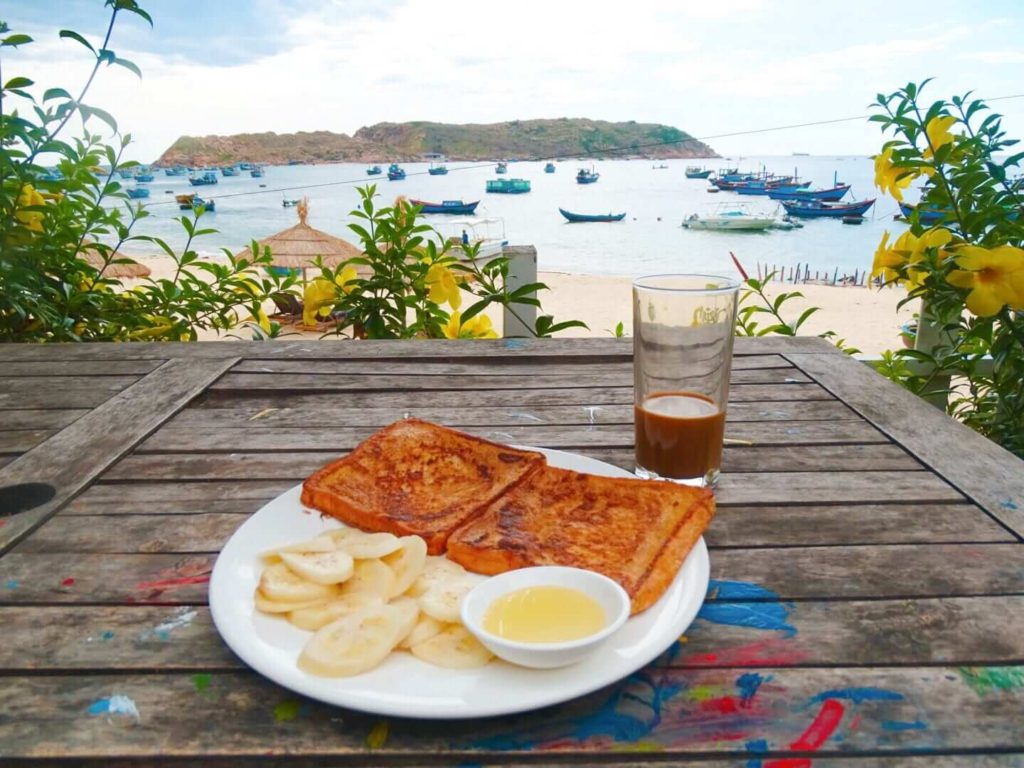
The best place to stay is Nhon Hai Beach Hostel which has both dorm and private rooms overlooking the ocean. The generous breakfast plates of tropical fruits and juices are delicious, and healthy too. Relax with a cocktail as you watch the sun go down to end a perfect day in Vietnam.
12hpz
Breakfast with a view in Nhon Hai

Exploring the Waters of Ninh Binh

Suggested by Lee Nelson from The Travel Scribes

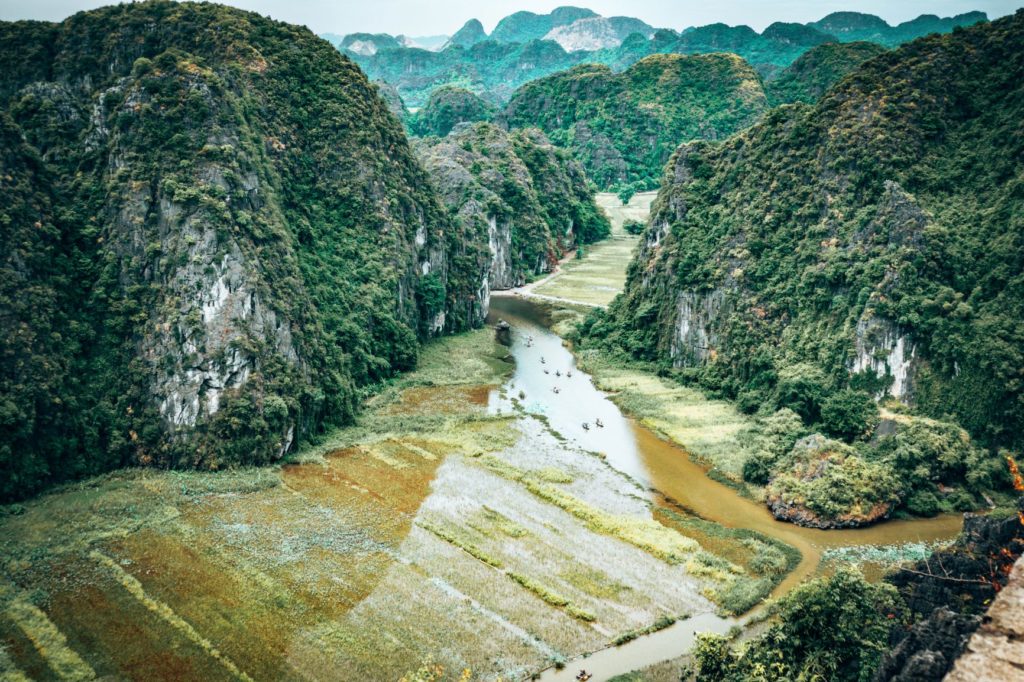
Affectionately known as ‘Ha Long Bay on Land’, Ninh Binh or – more specifically the small riverside town of Tam Coc – is a jewel in Vietnam’s already crowded travel crown.
t1bx6
Exploring Ninh Binh is one of the best travel experiences in Vietnam

Think limestone karsts soaring from the land around you, endless fields of flowering lilies, temples hidden in the mountainside, and a relaxed, laidback way of life as you explore it all from the back of a bicycle or, better yet, a boat. That’s since Tam Coc, located easily between the larger cities of Hanoi and Hue, is best explored by taking a boat trip on one of the many glittering rivers and lakes.

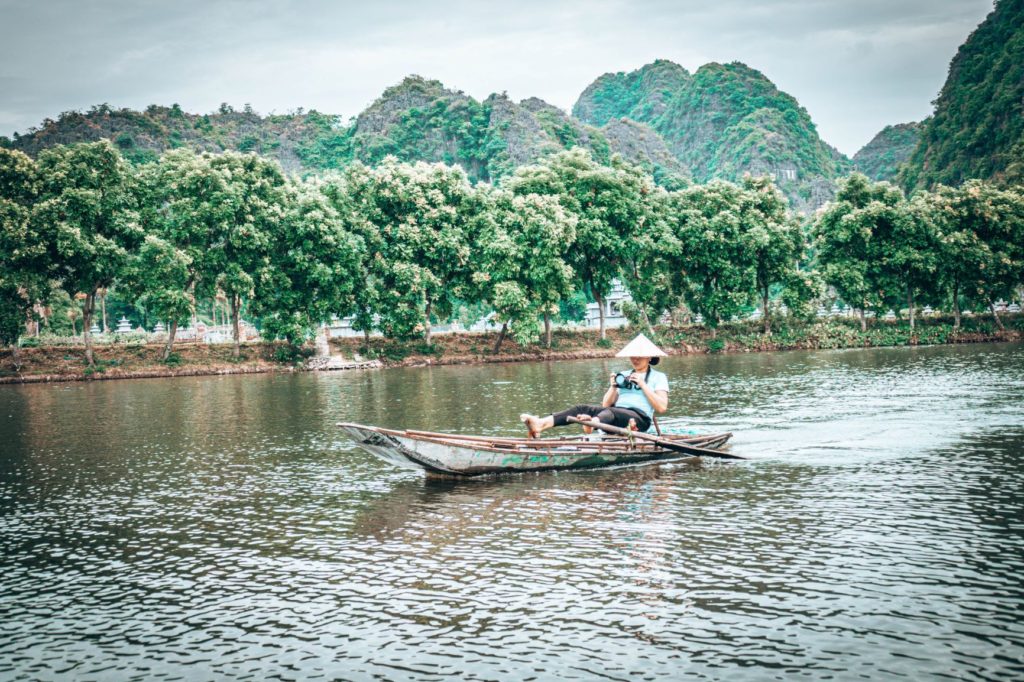
Three are a number of different rivers to explore in the Ninh Binh area, the two most famous being the Tam Coc and Trang An tours. The first is accessible directly from the town of Tam Coc as you float down the Ngo Dong river, ably steered by a local using their feet (yes, their feet!) to guide you down the river. This breath-taking tour sees you cruise through three caves, miles of rice fields and of course those stunning limestone cliffs.
0pzss
Steering the boat by feet in Ninh Binh Vietnam

Further afield is the UNESCO World Heritage Area of Trang An which, like Tam Coc, sees you float down the exquisite river on one of three different routes. The longest of these will take you through nine incredibly impressive caves (or grottoes) that have been carved out by the gushing river, as well as a number of temples and pagodas that make for some very Instagrammable content.

Regardless of your itinerary in Vietnam, it’s definitely worth adding the waters of Ninh Binh to your agenda; a uniquely Vietnamese travel experience you will never forget!

Enjoying a Coffee and Pastry at the Famous Metropole Hotel in Hanoi

Suggested by Julie from The Red Headed Traveler
eh2gx
Anyone who’s read Graham Greene’s The Quiet American knows that a pilgrimage to the Sofitel Metropole, a legendary grand dame of hotel royalty if there ever was one, is a requisite stop during a visit to Hanoi, especially since for most travelers, having enough đồng to stay there is out of their reach (at least that’s how it was for me when planning my time in the Vietnamese capital).

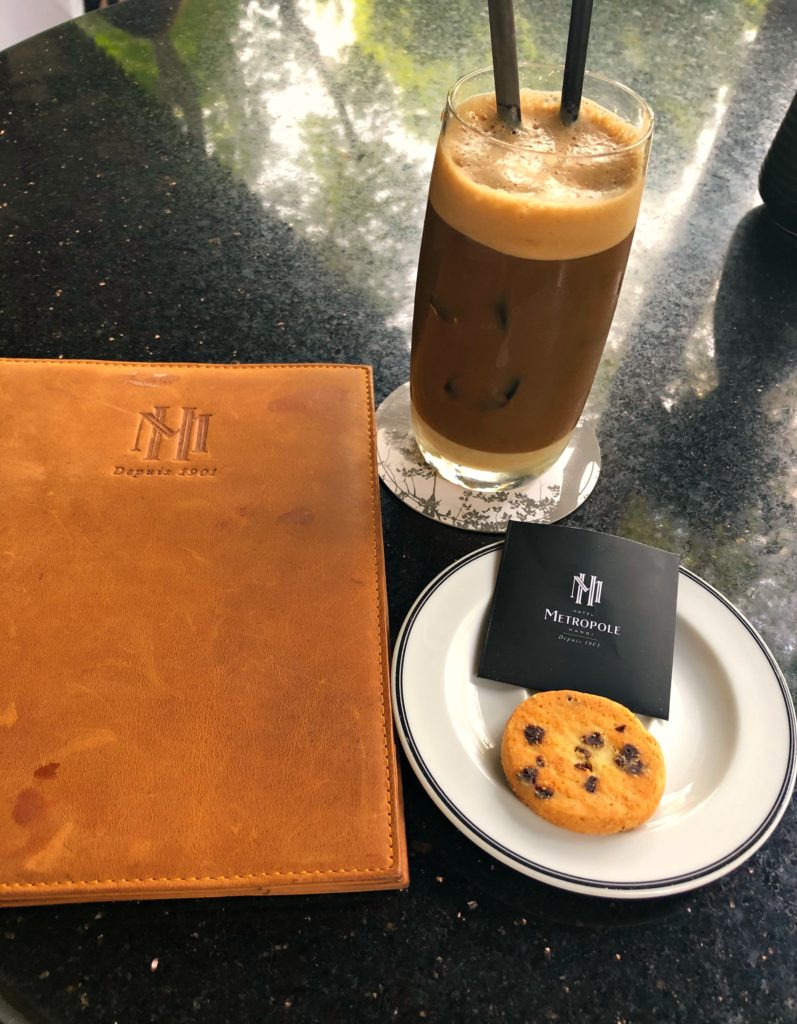
I adored Greene’s iconic work ever since I was assigned to read it in high school, one of the rarely assigned readings I actually enjoyed and whose characters and story stayed with me all these years. I knew were I to ever get to Hanoi I’d definitely enjoy a glass of the ubiquitous Vietnamese iced coffee (or cĂ  phĂȘ sữa đá when you want to look for it on a menu) at one of the patio tables of La Terrasse, the alfresco dining option of the Metropole. I’d imagine Thomas Fowler, Greene’s protagonist, sitting at a table beside me, also taking in the always bustling activity of the city’s historic French Quarter.

And naturally, to go with my iced coffee (since let’s be real the lone complimentary cookie I was given was not going to cut it) I ordered a pastry, one exquisite enough to grace the shelves of any Paris patisserie and with Paris prices to match too. But it was worth it.

My time in Hanoi had begun in the city’s chaotic and sensory overwhelming Old Quarter and ended in the tranquil French Quarter, oozing historic charm, all the while allowing my high school self to truly bring to life a literary work of art.

Reaching the northern-most point in Vietnam

Suggested by Fiona from Fiona Travels From Asia

One of my best travel experiences in Vietnam is definitely reaching Lung Cu Flag Tower, which is the country’s northernmost point.
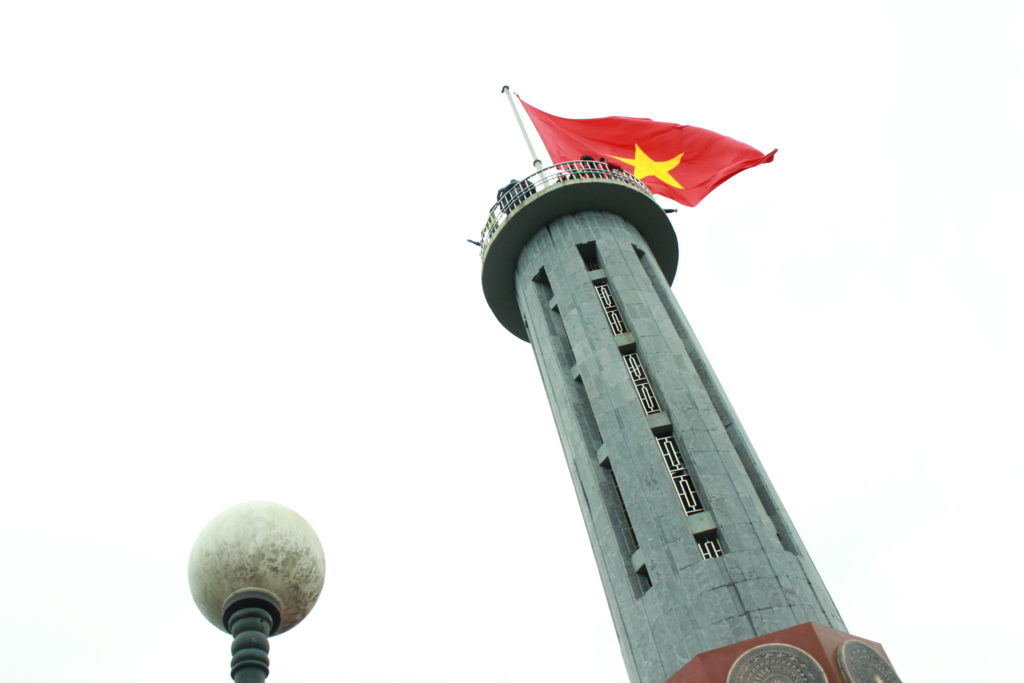
4dldo
Lung Cu Flag Tower marks the northern-most point of Vietnam

Situated at 1470 meters above sea level, Lung Cu Flag Tower boasts a 360-degree picturesque view of vast terraced fields, breathtaking mountains and fertile river valleys. Climbing up to the foot of the tower and then to its top can be quite strenuous, but the view is totally worth it. Everything just looks so beautiful up there!
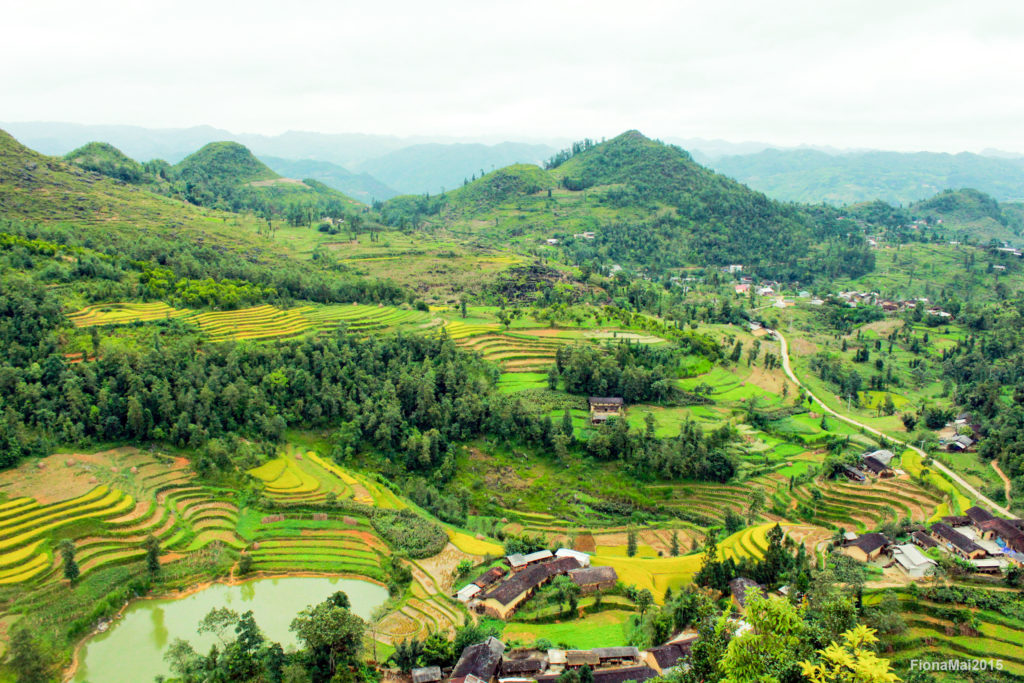
cldv4
Breathtaking view from Lung Cu Flag Tower

Lung Cu Flag Tower is located in Dong Van Ward, Ha Giang province. I made it there during my 4-day trip to Ha Giang from Hanoi. Ha Giang is one of Vietnam’s off-the-beaten-path destinations, featuring mesmerizing natural landscape and rich ethnic minority culture. If you want to see some of the best scenery in Vietnam, Ha Giang is the place to be!

Crossing Vietnam by Motorbike

Suggested by Campbell & Alya from Stingynomads

Riding from north to south Vietnam by motorbike

I traveled in South East Asia for about 18 months and exploring Vietnam by motorcycle was still one of my favorite adventures.

The country is perfectly suited for a road trip. It is long and narrow so driving north to south you drive close to most of the highlights.

Traffic is insane, with more than 37 million motorbikes registered here driving is not for the fainthearted, but the upside is there is always someone who can fix your bike if you have mechanical problems! When we had a breakdown someone always showed up and could fix our bikes for only a couple of dollars.

We bought bikes on the streets of Hanoi for about$250 each. Two Chinese copies of the Honda Win 110cc manual shift motorbike. We had some awesome adventures, dodging trucks, or scooters transporting everything you can imagine; cages with chickens, pigs, and up to a family of 4 on one bike!

The trip crossing the country can be done in about 2 weeks, it however took us more than a month. We did it slowly, spending time in beautiful towns like Dalat, Hanoi, Hoi An and Nha Trang scuba diving, hiking and enjoying the food, culture and nature.

After about a month, 2500km later, we sold our bikes on the streets of Ho Chi Minh for $125 each, if you have patience or luck you can even make a profit when selling your bike.

Reaching the Highest Point in the Indochinese Peninsula

Suggested by Yara Mowafy from Tayaramuse
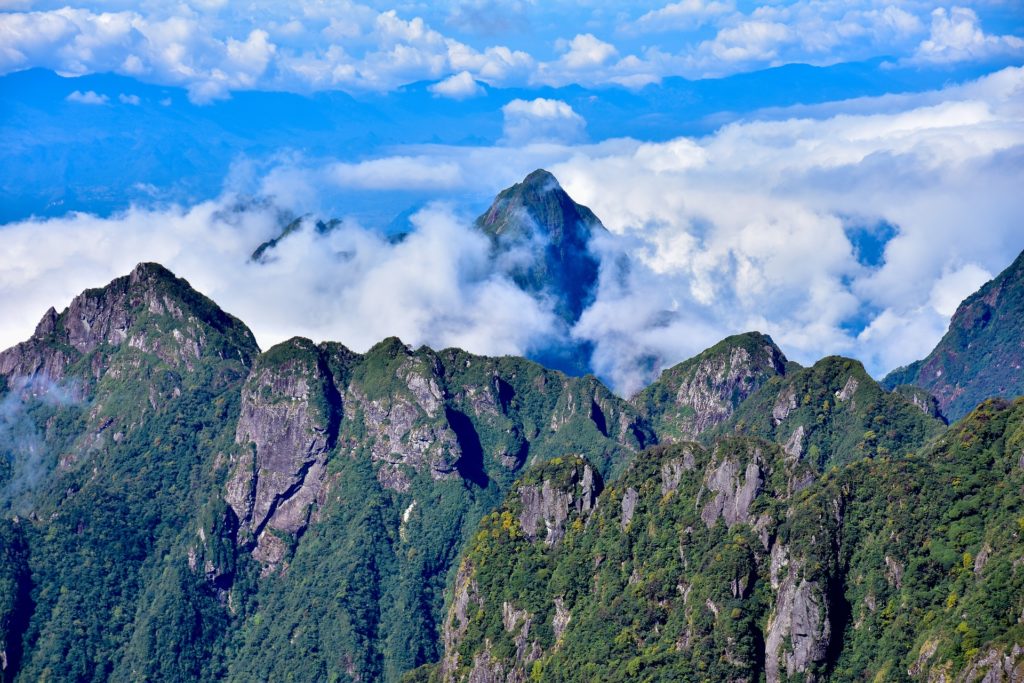
6c7sw
Reaching the Highest Point in the Indochinese Peninsula is one of the best travel experiences in Vietnam

Big surprises come in small packages. My small package story began at a hotel. Imagine waking up to a sunny morning in the hills of Sa Pa, following an itinerary that your hotel put together, then suddenly finding yourself 3,147 meters or 10,326 feet high! This journey was a complete and utter surprise to me and by far one of the coolest moments of my life.

I’m not exaggerating when I say I had no idea what was going on or where I was headed. My hotel suggested I visit Fansipan early that morning since the sky was clear. I assumed it was an ancient temple or a viewpoint of the famous rice fields. I got my things together, received a small package including an entry ticket to the site and headed to the train station. Little did I know, that on the other end of that train track was just the beginning of a very elevated journey.

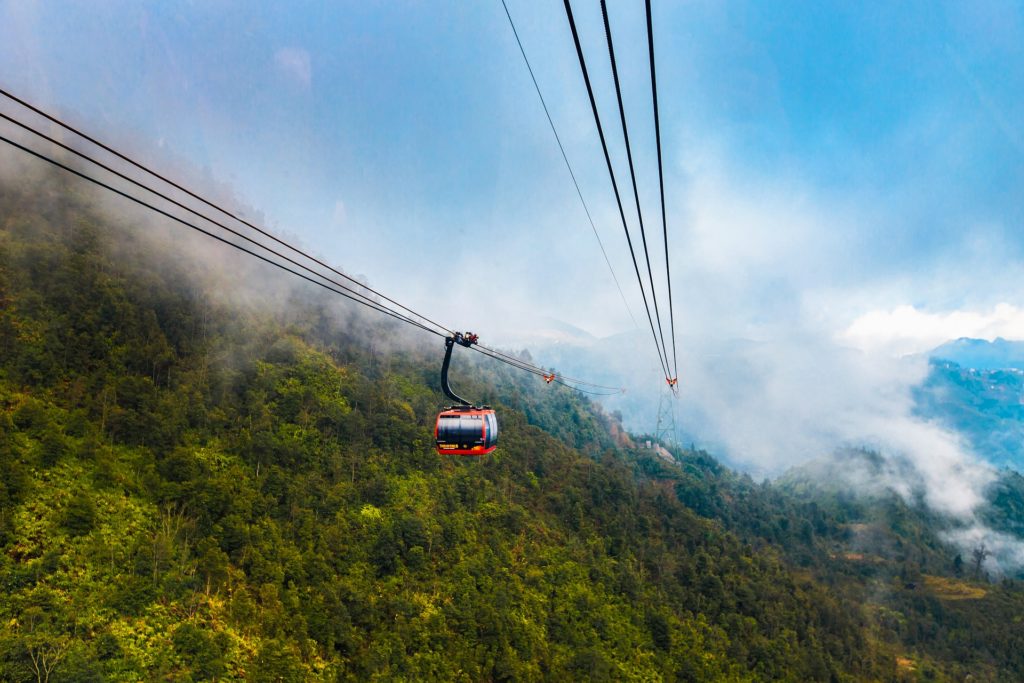
After boarding the train and riding for a short 10 minutes through the lush green mountains of Sa Pa, riders reach the welcome area for visitors. And right there, the adventure continued to unravel, and I was loaded onto a cable car!
q1xjo
The cable car going up to the top of Fansipan

Now let me tell you this cable car ride went on for at least 20 minutes, going straight upwards. Picture this – first, you’re a little above the ground, then you’re staring straight down at the rice fields, you’re over large hills, then mountains, and spending a decent chunk of time inside physical clouds all while sitting inside a completely see-through cable car.

And just like that, you go from touching the ground to reaching the highest point in the Indochinese Peninsula at Fansipan Mountain, Vietnam.

Getting Clothes made in Hoi An

Suggested by Nicola Rae from Seenicwander

Hoi An is a must-see city in central Vietnam and one of my favorite places to visit in the country. With a charming old quarter that is illuminated by thousands of colorful lanterns at night, it’s no wonder Hoi An is popular among travelers.

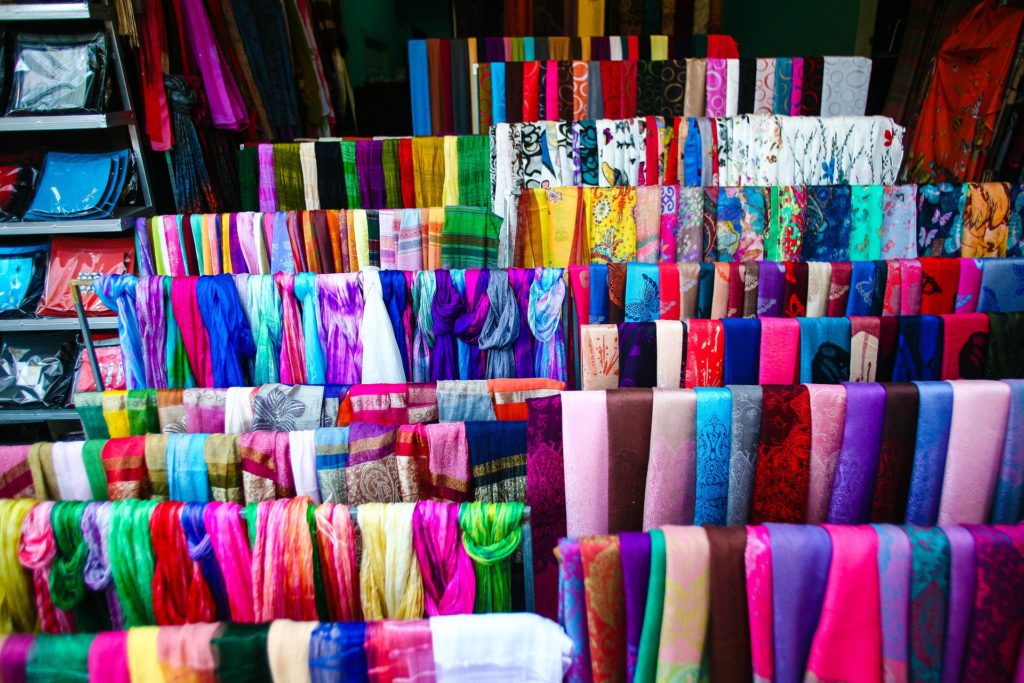
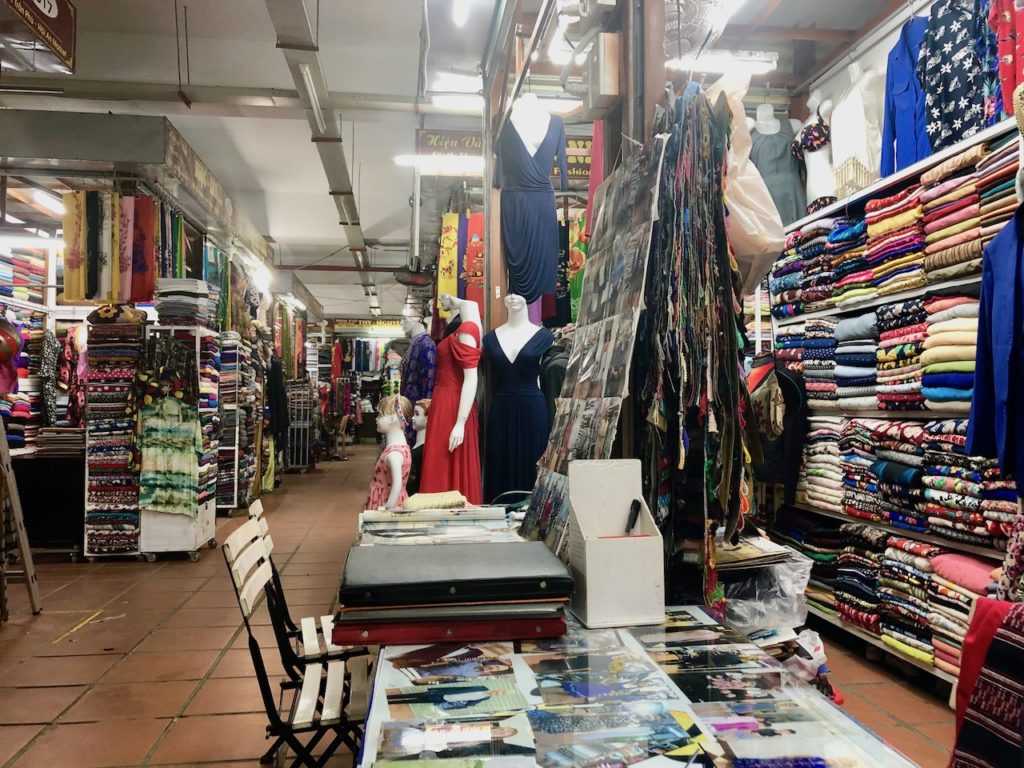
One of my favorite experiences in Hoi An was getting clothing made. Hoi An has a famous cloth and fabric market where you can get custom clothing items designed for affordable prices. I visited the Sewing Bee clothing shop inside the market on a friend’s recommendation, and I was immediately awestruck by all the beautiful fabrics.
mjx6g
Beautiful fabrics in Hoi An

Bee, the owner of a sewing bee, had a book of designs I could choose from. I was also able to show her images from Pinterest and the internet. I had a few dresses I’d seen online that I loved and Bee was able to create them from scratch. We sketched out what the garments would look like and then Bee took me on a walk through the never-ending rows of fabric. Luckily, she was able to point out materials that would work well for our designs and patterns that she thought were flattering.

After I had chosen my fabric and Bee had taken my measurements, she informed me that I could come back for fitting in two days! I was shocked because I’d ordered three garments, but Bee was confident. Just two days later, I went back to the market and tried on each item for alterations. There were a few little tweaks to be made, but I was able to pick up the finished items later that same day.
1dxvv
Getting clothes made in Hoi An is one of the best travel experiences in Vietnam

My clothes turned out amazing and they were pretty much all I wore for the rest of my trip in Vietnam! The service and quality were fantastic, and now I have beautiful custom clothing that reminds me of the magical little city of Hoi An.

Watching Water Puppet Show in Hanoi

Suggested by Neha from Travelmelodies
2u3hy
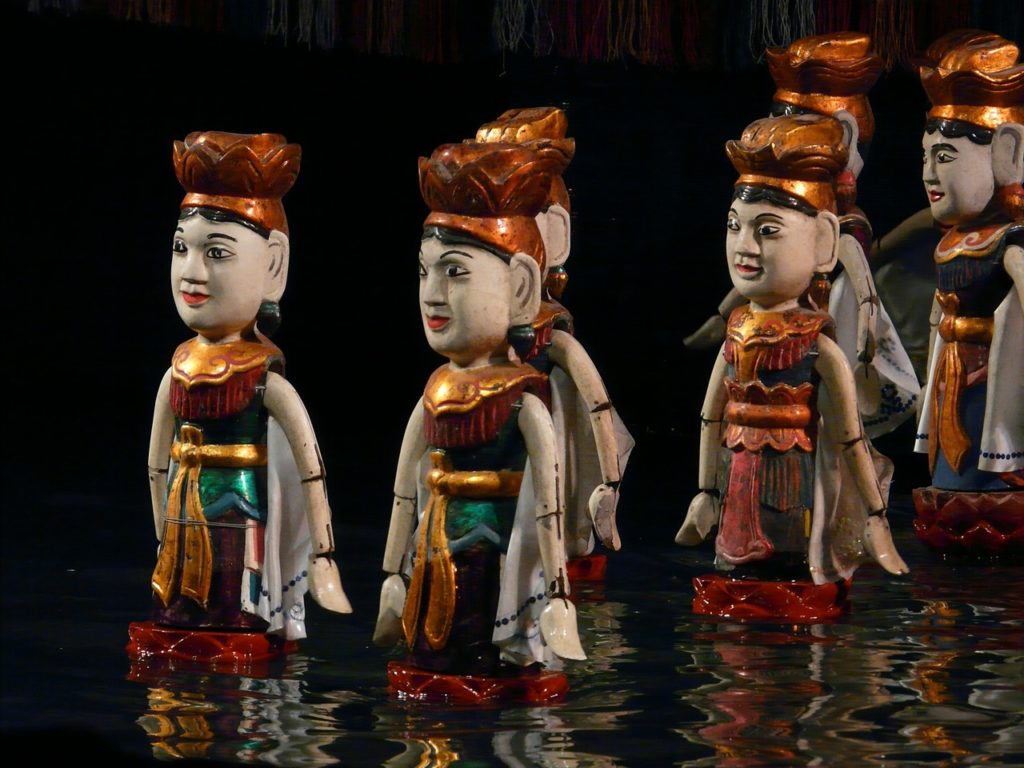
Watching Water Puppet Show is one of the best travel experiences in Vietnam

One thing that you can’t leave Vietnam without experiencing is the Water Puppet Show. This traditional art form dates back as far as 11 th century and is still preserved and performed.

When we watched the water puppet show in Hanoi, we were left spellbound by the aura created by the talented artists. The best place to watch the show is at the Thang Long Water puppet theater, although there are many other places to watch the water puppet show. There was even a live music band playing traditional instruments and singing the story as the show progressed.

There are different show timings and the popular timings do get booked fast, so it is better to book the show in advance. The tickets cost around 100,000 VND (around 4.30 USD) for the 1-hour show.

There is a small water pond as the stage for these puppets and each puppet is tied to a long pole that is held by an artist from the back of the stage who is also in the water.
zcxd8
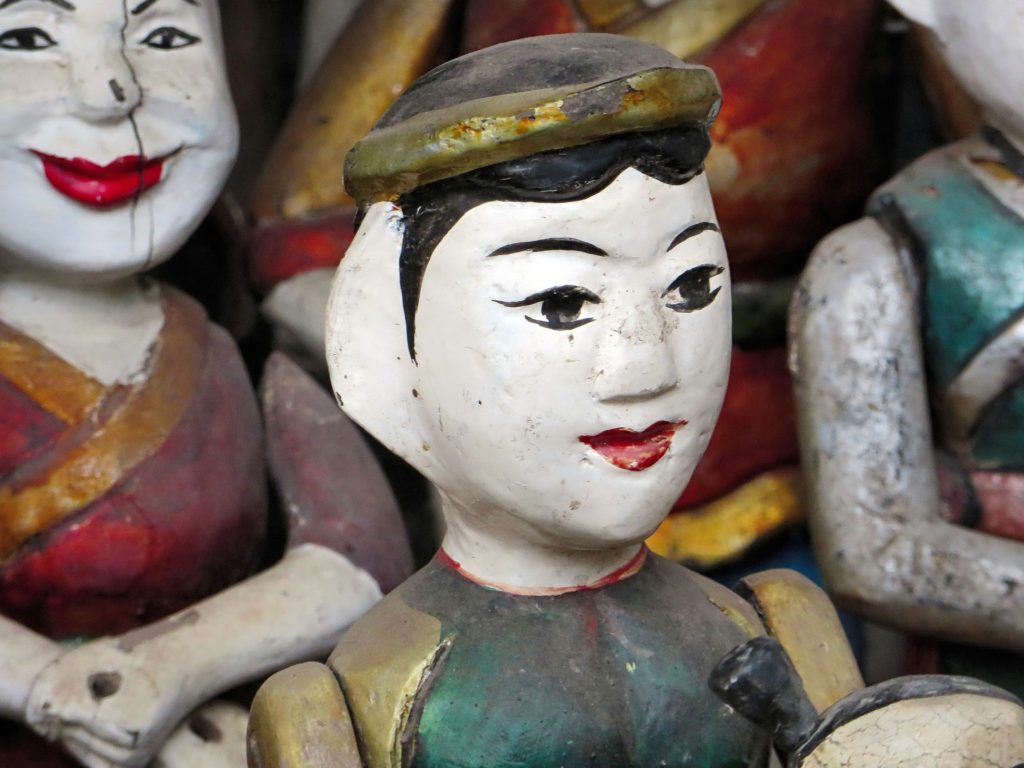
Watching Water Puppet Show is one of the best travel experiences in Vietnam

Most of the shows depict a mythological story or folktale from Vietnam. The different puppets carved out of wood are brough[……]

Read more

Top 8 Tips to Travel Safe in India

l9j4r
How to travel to India and stay safe? Here are 8 tips to ensure your next (or first) trip goes as smoothly as possible

Foreigners travelling to India are excited to explore its diversity but they are concerned about their own safety. Being a female traveller, I have to agree with the safety concerns of foreign travellers. I have personally travelled to the different states of India. I have done solo travel immensely and thus through my personal experience and also through what others have encountered, I recommend some easy tips to travel and stay safe in India.

z7vjs
How to stay safe in India? Here are our best travel tips

1. Handling the touts

The Indian travel industry is infamous for its touts. While travelling to Udaipur, I met a traveller from the USA who had come with his own itinerary. He had booked all his train tickets and hotels. When he was exchanging his currency in New Delhi, he encountered a tout who fooled him by saying that all his train tickets were invalid. The tout insisted him to buy a tour package of INR 4,00,000.

15vxw
Handling the Touts

The role of trusted travel companies is important here. In order to avoid a miserable experience with the touts, a foreign traveller must book his/her tour through a credible travel company. One of the ways to find such a tour company is through references or through the recognitions being given to the company. For instance, Ecoplore is an eco-travel company in India recognized by United Nations.

2. Connect with the Locals

lh7jg
Connect with locals

I have had several positive occurrences where strangers have been really helpful. Be it telling directions, hitchhiking or seeking recommendations for food joints, locals have been very supportive. People in the capital cities are more commercial than people in the villages. So, develop your sixth sense and assess the genuineness of an individual before trusting them and following their words. The ability to differentiate between a genuine person and a fake one is what a traveller should aim for.

3. Don’t go out very late at night

unrj3
Don’t go out after its Dark

If you are travelling in a remote area, it is suggested to stay indoors after it’s dark. Normal activity in the villages closes after dark. However, when you are living in a town or a city, you can move out at night. But, there are certain corners that are unsafe, so try to avoid them.

4. Choose local clothing

080re
Wear Modest Clothing

People in India are a little conservative so it is advisable to wear modest clothes especially when you are not travelling in metro cities.

5. Learn Self Defence

30u8w
Photo by Church of the King on Unsplash

A traveller is a learner for life and in case you do not know self-defence moves, then you must learn them. Hitting somebody using the right technique is really helpful in case of a physical assault.

Carry pepper spray in your purse

I recently bought a Naga Chilli pepper spray to keep in my handbag. It is really useful to carry this when you are moving out solo. Pepper spray is highly effective on somebody trying to harm you physically.

6. Keep emergency numbers handy

w6y3a
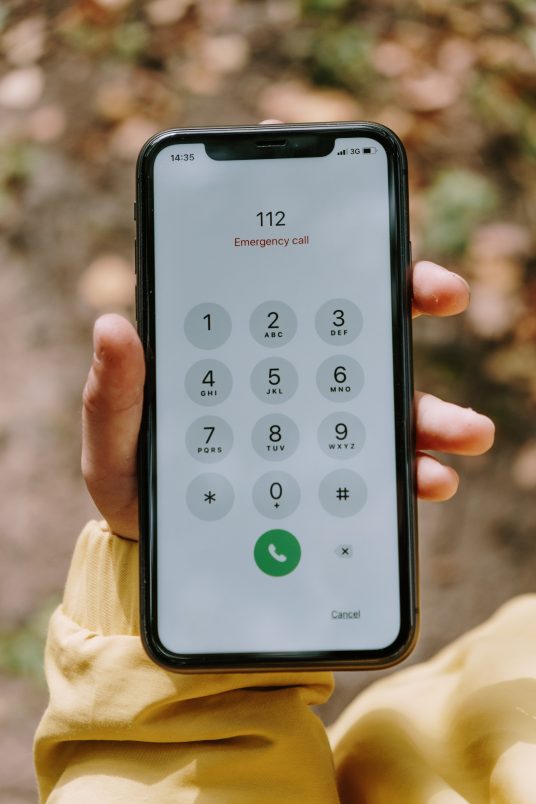
Keep emergency numbers handy, photo via pixabay

When you are in India, do inform your local contact be it a friend or a relative or else the tour operator you booked your hotels from. Tell them your travel plans and share your contact number with them. Remember, to call them at the very first instance in case of any emergency.

7. Choose Reservation for Women

ao7u6
Seats reserved for women

If you are a women traveller, do choose to travel in women’s coach in trains (wherever applicable). All buses & trains also have women seats reserved. So, take those seats.

Elderly travellers must take Travel Escorts

If you are a senior citizen and you are planning to travel to India, it is advisable to take a Travel Escort along. With this, your travel will be tension free and hassle less.

8. Respect local culture

4n2u8
Respect local culture

India is a country of diversities. If you visit a Gurudwara, you are expected to cover your head with a scarf. So, if you are planning to visit the Golden temple at Amritsar or any other Gurudwara, do remember to cover your head. At some places especially in South India, they want you to enter the house bare-footed. One should make an effort to follow these customs as long as possible in respect of the other culture.

Every country is unique and its culture defines a lot of things. We still have to develop our mindsets and become more receptive to other person’s choices. However, the hospitality you will receive in our country is life long memorable. If you are a foreigner, you will be treated like a celebrity and people would be wanting to click pictures with you. It happens only in India![……]

Read more
Undiscovered Brunei

Brunei Darussalam (meaning an Abode of Peace) is a country that one often cannot even locate on the world map. When I told friends I was coming to Brunei one said “oh, why don’t you also visit India since its so close.” Others told me they had to look the country up on Google Maps. A geographical lesson is obviously in order. Brunei is located on the large island of Borneo and is surrounded by the Malaysian states of Sabah and Sarawak. The rest of the island is part of Indonesia. Brunei is separated into 2 distinct sections of land, separated by the Bay of Brunei. A plane ride from Bangkok, Thailand takes about 2.5 hours.

p6uyk
My trip to Brunei highlights an important part of why I travel, especially to a country that does not see a lot of tourists. Trips like these break down any pre-conceived notions I might have about a particular country as well as help to offer insights for others. Tourists often use Brunei as a 1 or 2 day stop over between destinations – that is too short of a time; this country is certainly worthy of additional exploration.

Brunei was an unexpected surprise during our recent visit. While often overshadowed by its neighbors Indonesia and Malaysia, Brunei offers much for the independent traveler – including stunning mosques, the world’s largest connected water village, a surprising selection of foods, unspoiled virgin rain-forest, and friendly genuine people. This is a very safe country, the people I met were honest and helpful.

Attractions

9a7zq
o0nc5
There are a number of tour operators in Brunei but none more professional, efficient and personal than Travel Hub. The owner Adam Tan, has been involved in the local travel scene since 2000. Brunei is not an easy country to get around for independent travelers and Travel Hub secures all transportation and arrangements. They offer a variety of partial and full day trips as well as longer options into the rainforest. Travel Hub offers tours and sightseeing options to any of the attractions that we visited during our time in Brunei.

Mosques – two of the grandest mosques you will ever see are in Brunei. Each one was built by one of the Sultans, the current Sultan as well as his father. Both mosques are open to visitors during certain hours – Friday is the main prayer day and the mosques are closed for much of the day. Visitors wearing shorts (male or female) will have to wear one of the long robes available at the front of each mosque. Special carpets are setup for visitors.

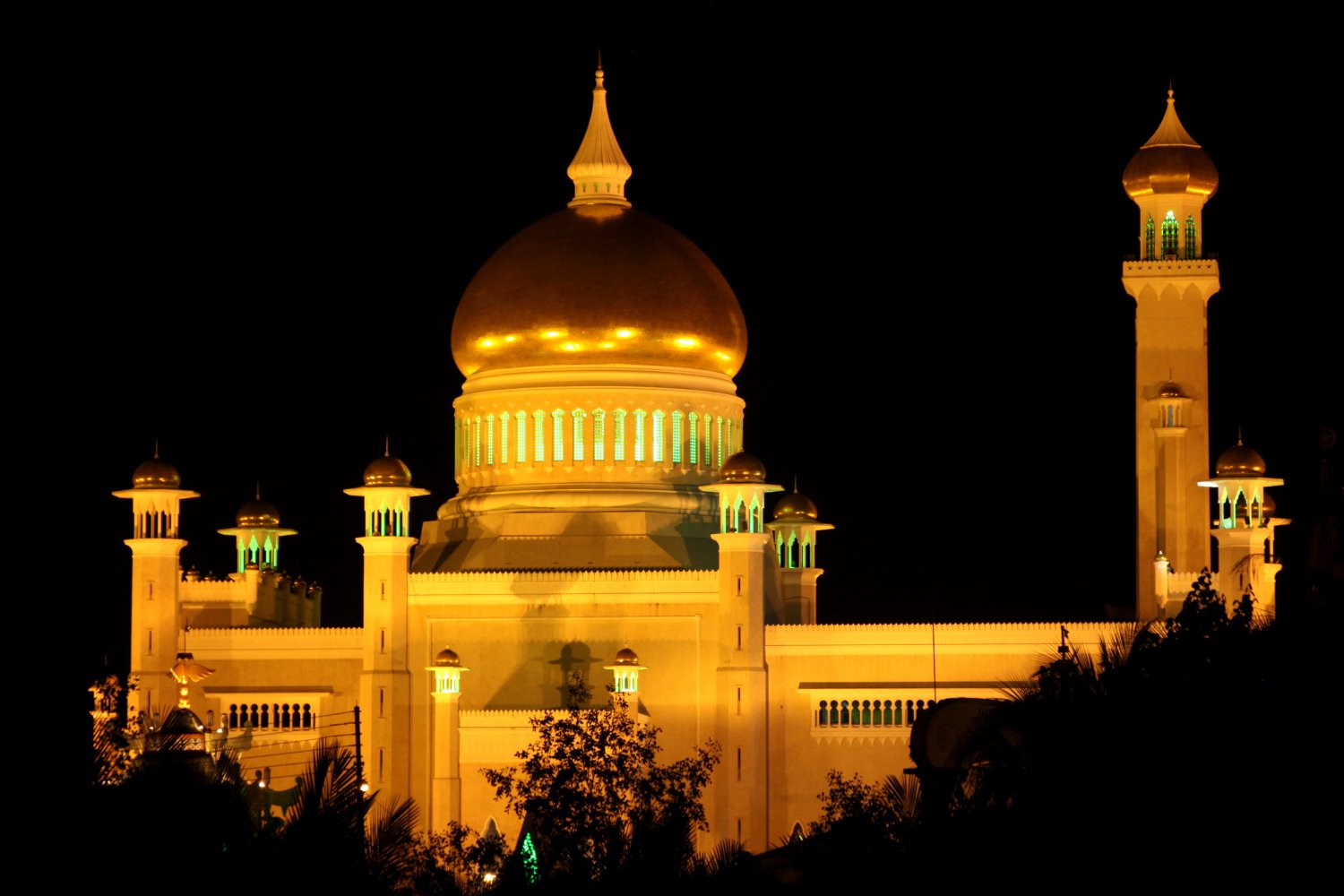
Sultan Omar Ali Saiffudien Mosque is located in central Bandar Seri Begawan. This was built by the current sultan’s father in 1958. This mosque is especially beautiful at night when it becomes “golden”, lit up by all the lights. For a visual contrast check out part of the water village located directly in front of the mosque.

The current Sultan built the Jame Asr Hassanil Bolkiah Mosque in 1992; it is located just outside of central Bandar Seri Begawan. This is the only mosque in Brunei to have separate prayer rooms for women and men (women usually pray in their homes). This mosque bars no expenses and its beauty is reflected in the mosaics, colorful tile and gold. The crescent moon at the top of the main dome is solid gold.

Oil and gas is integral to the prosperity of the country and the oil fields are centered around the town of Seria where oil was first discovered in 1929. This site is also known for its WWII history and Japanese occupation. Today all Brunei’s O&G production fall under one company Brunei Shell Petroleum (BSP) owned by the government of the Royal Sultan, Shell Oil Company and Mitsubishi Corporation.

A jetty extends 4.5 kilometers into the south China Sea and carries all the oil and gas to supply ships which then deliver the fuel to northern Asian countries such as Japan and Korea. Brunei only uses 7.5% of the total production. 80% of the mined reserves are actually located offshore. The “Billionth Barrel Monument” was a tribute to just how much oil has been taken out of this region – and that monument dates from years ago! Also on site are the Oil & Gas Discovery Centre as well as the site of the original discovery. A number of “nodding donkeys” are located in and around town constantly moving up and down as they suck oil from deep in the ground.

The capital city, Bandar Seri Begawan is small and the major highlights can easily be seen in about a day. Much of the country is covered with virgin rain forest and the majority of the population lives in or near the capital city.

Often a visit to the gas fields will include a stop at the Sungai Lian Forestry Museum. This small museum with its somewhat dated looking exhibits focuses on various aspects of the rain forest and its respective wildlife. Highlights include a display about rattan wood (more than 80 species) as well as preserved wildlife specimens. The museum averages about 5.5 visitors a day so chances are you will be alone inside! Admission is free of charge.

One of the highlights of any trip to Brunei is to see the Proboscis Monkey in the wild. This monkey can swim and is famous for its long nose which bobs above the water as it swims. Within 20 minutes of the main port in Bandar Seri Begawan you can be in the monkey’s home territory. Their diet is rather limited; they only eat young mangrove leaves so the mangrove swamps are where you have a chance to see them. They travel in packs, one “king” and lots of children. They are rather shy so its critical to be quiet when searching for them along the riverbanks.

Boats can be hired right at the main pier in Bandar Seri Begawan. Allow about an hour+ for a round trip. On the way to the Proboscis territory you will pass in front of the Royal Palace and the adjoining pier.

The Royal Regalia Building houses a large collection of Brunei’s historical royal regalia. Entrance is free of charge – photos are allowed in the main rotunda but not in the side galleries. Lockers are on site to store cameras and or cell phones. Allow at least 90 minutes here or more if you want to see all of the side galleries. Highlights include exhibitions on the Coronation of 1968, the Silver Jubilee (the current Majesty’s ascension to the throne in 1992), a Royal Exhibition room and the history and development of the Brunei Constitution. The museum (located in central Bandar Seri Begawan) is open daily with varying hours.

hcd18
Ulu Tempurong National Park is well worth a visit overnight or for longer stays. Due to the difficulty of getting here as an independent traveler one should make a reservation with a tour group. We used Adam of Travel Hub Brunei. There is no public transportation once you reach Bangar Town – a 45 min boat ride from Bandar Seri Begawan from which its another 25 minutes to the outside of the National Park. This park is really “off the beaten path” and very large; chances are you will be alone when hiking. The rain forest is one of Brunei’s primary attractions and the Trandie Marina Resort puts one just outside the Ulu Temburong National Park entrance (20 minutes via wooden boat up the fast moving brown colored river). Trandie amazingly provides free WiFi, as well as a zip line across the river and a small rock climbing wall. The rooms are clean but very simple. Alternatively the more luxurious Ulu Ulu Resort (www.uluuluresort.com) is located at the entrance to the park (again only accessible via boat).

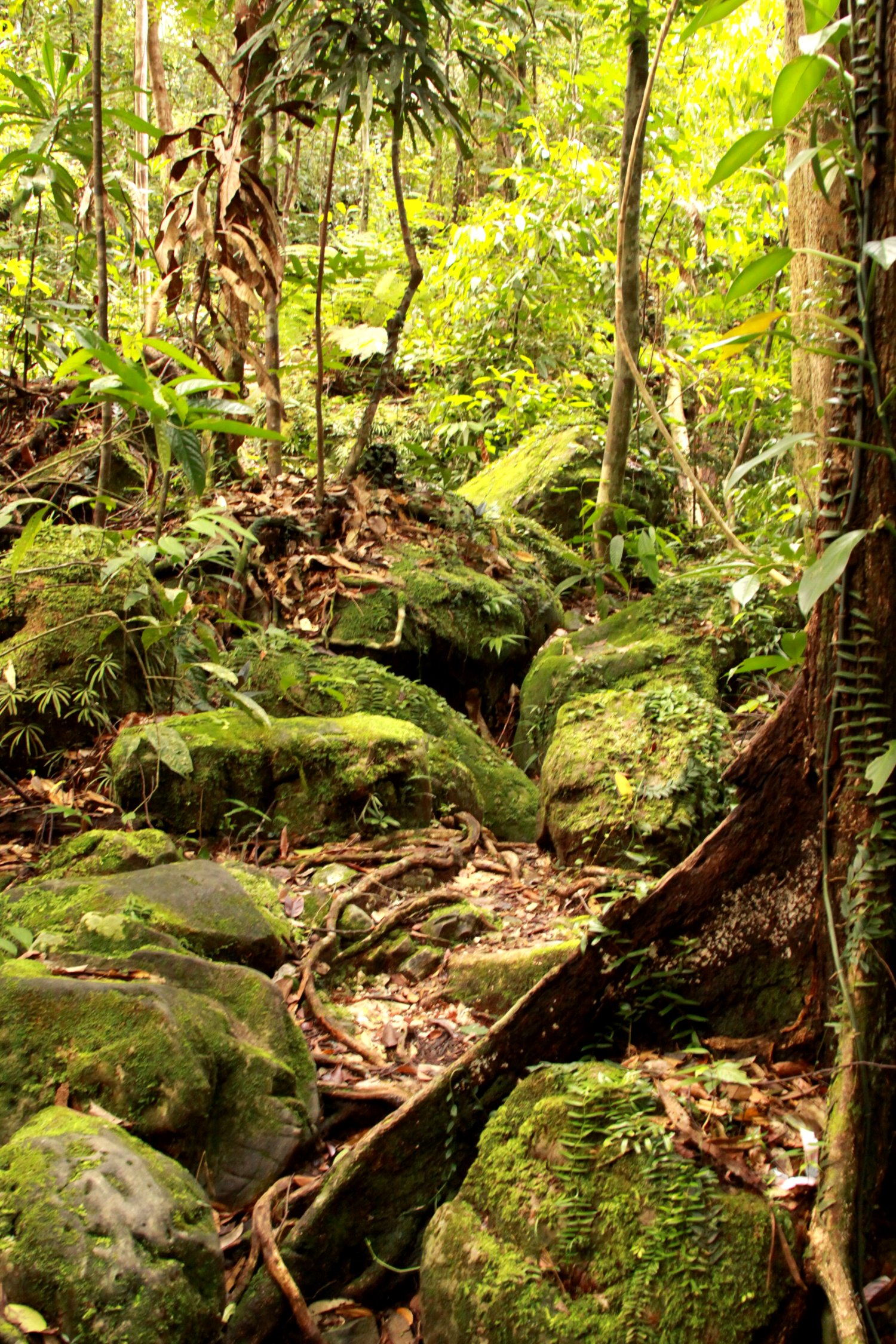
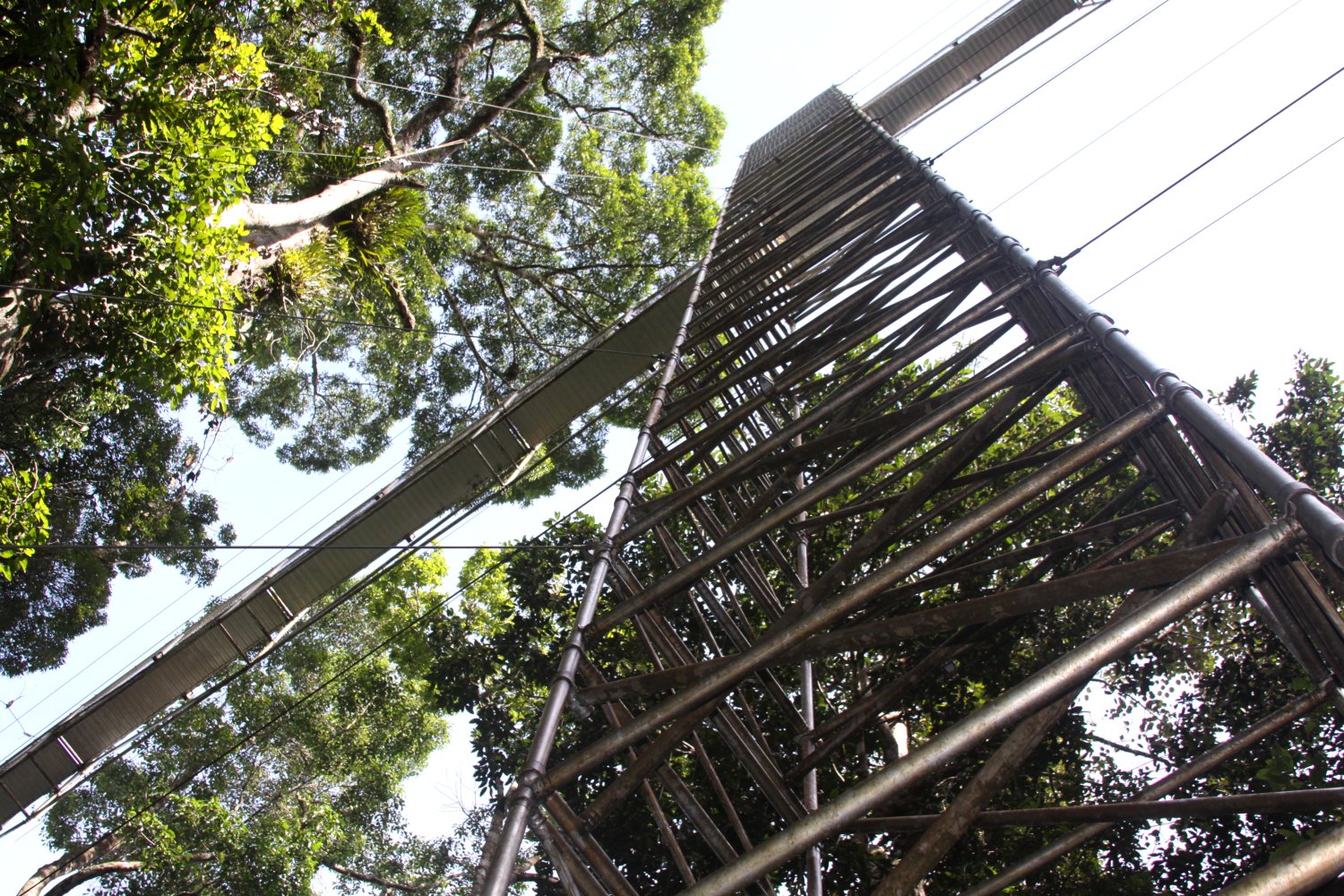
The rain forest “canopy walk” is one of the main highlights of a visit here. This canopy walk towers 42 meters above the forest floor at its high point; it is built entirely of aluminum. In order to reach the canopy walkway one has to climb up a rectangular structure which incorporates a series of almost vertical steps every 7 feet. Its best to be here in the morning as from the top one can see the floating mists above the jungle canopy, be serenaded by the cicadas and hear the occasional cry from a hornbill; you will look down over bright green rain forest in all directions.

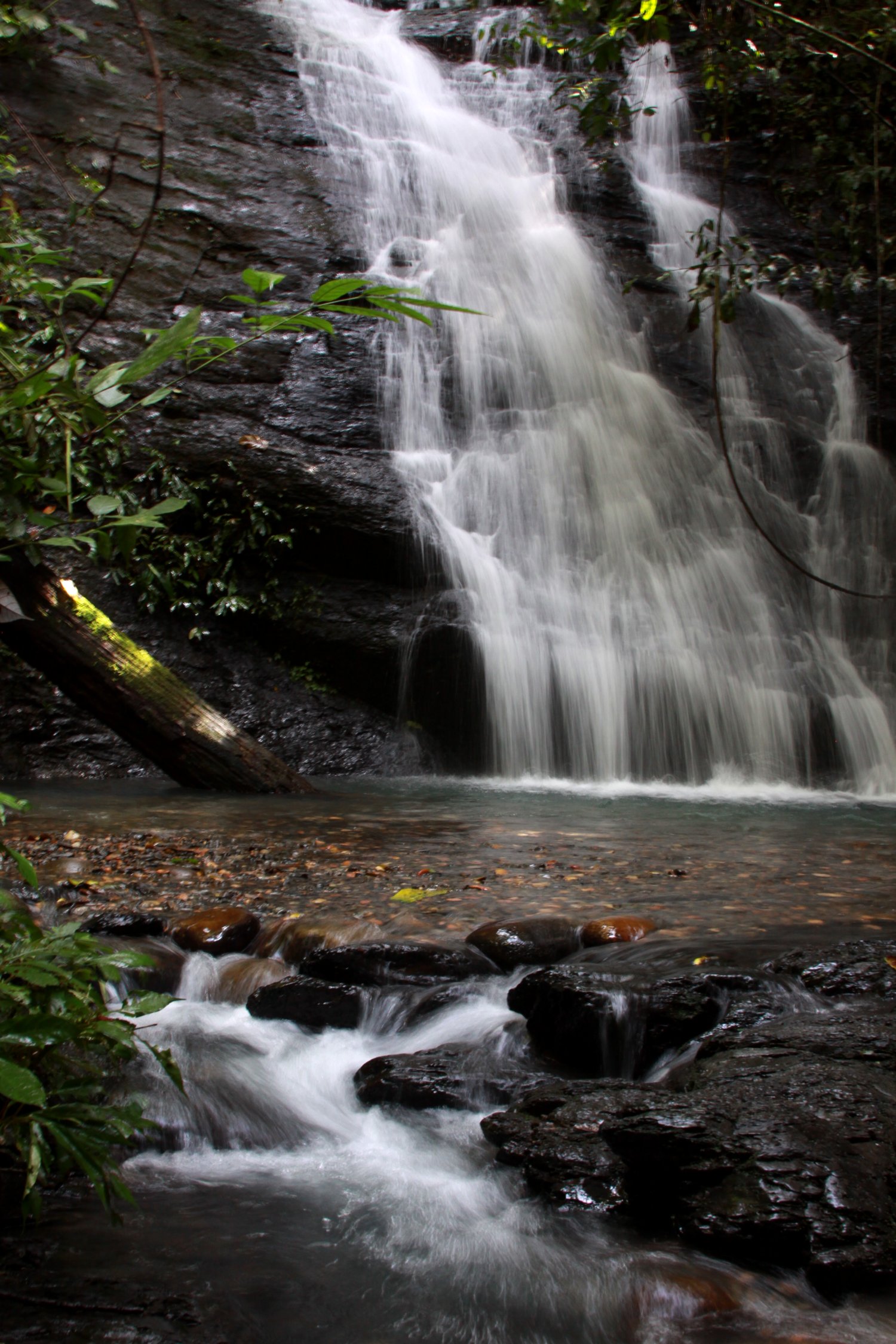
Consider cooling down at the small Hilir Waterfall after your sweat riddled climb up the canopy walk. This waterfall is located a few minutes by boat downstream from the trail head to the canopy walk. After a short hike up the creek you reach the falls, a relaxing place to cool down and ponder the meaning of life as you are surrounded by the verdant greenery of the rain forest.

A “Water Village” is located across from central Bandar Seri Begawan. The homes are on stilts (parking is underneath for each family’s personal boat, if they have one) and all the homes are connected by wooden walkways. This is a safe place to live, neighbors know each other and people go out and leave their homes unlocked all the time. I had the unique opportunity to actually visit the inside of several homes – the rooms are very ornately and colorfully decorated. Adam (owner of Travel Hub Brunei) opened the only guesthouse of its kind in one of the homes here. This is a unique place to experience “local Brunei life” and is an excellent affordable alternative to the main hostel in Bandar Seri Begawan.

Markets

Pasar Gadong Night Market – much of what you will buy at this market is merely one Brunei dollar. As a result its fairly inexpensive to build a filling meal just by stopping at several of the vendors. Not only does this market have a wide variety of foods including some delicious BBQ but also fruits, vegetables and seafood.

Tamu Kianggeh Market is located along a wide canal just in from the main pier in central Bandar Seri Begawan. This market is easily accessible by walking anywhere from central Bandar Seri Begawan. Vendors sell a variety of fruit and vegetables. Boatmen often cruise back and forth in the nearby canal trying to drum up business to go see the Proboscis monkey or take a water village tour.

Lodging, Bandar Seri Begawan

There are several budget as well as higher end hotels in Bander Seri Begawan (the only international chain is a Radisson), but none as cheap as the Pusat Belia Youth Hostel (15 Brunei dollar). Compared to say hostels in Thailand this one is rather empty at times. Sexes are segregated by buildings – 4 to a room. During a recent stay here I was the only one in the room for several nights. A large pool pool is on site, free WiFi can be used near the lobby and each of the rooms has air conditioning as well as small wooden lockers. The staff maintains very sporadic hours and you never know when someone is going to be around. Pusat Belia is extremely centrally located and you can walk to the water village, the main mosque as well as any number of shops. While “youth” is part of its name, during our stay we saw several older couples also staying here.

With the country’s independence coming merely in 1984 Brunei is a fairly young country. This was a protectorate of the UK and is part of the British Commonwealth. As a result English is commonly spoken.

Food is surprisingly inexpensive especially if you eat at local markets or cafes. There is relatively very little agriculture; much of the fruit and vegetables are imported from nearby Malaysia. Gas prices are fixed and usually remain so for a number of years. Drivers are generally courteous and will stop for pedestrians (the reverse of many countries). There is somewhere between 3 and 4 cars per Brunei household and with gas so cheap its not surprising that there are very few taxis. As a result it can be somewhat difficult to get around the country for independent travelers. Good options are to rent a car and create a plan that includes a mix of independent travel and the use of a local tour company.

Brunei offers its citizens an incredible standard of living when it comes to medical needs. Hospital and medical stays are nearly free – for major surgeries the cost of flying one to Singapore and the surgery itself is covered. Weekends in Brunei are not Saturday and Sunday, but rather Friday (day of prayer) and Sunday with Saturday being a regular work day. Alcohol is forbidden although you can take up to 1.5 liters into the country (either overland or by plane). As a result you often find a stream of cars leading to the Malaysia border the evening before a weekend day.

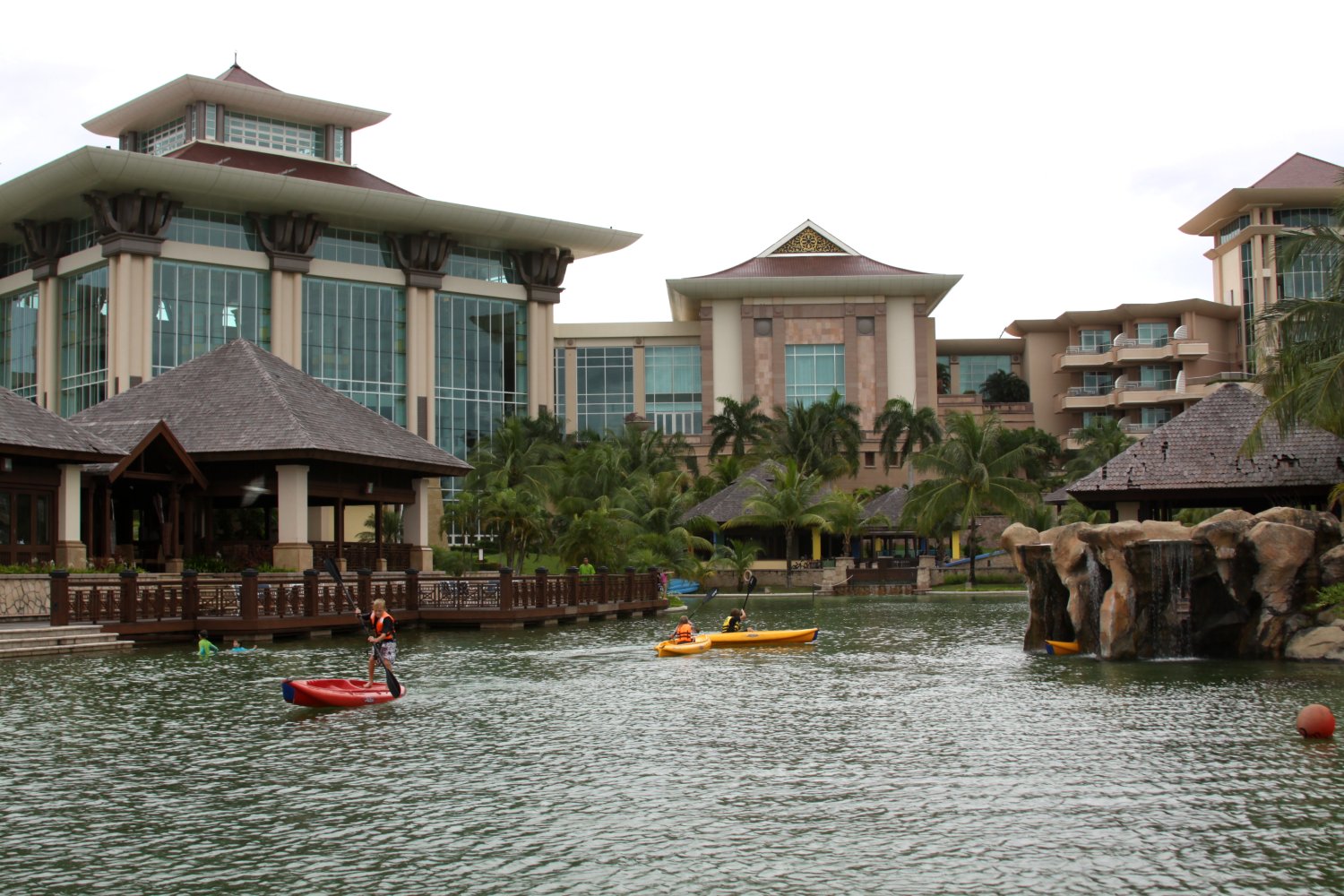
Empire Hotel is Brunei’s only 5-star luxury option and what an option it is. When you walk into the grand entrance an appropriate word is “wow”. When you find out the price, again you may utter “wow”, not because the price is unexpectedly unattainable but because of how reasonably priced this resort is based on what it offers.

4c06n
It is Brunei’s only hotel resort to face the South China Sea. It is accessible via a drive of 20-30 minutes from Bandar Seri Begewan. This hotel is the vision of the Royal Family (originally built as their guesthouse) and was opened less than 10 years at the time of our visit. The inside is truly impressive, glittering with gold, boasting giant columns and a ceiling that has to be a good 35 meters above the first floor. Oh and for the price this is one heck of a value with rooms starting at 250 Brunei dollar / night!

Dining, Bandar Seri Begawan

Chop Jing Chew is not on the tourist circuit and it helps to have a local show you where this is located (can be accessed by car or by boat). This restaurant is extremely popular at breakfast and serves up a variety of good local cuisine. Some of the menu is a series of photos on one of the wall overhangs – simply pick one of the dishes! Bread buns with tasty stuffings are automatically brought to your table when you sit down. Good tea. A number of government employees who work for the Royal Family also often eat here during their lunch time. Jing Chew has several locations within Brunei. The branch we ate at is located at: Simpang 5, No 10, Jalan Gadong in Bandar Seri Begawan. Phone: 2 424 132, 2 448 660

Coffee Bean & Tea Leaf was established in 1963 and their convenient location is in central Bandar Seri Begawan not far from the main mosque. This is well frequented meeting place by both tourists and locals alike. Choose from a variety of coffees including the Brunei latte as well as fruit drinks. WiFi is free.

Fratini’s Restaurant is located in central Bander Seri Begawan overlooking the main river (right where the river boats leave for the water village. This restaurant actually runs a number of branches in Brunei. As a result of this location there are nice views, dining is inside or out. The focus as the name indicates is on Italian food. Phone: +673 2231466

Seri Kandi Cafe (since 1974) is located at Ground Floor No. 18 & 19, Block B in the Q-Lap Complex, Kg. Kiulap. Phone: +673 2460432. This is another restaurant that only locals know about. Good roti and sauces.

aiobx
Tarindak Restaurant is located at Jalan Kota Batu near the waterfront just down from the central part of Bandar Seri Begawan. This is the “best game in town” for the buffet dinner which features mostly local Bruneian cuisine. They are also open for breakfast and lunch. The restaurant is located on the second floor and is part of a complex which promotes local Brunei clothing and crafts (store is also on site).

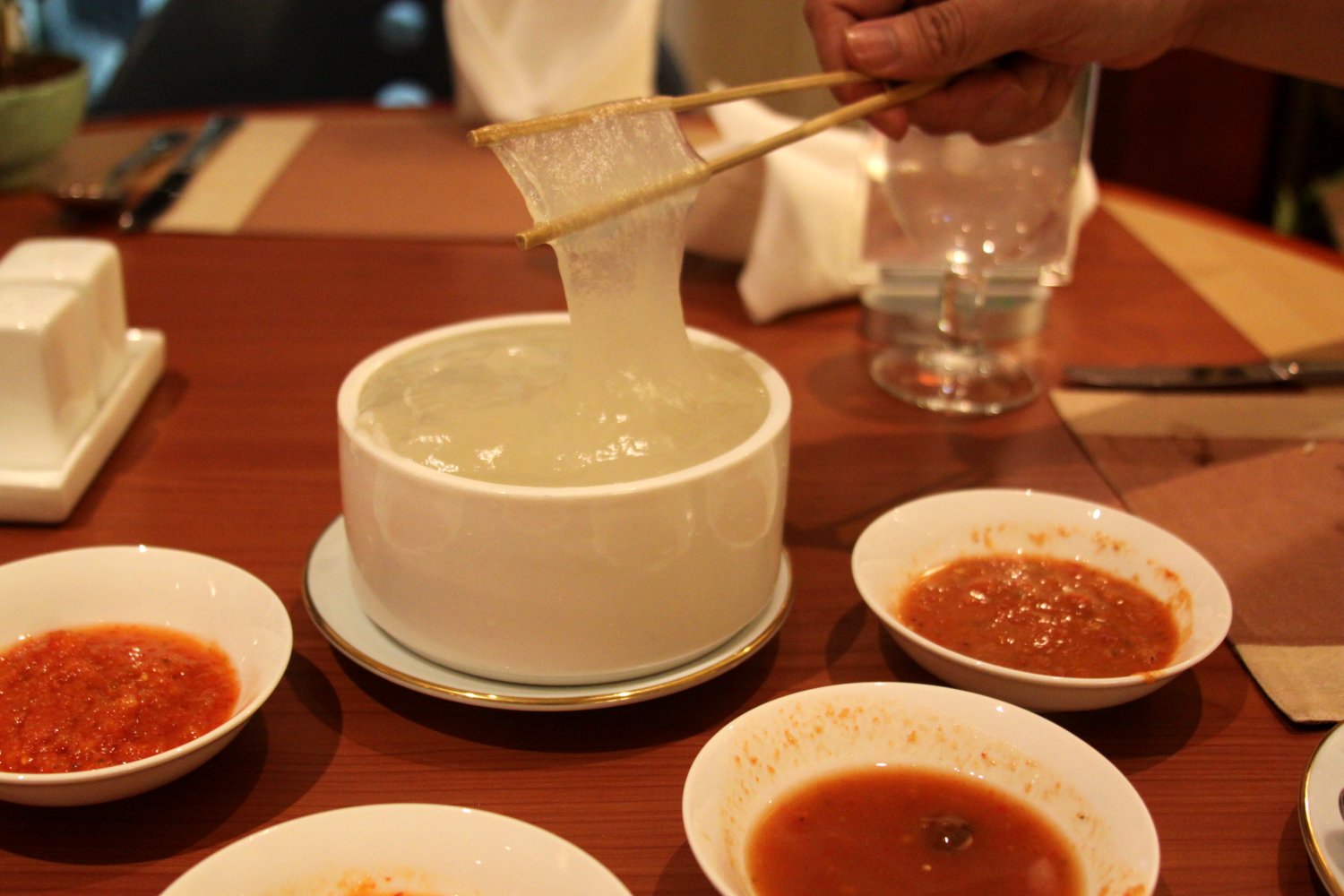
One of the highlights of a dinner here is the Ambuyat, a Brunei staple made from the powder of the pith of the Sago Palm tree. Water is added giving this a consistency of starch. Use 2 chopsticks, dip in and twirl until you have a enough and then dip into any of a number of sauces. This food item is not one you chew, rather you swallow it in one gulp, basking in the spicy afterglow of the delicious sauce. Our favorite is the Durian chili sauce. Besides the main courses, local salads, soups and desserts are available.

Getting There

Brunei is a 2.5 hour flight south from Bangkok Thailand – several carriers operate flights to BWN (Brunei Airport) including Royal Brunei (non stop from a number of locations including select cities in Australia) and the budget carrier Air Asia which stops in Malaysia if you are coming from Thailand. Royal Brunei also offers non stop flights from New Zealand, Dubai, London as well as other major Asian rim cities.

Brunei’s International airport (BWN) is very small and easy to navigate. We usually allow 2 hours before International flights but for a recent mid day International flight, 1 hour prior to the flight was more than enough time!

A large swimming lagoon is made from filtered sea water (so it doesn’t taste salty) complete with its own beaches. A seafood restaurant is located right in the middle of this lagoon.[……]

Read more
Brunei travel guide

Apa khabar’! My name is Trisha, and I’ve traveled and have lead group tours to Brunei several times. In this Brunei travel guide, I will share with you everything I know about Japan travel including budget, things to do, cheap flights, affordable accommodations, what to avoid, and more!

Nestled on the northern coast of Borneo, Brunei Darussalam, or simply Brunei, is a hidden gem that offers a unique travel experience for those seeking a blend of rich culture, pristine nature, and unspoiled tranquility. Often overshadowed by its more prominent Southeast Asian neighbors, this tiny, oil-rich sultanate beckons intrepid travelers with its captivating charm and warm hospitality.

Stepping foot in Brunei, you’ll be immediately struck by the stunning architectural wonders of its mosques, adorned with shimmering golden domes and intricate designs that pay homage to the nation’s Islamic heritage. Delve deeper into the cultural tapestry by exploring the opulent Royal Regalia Museum or strolling through the bustling markets of Bandar Seri Begawan, the country’s vibrant capital.

Beyond the urban landscape, Brunei’s verdant rainforests and unspoiled ecosystems offer a haven for nature enthusiasts and adventure-seekers alike. Embark on an unforgettable journey into the heart of Ulu Temburong National Park, where you can traverse canopy walkways, encounter exotic wildlife, and relish the serenity of the lush Bornean jungle.

Join us as we explore the wonders of Brunei, uncovering its best-kept secrets and revealing the allure of this enchanting destination. Immerse yourself in the fascinating fusion of tradition and modernity that awaits you in this remarkable corner of the world.

🇧🇳 Brunei Travel Guide: quick info

if1ie
Currency

The currency in Brunei is the Brunei Dollar, abbreviated as BND and symbolized as B$. The Brunei Dollar is further divided into 100 cents. Banknotes come in denominations of 1, 5, 10, 20, 50, and 100 B$, while coins are available in denominations of 1, 5, 10, 20, and 50 cents. Interestingly, the Brunei Dollar is interchangeable with the Singapore Dollar at a 1:1 ratio, meaning both currencies can be used in either country. This interchangeability is due to a Currency Interchangeability Agreement between Brunei and Singapore that has been in place since 1967.

Power Plug

In Brunei, the electricity sockets used are of Type G. These sockets are the same as those used in the United Kingdom, Malaysia, and Singapore. They are designed for three-prong plugs with rectangular pins, and the standard voltage is 240V with a frequency of 50Hz. If you are traveling to Brunei from a country with a different type of plug or voltage, you may need to bring a travel adapter or a voltage converter to ensure compatibility with your electronic devices.

Visa

Whether or not you need a visa to enter Brunei depends on your nationality and the purpose of your visit. Citizens of certain countries, including the United States, the United Kingdom, Canada, Australia, New Zealand, and most European Union member states, are allowed visa-free entry for short stays, typically ranging from 14 to 90 days. However, the exact duration of visa-free stays varies depending on your nationality.

Wifi

In Brunei, internet connectivity and Wi-Fi speeds have improved over the years. In urban areas, such as Bandar Seri Begawan, you can expect reasonably fast Wi-Fi at hotels, restaurants, cafes, and shopping centers. However, the internet speeds may not be as fast as those in more developed countries or major cities in other parts of the world.

In rural areas or remote locations, the Wi-Fi coverage and speed can be less reliable and slower. If you require a consistent and fast internet connection during your stay in Brunei, you may want to consider purchasing a local SIM card with a data plan from one of the local mobile operators, such as DST or Progresif. This will allow you to have access to mobile internet, which can be helpful in areas with limited Wi-Fi availability or slow connections.

Language

The official language of Brunei is Malay, which is spoken by the majority of the population. Malay, or Bahasa Melayu, is a member of the Austronesian language family and is used in government, education, and media throughout the country. Brunei Malay, a distinct dialect, is spoken by locals and may have some differences in vocabulary and pronunciation compared to Standard Malay.

In addition to Malay, several other languages are spoken in Brunei due to the country’s ethnic diversity. These include Chinese dialects such as Hokkien, Hakka, and Cantonese, as well as indigenous languages like Iban, Dusun, and Tutong.

English is also widely spoken and understood in Brunei, particularly in urban areas and tourist centers. English is taught as a second language in schools and is often used in business, commerce, and official matters. Most signs and official documents are written in both Malay and English, and many Bruneians are proficient in English, making communication relatively easy for travelers from English-speaking countries.

Safety

Brunei is generally considered a safe country for travelers. The crime rate in Brunei is relatively low, and incidents of violent crime against tourists are rare. The country is politically stable, and the risk of civil unrest or terrorism is minimal compared to many other regions in the world.

However, as with any destination, it is essential to exercise common-sense precautions to ensure your safety during your stay. Petty crimes, such as pickpocketing and bag-snatching, can occur, particularly in crowded or touristy areas. To minimize risk, be aware of your surroundings, avoid displaying valuable items, and keep your belongings secure.

Additionally, Brunei has strict laws and regulations, particularly regarding drug offenses, which carry severe penalties, including the death penalty for trafficking. It is crucial to familiarize yourself with local laws and customs to avoid inadvertently violating any rules or regulations.

In terms of health and safety, Brunei has a well-developed healthcare system, and the risk of contracting infectious diseases is relatively low. However, it is always advisable to follow standard precautions, such as staying up-to-date on vaccinations, practicing good hygiene, and using insect repellent to protect against mosquito-borne diseases like dengue fever.

Brunei travel tips for first-timers

ihgux
Respect local customs and religion: Brunei is an Islamic country, and it is essential to be mindful of local customs and religious practices. Dress modestly, particularly when visiting mosques or religious sites, and refrain from public displays of affection. Be aware of the local prayer times, as some establishments may close temporarily for prayers.

Try local cuisine at night markets: Brunei offers a unique blend of Malay, Indian, and Chinese culinary influences. Visit the Gadong Night Market or Tamu Kianggeh for a taste of authentic Bruneian dishes, such as ambuyat, nasi katok, or satay.

Visit Kampong Ayer, the “Venice of the East”: This historic water village in Bandar Seri Begawan is home to stilt houses, mosques, and schools built on the Brunei River. Take a water taxi to explore the village, and don’t forget to visit the Kampong Ayer Cultural and Tourism Gallery to learn about the area’s rich history.

Discover Brunei’s shipwreck diving sites: Brunei has several shipwreck diving sites worth exploring, such as the Cement Wreck and the Australian Wreck. With clear waters and an abundance of marine life, these sites offer fascinating diving experiences for both beginners and experienced divers.

Take note of the alcohol restrictions: Brunei is a dry country, and the sale of alcohol is prohibited. Non-Muslim visitors can bring a limited amount of alcohol for personal consumption, but be sure to declare it at customs upon arrival.

Be prepared for limited public transportation: Public transportation options in Brunei are limited, with infrequent bus services and no trains. Consider renting a car or using taxis and ride-hailing apps like Dart to get around more efficiently.

Visit the Oil and Gas Discovery Centre: Gain insight into Brunei’s oil and gas industry by visiting the interactive Oil and Gas Discovery Centre in Seria. The center features hands-on exhibits, multimedia displays, and educational programs that showcase the science and technology behind the industry that fuels the nation’s economy.

Learn about Brunei’s biodiversity at the Kuala Belalong Field Studies Centre: Located in Ulu Temburong National Park, the Kuala Belalong Field Studies Centre is dedicated to research and education on Brunei’s diverse ecosystems. Visitors can participate in guided tours and workshops to learn about the flora and fauna of Borneo’s rainforests.

Attend a traditional Bruneian wedding: If you have the opportunity to attend a traditional Bruneian wedding, don’t miss the chance to experience the customs, rituals, and lavish celebrations that accompany these events. Be sure to dress appropriately and follow any etiquette guidelines provided by your hosts.

Explore Brunei’s pristine beaches: While Brunei may not be famous for its beaches, the country boasts several unspoiled stretches of sand that are worth exploring. Visit beaches like Muara Beach, Serasa Beach, or Pantai Meragang for a quiet escape from the bustling city life.

Best time to visit Brunei by month

f0iw4
January in Brunei

Traveling to Brunei in January offers visitors the chance to experience the country during its northeast monsoon season. This period typically lasts from November to March and is characterized by more frequent rainfall than the rest of the year. While this may not seem like the ideal time to visit, there are still some advantages and unique experiences during this month.

The weather in January tends to be warm and humid, with average temperatures ranging from 23°C (73°F) to 31°C (88°F). Despite the increased likelihood of rain, the showers are usually short and heavy, often occurring in the late afternoon or evening, leaving much of the day dry and suitable for outdoor activities. When venturing out, it is essential to be prepared for sudden downpours by carrying an umbrella or raincoat.

One of the benefits of visiting Brunei in January is the potential for fewer tourists, which can lead to a more authentic and less crowded experience at popular attractions. Moreover, the lush vegetation flourishes during the rainy season, making it an excellent time to explore Brunei’s rainforests and national parks, such as Ulu Temburong National Park.

February in Brunei

Traveling to Brunei in February provides visitors with an opportunity to experience the country during the tail-end of the northeast monsoon season. While rainfall remains relatively frequent during this month, the weather gradually begins to improve as the dry season approaches. Despite the occasional rain, there are still plenty of opportunities to explore the beautiful landscapes and cultural attractions that Brunei has to offer.

February’s temperatures in Brunei are consistently warm and humid, with average highs of around 30°C (86°F) and lows of approximately 23°C (73°F). While rain showers can still occur, they tend to be short and heavy, typically taking place in the late afternoon or evening. This leaves the majority of the day suitable for outdoor activities, but it’s wise to carry an umbrella or raincoat as a precaution against sudden downpours.

One advantage of visiting Brunei in February is the possibility of encountering fewer tourists, which can lead to a more authentic and less crowded experience at popular attractions. Additionally, the abundant rainfall during this season ensures that the country’s rainforests and national parks, such as Ulu Temburong National Park, remain lush and vibrant.

March in Brunei

March is a great time to visit Brunei – temperatures are mild, with an average of around 25°C (77°F) during the day. March marks the beginning of the dry season, meaning days are generally sunny and pleasant.

When it comes to festivals, visitors may be lucky enough to experience the titah ceremony, in which the Sultan reads out his new commands for the year at the Istana Darul Hana Palace. Aside from this unique experience, there are also two Islamic holidays celebrated in Brunei – Maulidur Rasul and Isra Mi’raj – both of which involve processions and other festivities.

April in Brunei

April is a wonderful time to visit Brunei – temperatures are a pleasant 27°C (81°F) during the day, making it perfect for exploring the outdoors. April also marks the beginning of the holy month of Ramadan, meaning many food stalls and certain establishments close until sunset.

Festivities-wise, the Water Village Festival takes place in April, celebrating the traditional stilt houses and culture that’s so unique to this country. Many other festivities take place throughout Brunei during this time as well, such as fireworks displays on national holidays and religious celebrations like Isra Mi’raj.

May in Brunei

May is a lovely time to visit Brunei – temperatures are a pleasant 29°C (84°F) during the day, making it ideal for exploring the outdoors. May marks the end of Ramadan, so expect plenty of feasting and festivities around this time.

Festivities-wise, visitors can also witness the ceremonial titah ceremony at Istana Darul Hana Palace, in which the Sultan reads out his new commands for the year. In addition to this unique experience, there are also several other religious celebrations held throughout Brunei in May, such as Isra Mi’raj and Nuzul Al-Quran.

Overall, May is an excellent time to visit Brunei – perfect for those looking to take advantage of warm weather and explore all sides of this beautiful country.

June in Brunei

June is an ideal time to visit Brunei – temperatures are comfortably warm at 31°C (88°F) during the day. June also marks the beginning of the annual Sungei Liang Festival, which celebrates Brunei’s traditional boats and seafaring culture with parades, performances, cultural dances and activities.

Other festivities taking place throughout Brunei in June include Hari Raya Aidil Fitri and His Majesty’s Golden Jubilee. The latter event commemorates His Majesty Sultan Hassanal Bolkiah’s 50th year on the throne – it involves grand parades, fireworks displays and many other fun activities for visitors to enjoy.

Overall, June is an excellent time to visit Brunei – perfect for those looking to soak up some sunshine while experiencing all of the amazing sights that this wonderful country has to offer.

July in Brunei

July is an ideal time to visit Brunei – temperatures are hot and humid, reaching up to 33°C (91°F) during the day. For visitors looking for some respite from the heat, there are many air-conditioned attractions such as museums, galleries, shopping centres and cinemas.

One of the main festivities taking place in Brunei during July is Hari Raya Aidiladha. This religious holiday celebrates Prophet Ibrahim’s willingness to sacrifice his son for God and is marked by animal sacrifices, prayers and feasts. There are also several other cultural activities held throughout Brunei during this time of year, such as dragon boat races, Regatta Lepas Labuan Races and various festivals in Temburong district.

Overall, July is an excellent time to visit Brunei – perfect for those looking to get away from the hustle and bustle of everyday life while enjoying all that this wonderful country has to offer.

August in Brunei

August is an ideal time to visit Brunei – temperatures are hot and humid, reaching up to 33°C (91°F) during the day. It’s also worth noting that August is the beginning of the monsoon season in Brunei, so visitors should be prepared for rain and thunderstorms.

During this period visitors can experience a plethora of festivities including Ramadan, National Day and Royal Birthday Celebrations. The latter event commemorates His Majesty Sultan Hassanal Bolkiah’s 72nd birthday – it involves grand parades, fireworks displays and many other fun activities for visitors to enjoy.

Overall, August is an excellent time to visit Brunei – perfect for those looking to both escape from sweltering heat and get a closer look at this amazing country’s culture.

September in Brunei

September is an ideal time to visit Brunei – temperatures are warm and pleasant, typically ranging between 22°C (72°F) and 34°C (93°F). It’s also worth noting that this month marks the peak of the monsoon season in Brunei, so visitors should be prepared for rain and thunderstorms.

September marks the end of Ramadan and celebrates Hari Raya Aidilfitri, a religious holiday which commemorates Prophet Muhammad’s journey from Mecca to Medina. Other cultural events taking place during this time include National Day Celebrations, royal birthdays, and international competitions such as Regatta Lepas Labuan Race.

Overall, September is an excellent time to visit Brunei – perfect for both those looking to enjoy some cooler weather and those wanting to immerse themselves in local culture.

October in Brunei

October is an ideal time to visit Brunei – temperatures are cool and comfortable, usually ranging between 21°C (70°F) and 33°C (91°F). As with the previous months, visitors should be prepared for rain and thunderstorms due to the monsoon season.

October marks several important festivals in Brunei, including Hari Raya Haji, a religious holiday commemorating Prophet Abraham’s willingness to sacrifice his son Isaac; Chinese Mooncake Festival; and Deepavali, a festival of lights celebrating knowledge over ignorance. There are also plenty of cultural events taking place during this period such as National Day Celebrations and international sailing competitions.

Overall, October is an excellent time to visit Brunei – perfect for those seeking cooler weather and wishing to explore local culture.

November in Brunei

November is a great time to visit Brunei – temperatures are mild and comfortable, typically ranging between 20°C (68°F) and 32°C (90°F). As with the other months of the monsoon season, visitors should be prepared for rain and thunderstorms.

November marks several important festivals in Brunei, including Chinese Mooncake Festival and Deepavali, a festival of lights celebrating knowledge over ignorance. There are also plenty of cultural events taking place during this period such as National Day Celebrations and international sailing competitions.

Overall, November is an excellent time to visit Brunei – perfect for those seeking mild weather and wishing to explore local culture.

December in Brunei

December is a great time to visit Brunei – the temperature is mild and pleasant, usually around 21°C (70°F) to 30°C (86°F). The monsoon season is still in effect so visitors should be prepared for rain and thunderstorms.

December marks several important festivals in Brunei, including Hari Raya Haji, which commemorates Prophet Abraham’s willingness to sacrifice his son Isaac; Chinese Mooncake Festival; and Deepavali, a festival of lights celebrating knowledge over ignorance. There are also plenty of cultural events taking place during this period such as National Day Celebrations and international sailing competitions.

Overall, December is an excellent time to visit Brunei – perfect for those seeking mild weather and wishing to explore local culture.

Getting around Brunei

8ocrv
Getting around Brunei can be an interesting experience due to the country’s relatively limited public transportation options. However, there are several ways to explore the nation, each with its own advantages and drawbacks.

Public buses: Brunei has a public bus system, primarily concentrated in the capital city, Bandar Seri Begawan. Buses are an affordable means of transportation, but the routes and schedules can be infrequent and challenging to navigate for visitors. While they can be a[……]

Read more
Vietnamese tourist hotspots that glowed on the global map

The newspaper releases an annual list of 52 best travel destinations every year. However, due to Covid-19 travel restrictions, it termed this year’s version “52 places to love in 2021” and instead of using recommendations from travel writers, asked readers to write about a place of special significance. The paper then chose 52 destinations to highlight from a list of more than 2,000.

Con Dao, notorious once as “hell on earth” by virtue of inhuman treatment of prisoners in a prison built by the French colonialists, continued its notoriety under the American-backed regime during the Vietnam War.

The archipelago has become an increasingly popular tourist in recent years, prompting authorities to expand the local airport to cater to growing travel demand. Photo by VnExpress/Tam Linh

Vietnamese tourist hotspots that glowed on the global map this year
In February, Phong Nha-Ke Bang, a UNESCO heritage site, was chosen among the world’s 25 best national parks by TripAdvisor readers.

“The karst formation of Phong Nha-Ke Bang National Park has evolved since the Paleozoic some 400 million years ago and so is the oldest major karst area in Asia,” the world’s most popular travel guide and review website said.

The Phong Nha-Ke Bang Park was recognized as a global heritage site by the UNESCO in 2003. With over 3,000 caves and grottoes, it is often called the “Kingdom of Caves.”

However, only 30 caves, including Son Doong, the world’s largest cave, are now open to visitors. The province is limiting tourism activities in the area to avoid commercial overexploitation. Photo courtesy of Ryan Deboodt

Vietnamese tourist hotspots that glowed on the global map this year
In March, Hanoi and Da Lat were included in a list of 14 best Asian spots to watch spring flowers by Hong Kong-based South China Morning Post.

“The Nhat Tan Village in the northwest of Hanoi has a unique dark pink shade of cherry blossom trees curated by local gardeners,” the SCMP noted, introducing the once famous flower village that enters its busiest season early January.

Located in Tay Ho District’s Nhat Tan Ward, the village, Hanoi’s peach tree hub, has become a cultural and tourism hotspot of Tet, the Lunar New Year festival. Photo by VnExpress/Giang Huy

Vietnamese tourist hotspots that glowed on the global map this year
SCMP also mentioned the Central Highlands town of Da Lat as “being exceptionally beautiful in spring.”

Da Lat has long been known as ‘a city of flowers’ for its horticultural industry. Photo by VnExpress/Tran Quang Anh

In April, Dam Trau on Con Dao Island was named among 25 best beaches in the world by U.S. travel site Travel+Leisure.

The American site said that due to its proximity to the airport, commercial flights fly thrillingly close, giving swimmers a chance to watch planes take off and land at close quarters.

Dam Trau Beach is situated at the edge of the Con Dao National Park and near the Co Ong Airport, four kilometers from Con Dao’s downtown area in Ba Ria-Vung Tau Province. Photo by Shutterstock/Jimmy Tran

KiĂȘn Giang lĂȘn káșż hoáșĄch tiĂȘm chá»§ng ở PhĂș Quốc, chuáș©n bị cho thĂ­ điểm đón  khĂĄch quốc táșż - Tổng cỄc Du lịch
Also in April, Phu Quoc Island in the Mekong Delta province of Kien Giang was named among the world’s 15 best islands to retire this year by Irish publication International Living, which based its choice on beautiful beaches, low cost of living and rich culture.

Phu Quoc, dubbed the ‘Pearl Island’, became the country’s first island city early this year. The once sleepy island shot to global fame after building an international airport in 2012 and rolling out a 30-day visa-free policy for foreigners in 2014. Photo by VnExpress/Khanh Tran

Vietnamese tourist hotspots that glowed on the global map this year
In May, Hai Van mountain pass between Thua Thien-Hue Province and Da Nang City in central Vietnam was listed as the world’s fourth most beautiful drive by American site Travel+Leisure.

With over 55,000 pictures tagged #HaiVanPass on Instagram, the world’s largest photo sharing network, the pass ranked behind the Great Ocean Road (Australia), Big Sur (California) and Jebel Hafeet (United Arab Emirates).

Crossing over a spur in the Truong Son mountain range, it lies 500 m above sea level. Its name, which literally means “cloud sea”, refers to the mist that frequently rises from the ocean, reducing visibility. Photo by Shutterstock/Jimmy Tran

In June, the old Hoi An Town was ranked eighth in the annual list of 10 cheapest tourist destinations in the world drawn up by the Post Office, the U.K.’s leading currency exchange agency.

The ranking was based on the minimum required budget for eight staple items that holidaymakers are likely to purchase – a cup of coffee, a pint of beer, a can/bottle of Coca-Cola, a bottle of water, sun cream, insect repellent, and a three-course dinner for two with a bottle of wine at 46 tourist destinations worldwide.

The average cost in Hoi An for these items was s ÂŁ58.39 ($80.51) per day, the agency said. Photo by VnExpress/Do Anh Vu

Vietnamese tourist hotspots that glowed on the global map this year
In July, HCMC was named among the world’s 100 greatest places by the Time magazine. The list also featured Hanoi and Phu Quoc.

The magazine said its third annual World’s Greatest Places list was “curated from editor and expert nominations from around the world” and that “the list recognizes 100 unique destinations that are offering visitors an extraordinary experience that’s unlike any other.” Photo by VnExpress/Tran Ngoc Dung

In August, British travel publication Rough Guides listed the Cai Rang floating market in Mekong Delta’s Can Tho City among the world’s 19 must-visit food hubs.

Cai Rang is about five kilometers from downtown Can Tho and 30 minutes by boat from Ninh Kieu Wharf. From very early in the morning, traders gather to buy fresh vegetables and fruit to resell elsewhere. The most crowded time is from 5:30 to 6:30 a.m. when many boats clog the waterway. Photo by VnExpress/Le Dang

Vietnamese tourist hotspots that glowed on the global map this year
In September, American new site BuzzFeed included the UNESCO-recognized Cat Ba biosphere reserve in the northern port city of Hai Phong on its list of 11 must-visit national parks.

Located 45 kilometers to the east of Hai Phong and just 25 kilometers from world-famous Ha Long Bay, the Cat Ba National Park, established in 1986, is home to a diverse flora and fauna that has won it increasing tourism popularity in recent years.

In 2003, the Cat Ba National Park was recognized by UNESCO as a world biosphere reserve in order to protect the multiple terrestrial and aquatic ecosystems as well the diverse plant and animal life found on the island. Photo by VnExpress/Nguyen The Hung

Vietnamese tourist hotspots that glowed on the global map this year
In October, Cuc Phuong, a popular trekking destination near Hanoi, was named Asia’s leading national park at the 2021 World Travel Awards.

It beat competitors like the Chitwan National Park in Nepal, Kinabalu and Taman Negara National Park in Malaysia, Komodo National Park in Indonesia, and Minneriya National Park in Sri Lanka to claim the honors.

Cuc Phuong, Vietnam’s first national park, is located in the Tam Diep mountain range that runs across the provinces of Ninh Binh, Hoa Binh and Thanh Hoa.

The park stretches 22,408 hectares and is mainly covered by tropical rainforests. Photo by VnExpress/Kieu Duong

Vietnamese tourist hotspots that glowed on the global map this year
In November, Travel+Leisure mentioned Ban Gioc in Cao Bang Province in its list of 21 most beautiful waterfalls in the world.

“In a stunning show of power and grandeur, water flows endlessly through pools, down tiers, and over cliffs in a unique horseshoe shape,” it said.

Ban Gioc encompasses a series of waterfalls on the Quay Son River in Trung Khanh District and is part of the UNESCO-recognized Non Nuoc Cao Bang geopark whose fossils, sediments, volcanic rocks, and karst landscapes are believed to be 500 million years old. Photo by VnExpress/Tran Bao Hoa

Vietnamese tourist hotspots that glowed on the global map this year
In December, Mui Ne, a popular resort town in the south central province of Binh Thuan, ranked ninth on the list of the world’s 100 best beach destinations, thanks to cheap hotel rates and sunny weather.

The list was compiled by London-based luggage storage company Bounce, which analyzed the world’s 250 most popular beach destinations from a variety of travel sources.

Each spot was evaluated based on a number of factors including water temperature, weather, average hotel price, number of restaurants and bars, and number of Instagram hashtags. Photo by Shutterstock/Jimmy Tran[……]

Read more
6 Tops Tips for Travelling the Philippines

Boats, Sumillion Island
Travelling to the Philippines is something that everybody should put on their bucket list. I have written down my 6 top tips for travelling the Philippines that I personally believe will help improve your experience.

My best tips include ways to avoid spending unnecessary money, how to plan for Philippine transport, and other helpful things I picked up along the way.

So here it is, my 6 top tips for travelling the Philippines.

Number 1: Leave Yourself an Entire Day to Travel to Each Destination.


We used all types of public transport in the Philippines and a number of factors can affect their punctuality. The main reason for delays is down to the typhoons. We boarded 2 ferries throughout our trip, both of which were cancelled for up to 24 hours, and our flight to Boracay was delayed by 6 hours. Buses that are supposed to take 3 hours actually take 6
 the list goes on.

Just bare in mind that things go wrong!

If they don’t, then hey! you’ve gained yourself a couple of hours – Bonus.

Number 2: Don’t Book Your Accommodation More Than a Day in Advance!

6 most helpful tips for travelling the Philippines
Okay, so if you are looking into a place and everything is booking up, you might make an exception. Booking accommodation in Boracay beforehand is recommended as it is usually really busy with tourists, but hear me out. In general, I would advise that you don’t book anything in advance.

The main reason for this is based on Number 1, things go wrong. If your transport is delayed, you will need to make new arrangements and find a new place to stay on the spot. This also means that the accommodation you have already booked is going to go to waste.

The amount of money that we would have lost if we would have booked our accommodation beforehand is insane! Our plan changed a total of 3 times throughout our trip due to delays and cancellations. We actually re-routed the whole thing at one stage.

The delays didn’t just affect the one day, but they pushed back the whole trip. Don’t book too far in advance!

Number 3: Note That Domestic Flights Aren’t as Cheap as You Would Think

6 most helpful tips for travelling the Philippines
When we planned our trip, we estimated a total cost and tried our hardest to stick to it. The domestic flight prices changed and we paid more than what we had hoped. Booking the flights in advance does save you money, however, the issue is of course that things change!
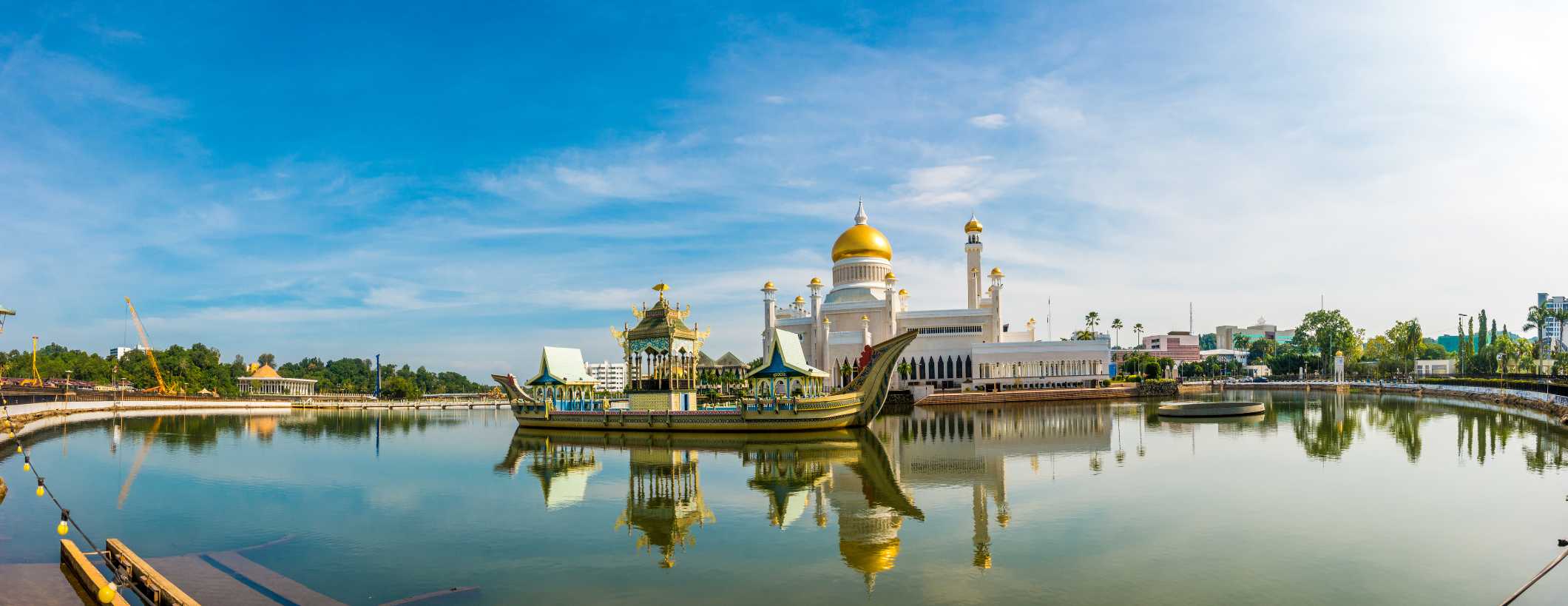
It is a tricky one to get around because if you book your flight in advance, other plans may fall through and you could end up missing out on an amazing place. If you wait, you could end up paying double.

My honest advice would be to wait and go with the flow. Overall, we did save money by travelling the way we did.

Another issue for anyone travelling with luggage
 Philippine Airlines will only accept 10kg checked luggage and there is no option to pay for an upgrade. This means that you have to fly with more expensive airlines.
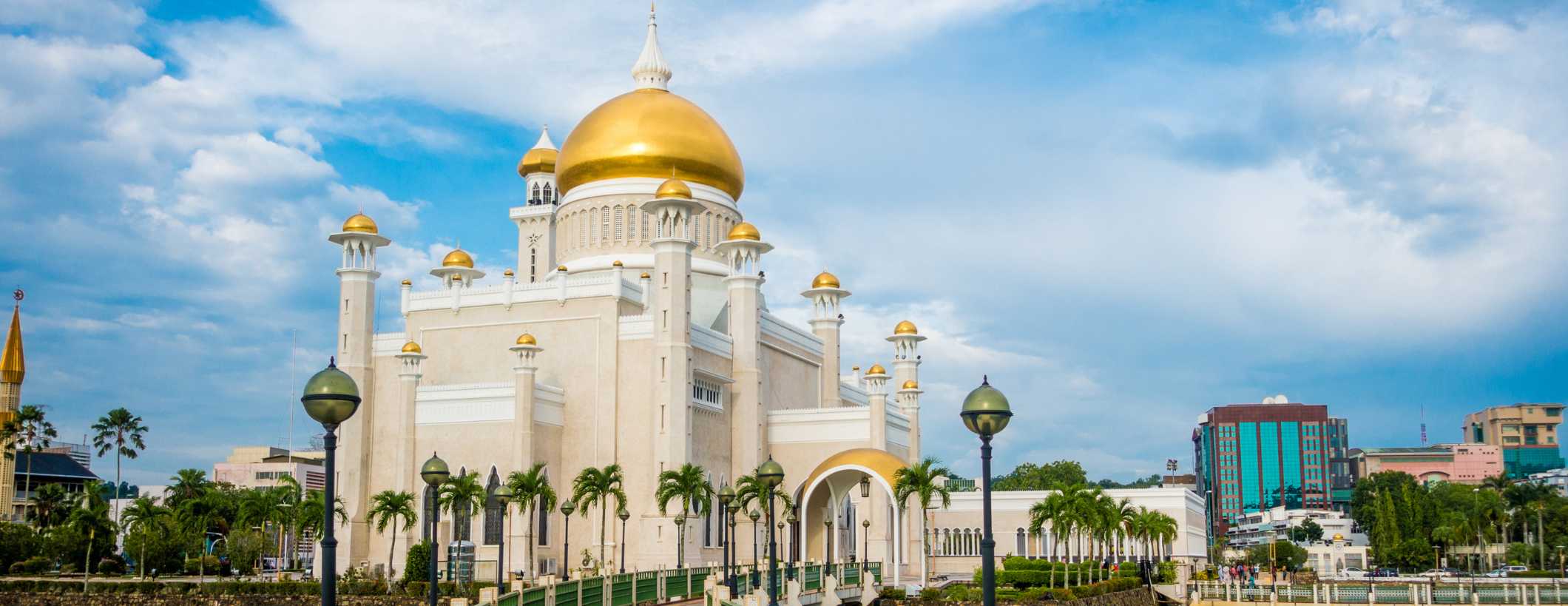
Cebu Pacific and Air Asia are your two main contenders – although be warned, Air Asia get delayed, A LOT!

If you can travel with a limited amount of luggage, I would highly recommend that you do, you will save even more money and hassle!
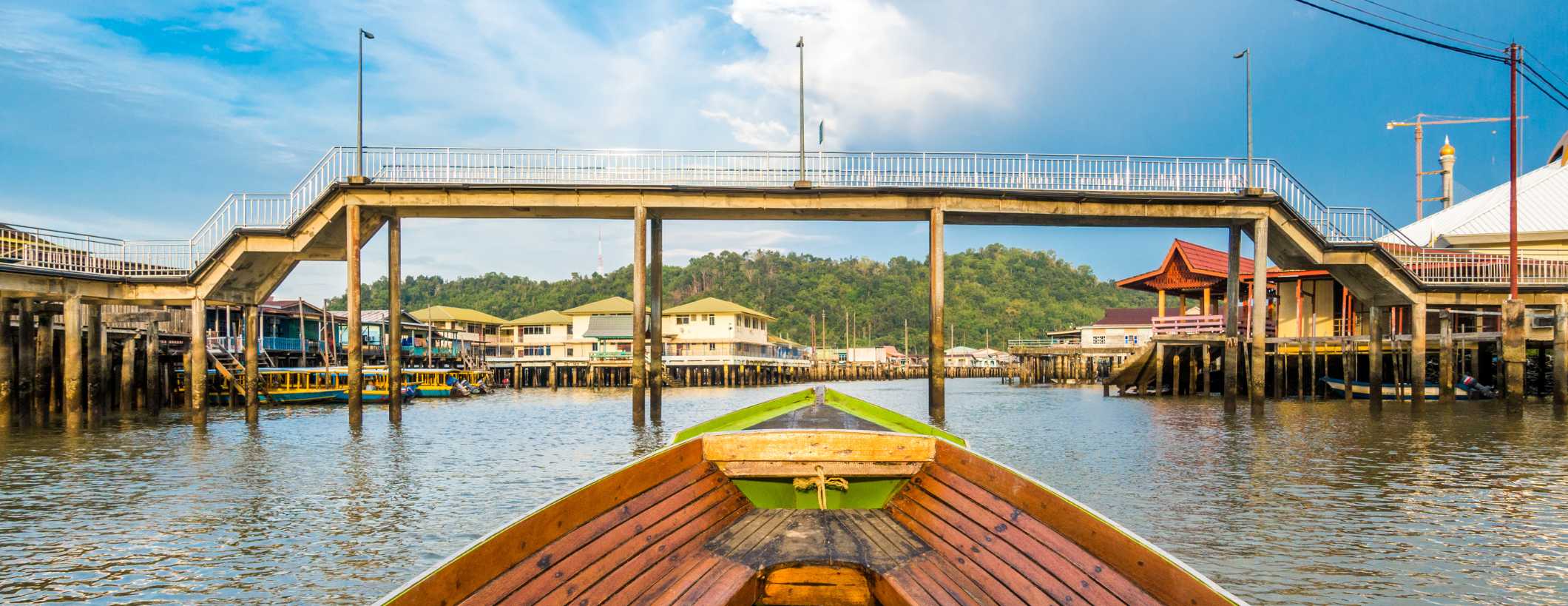
Number 4: Choose Your Tours and Make a Deal

6 most helpful tips for travelling the Philippines
The recommended amount of tours to do in both Coron and El Nido is 2 in each. Buy the tours at the same time, with the same company and save yourself some pennies! It’s like anywhere you go, the more you buy, the cheaper they are.
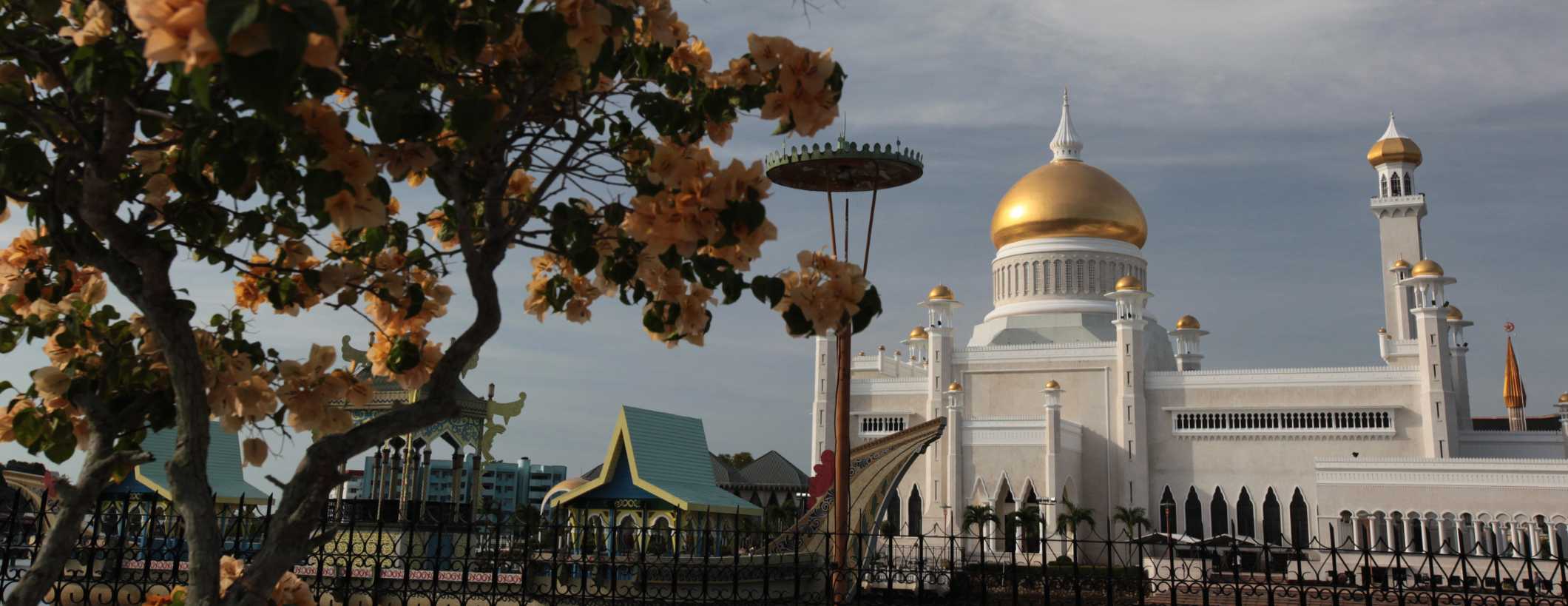
You can also try make a deal such as getting a snorkel and mask thrown in for free. In Coron, you have to pay 100php extra for the snorkels (unless you get a discount) but in El Nido they are already included in the tour.

Make sure you don’t negotiate a deal that is already included (like we managed to do haha!). Once we were on the boat, we realised that EVERYBODY was being handed a mask and snorkel and that we had been mugged off.

Number 5: Tricycles Are Your Main Form of Transport Within the Small Towns and Prices Vary Depending on Where You Are

6 top tips for travelling the Philippines
The cheapest places were in both Puerto Princesa and Coron at only 10 php a head (0.25AUD/0.14p). The locals will try and charge you up to 150 php in some places, especially when arriving in to a port or an airport.

Let them know that you are aware it should only be 10 php and keep walking. They’ll either run after you and take you for the correct price, or you’ll make your way to the main roads and find a tricycle there.

In El Nido they were a little bit more expensive and charged 50 php from the ferry port to our hotel. Just be smart and settle for a fair price – the locals are just there to make a living.

TIP! Be aware that tricycles to attractions (such as the hot springs in Coron, or Nacpan beach in el Nido) are a lot more expensive and cost around 150 php. You’ll understand why once you get on the dirt roads in one of them things!

Number 6: Buy Aqua Shoes for El Nido and Coron Tours

6 top tips for travelling the Philippines
It may seem a bit strange to you that I have included this in my 6 top tips for the Philippines. However, I wish I had bought aqua shoes for the tours and I advise you to do it!

In Coron, it was OK without them. I would have been much more comfortable if I would have bought a pair and it would have been way safer with them on. In El Nido however, we did actually need them.

Of course, nobody on our tour bought aqua shoes as you get the impression that you’re just been ambushed by locals to buy loads of rubbish. We were all very stubborn and ended up having to wear our flipflops in the water. I don’t know if you have ever tried to swim in flipflops but it isn’t very easy.

Luckily flipflops float so you don’t lose them.

At some points in the tour, it was actually quite dangerous to get to the attractions – such as entering the caves. The waves were really rough and people were being knocked into the rocks. We struggled to get into the cave, and getting back to the boat was even worse. There are lots of sharp rocks and the water is shallow enough for you to hit them. With the aqua shoes you could walk over them with much more ease.

There are also millions of sea urchins, lurking about in the rocks and it is difficult to avoid them when the waves are pushing you all over the place.

One of our tour guides also spotted a stone fish, which for those of you who don’t know, can be fatal to humans.

I am not trying to scare you. Coron and El Nido are the 2 most beautiful places to visit in the Philippines and you HAVE to go on these tours. The beaches, lagoons and caves are among the most stunning things I have ever seen. Just be careful and if you can pre-prepare with a simple action of buying aqua shoes, it will make your experience much more enjoyable![……]

Read more