Divi WordPress Theme


22 Delightful Places to Visit in Denmark (+ Travel Tips!)

Denmark may be a small country in terms of size (on the mainland), but it sure has a lot of unique places to visit and things to see!
jbs68
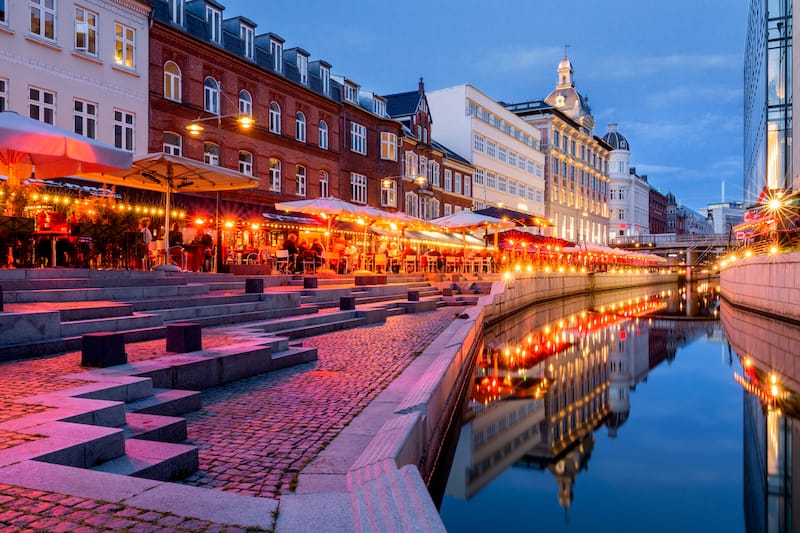
Best Places to Visit in Denmark1. AarhusAarhus is the second-largest city in Denmark and it is filled with a wide range of activities.

No matter what you’re on the hunt for, whether that be a big-city atmosphere, beautiful scenery, or just an active vacation spot, Aarhus has it all.

Tivoli Friheden is an amusement park within walking distance of the city center, and the city is known as a foodie hub.
c7r9b
Aarhus also has an abundance of history, showcased very well in the open-air museum of Den Gamle By– a historical district enclosed in the Aarhus Botanical Gardens.

Visitors can fully immerse themselves within a medley of contemporary and Nordic culture and lifestyle whilst learning about the history that has made Aarhus what it is today.

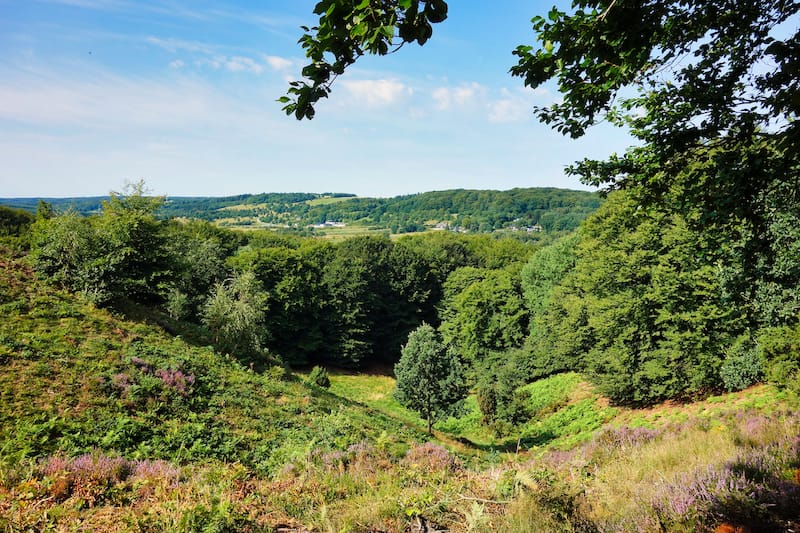
2. Rold Skov ForestWith an absolutely calming and therapeutic atmosphere, the Rold Skov Forest is great for an active holiday and enjoying amazing nature.

There is an abundance of activities awaiting all visitors of Rold Skov Forest, one of them being the wild mountain bike ride in Rold Forest.

There are also many hiking trails if you’re looking for a more relaxed activity. Canoes are also available for rent for a peaceful trip down the stream.
kiorx
One great spot to stop by is the Lille Blaklide, which is one of the richest water sources in Western Europe and is definitely worth checking out.

If you’re traveling with children, you can visit Roverknolden, which is considered to be the best playground in the North.

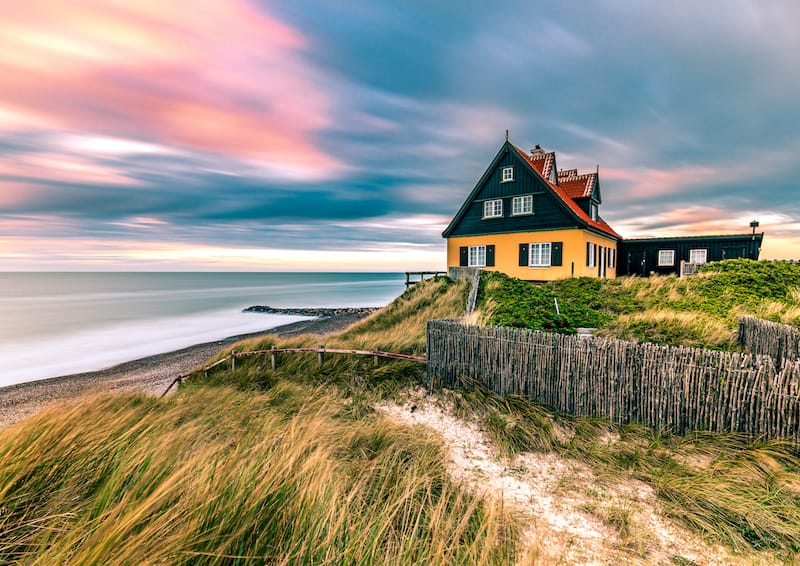
3. Skagen Skagen is a city for the artists and creators of the world.

The town is in the northernmost part of the country and has an amazing lighthouse, which has inspired many Danish painters.

One of the most interesting venues worth visiting in this unique and inspirational city would have to be the Skagen Museum, where you can exhibit works of famous Skagen painters, such as Michael and Anna Ancher and P. S. Krøyer.
x0sq9
The city of Skagen is not only known for its history of art and talent but also for its unique nature.

Skagen has an interesting light to it, and, combined with its natural beauty and white sandy beaches, it creates a tranquil and cozy atmosphere for visitors.

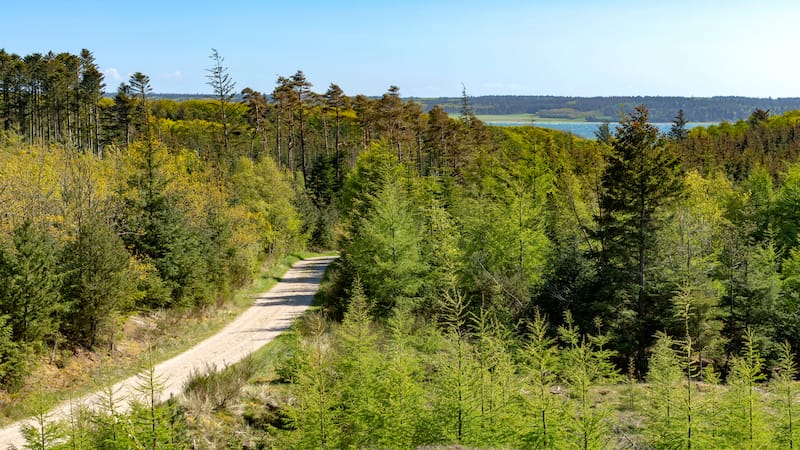
4. Thy National ParkAs you may have already gathered, one of the things Denmark is renowned for is its ethereal natural scenery.

Thy National Park is the perfect place to visit for those who are looking to relax or hike through the twisted and untouched dunes of the forest.

Additionally, there are plenty of seaside villages, famous for their traditions and history.
2zuvt
Visitors can really become one with the locals and engage with the nearby communities, learning from them and their way of life.

This way, Thy National Park is not only a place to feel one with mother nature but to also socialize with the village voices nearby.

The fishing village communities also give a great perspective into Danish cuisine.

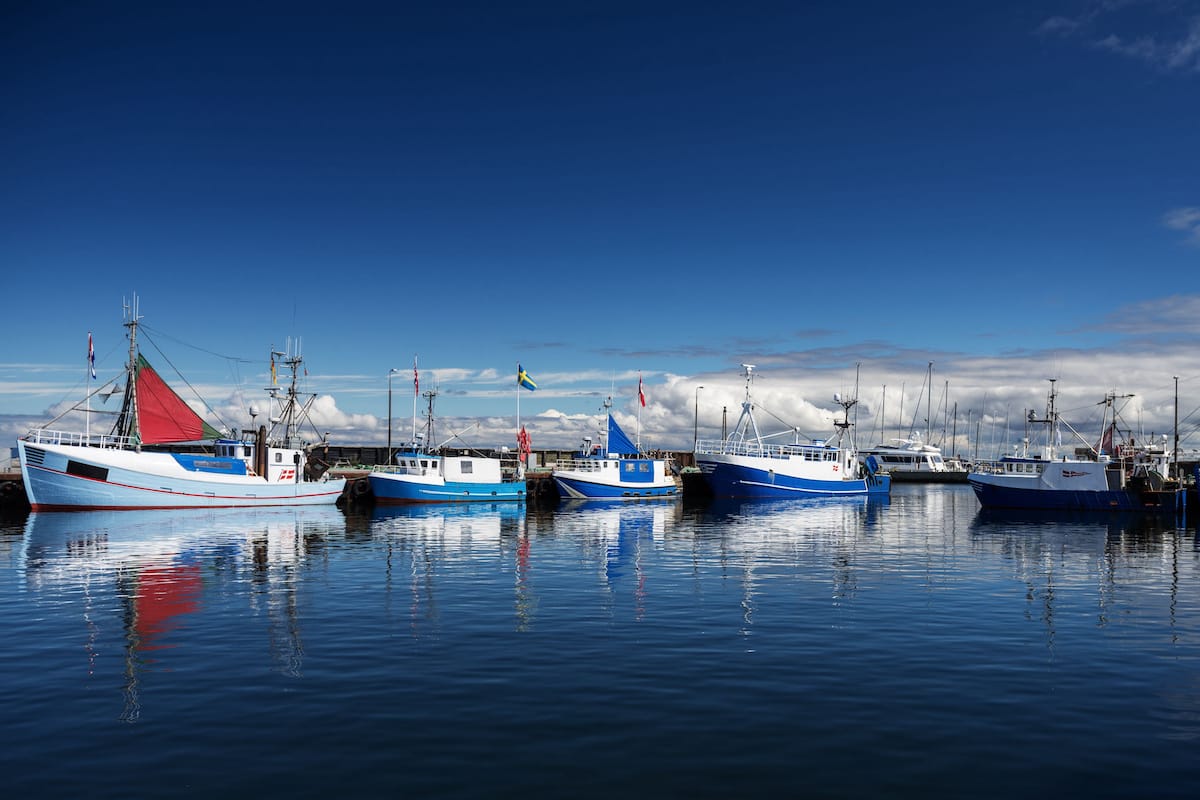
5. GillelejeThe city of Gilleleje is at the northernmost point and offers the people a busy commercial life. Having fish in Denmark is an absolute must, as fish plays a major role in Danish cuisine.

Gilleleje Harbor is the largest commercial port where there is always fresh fish caught from Sund, the Atlantic, and Kattegat, and served to their guests.
adw4p
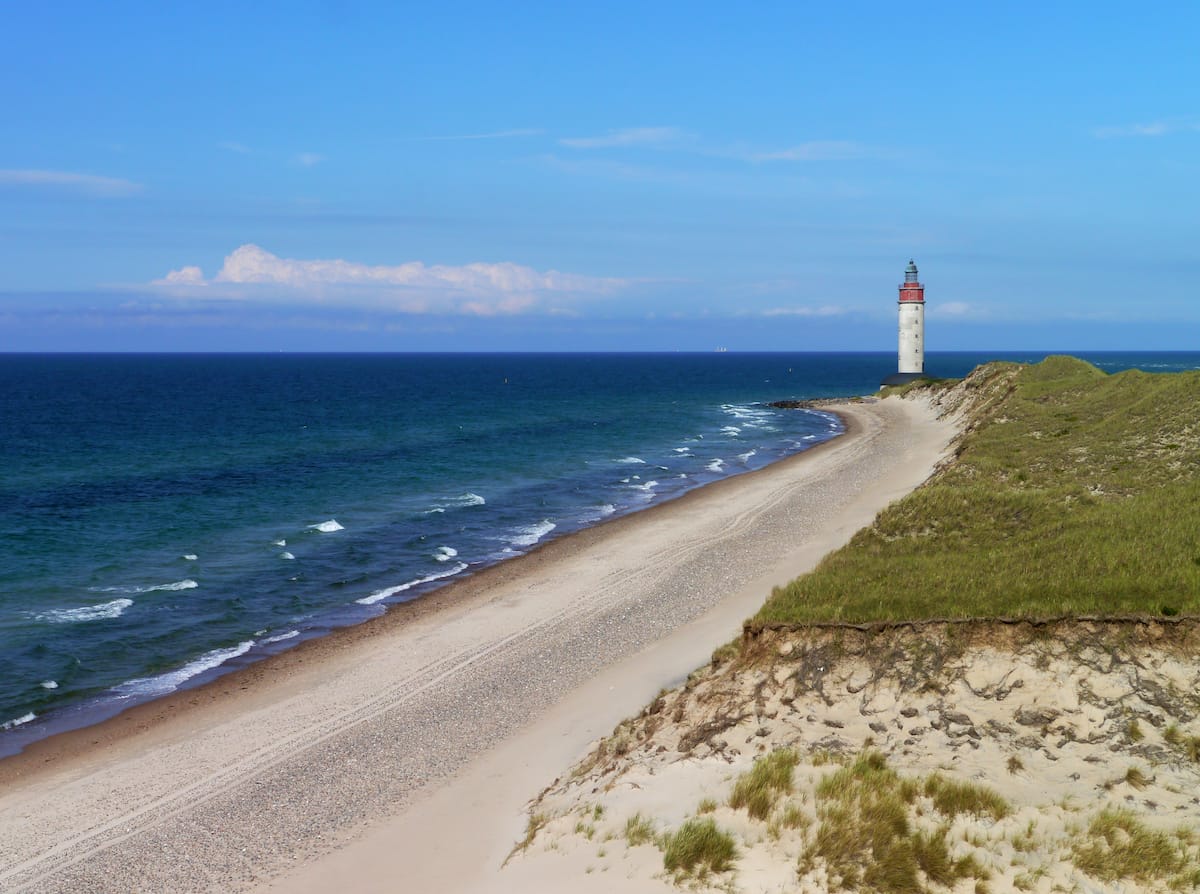
The Museum of Lighthouse History and Nakkehoved Lighthouse are also places worth visiting, with amazing sea views over the Kattegat, as well as breathtaking sunsets.

Visitors will also learn the history of lighthouses and their impact on Danish culture and history.

Overall, the city is always active and a great checkpoint to experience whenever you’re in Denmark.

6. CopenhagenThe capital of Denmark, Copenhagen, is surely not a place to miss!

The pedestrian street of Strøget is one of the largest in the world, and its narrow streets of high-end shopping lead directly into the Old City.

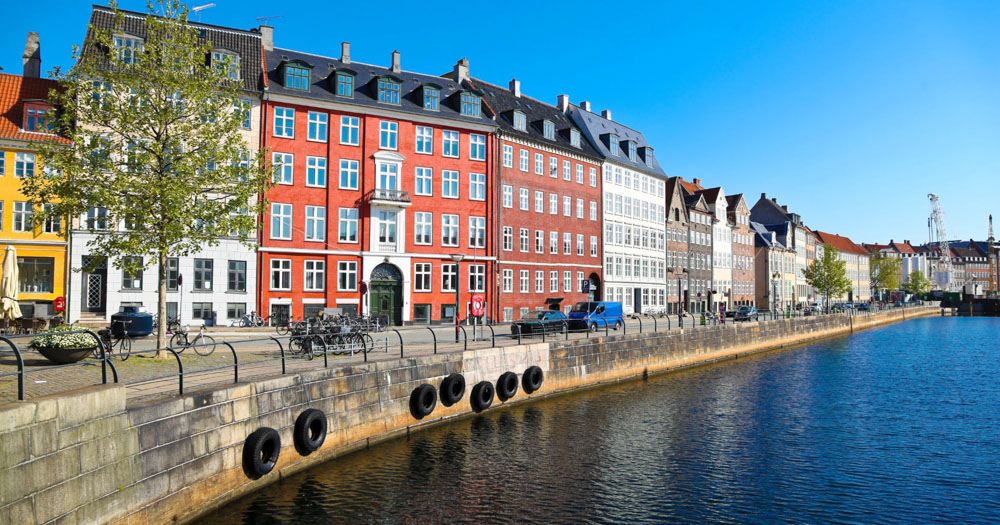
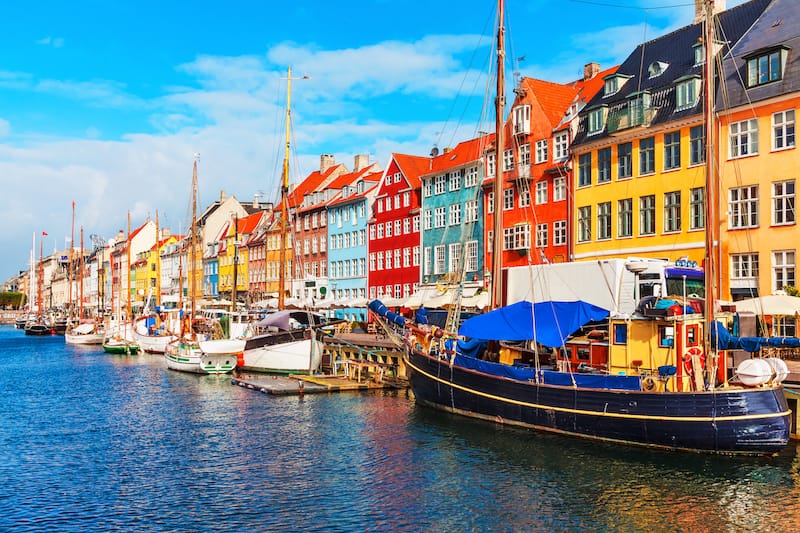
Nyhavn’s canal has a waterfront, vibrantly painted houses, bars, restaurants, and cafes– all with outdoor seating for anyone to enjoy the sight of the stunning, historic waterfront area of the canal and its many old, wooden ships.

The National Museum houses Danish artifacts from a variety of eras and ages, especially those from the Viking culture.
3xzs2
The architecture of the museum as well as that of Christiansborg Palace offers tours through its many halls and offices: the Prime Minister’s office, Denmark’s Supreme Court, and the Danish Parliament.

The Rosenborg Castle and Botanical Gardens are also Danish cultural sights to behold!

7. AnholtVisitors looking for secluded areas to enjoy their vacation or holiday should look no further than Anholt.

Anholt has 25 kilometers of coastline and is perfect for swimming under the glistening sun during the summer months.

Rent a kayak or snorkeling equipment, or a standing-up paddle board and engage yourself in water activities at Anholt’s Statshavn.
uucjv
Hiking is also a fairly popular activity, and most people like to hike up the top of the island’s two hills: Nordbjerg and Sønderbjerg.

The Grenaa Marina and the Sostrup Castle are also lovely architectural sights to behold nearby.

The Hylkegaard winery and vineyard have an assortment of wines to choose from, with an art gallery in a charming building in the city–an excellent close to a trip.

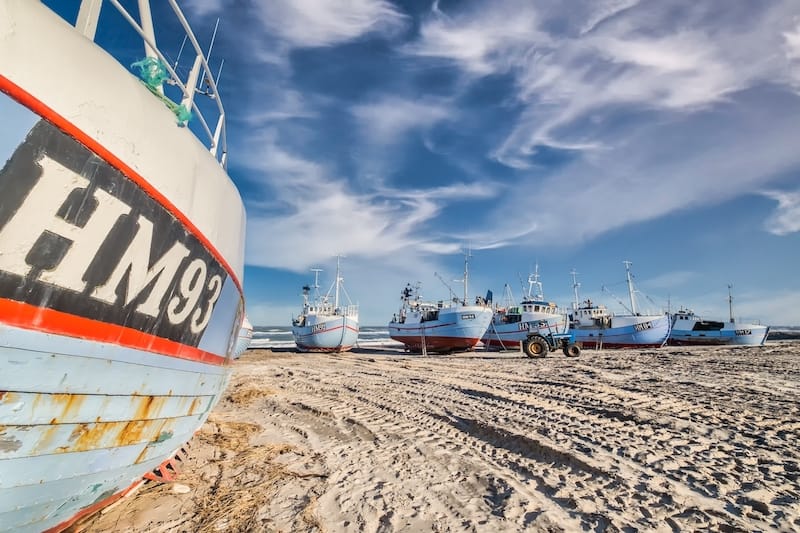
8. JammerbugtenJammerbugten is known as one of the most beautiful areas of Denmark and also goes by the names of ‘The Bay Denmark’ or ‘Misery Bay.’

It is famous for its vast forests, white-sanded dunes, and sandy beaches.

Today, it is a popular summer destination due to its vast water activities.
phfl2
In May each year, the Wind Festival takes place on the beach between Blokhus and Løkken, and it attracts hundreds of people each year.

Those who are looking for more thrilling and adventurous activities can partake in the following: paragliding, kite-surfing, and parachute jumping.

Additionally, the Faarup Sommerland is a popular amusement park with a range of various rides, whereas the Museum for Papirkunst is a great place to lounge and observe galleries of paper art.

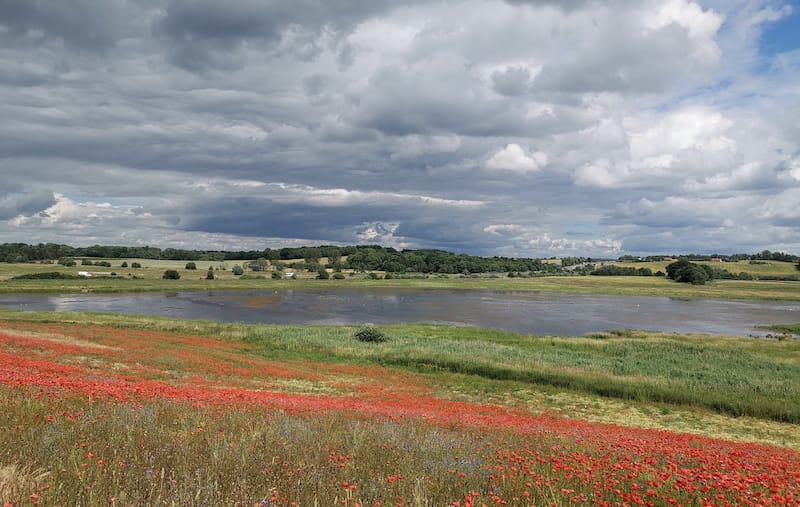
9. Skjoldungernes Land National ParkDiscover salt meadows, islands, and coastal bluffs, and disappear into the large forests on the campsites and hiking trails in central Zealand.

The Skjoldungernes Land National Park has been inhabited since the Stone Age, and the medieval city of Roskilde and its iconic cathedral within the national park can both be toured.
gg7th
The main objective of this National Park is to develop its landscape and enhance its nature, protect its cultural history, encourage outdoor activities for all its visitors, and develop educational sectors.

Learn about the Scyldingas, from which the name of the park is inherited, a legendary family of the royal Danes from their facilities, and as you hike through the floral grasslands, try to catch sight of the white-tailed eagles.

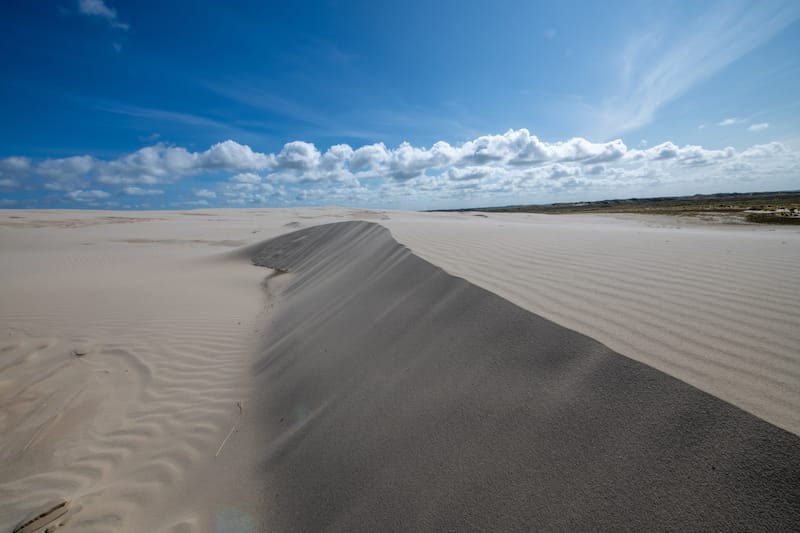
10. Rabjerg MileRabjerg Mile is perhaps the most interesting place in Denmark– it is a desert right in the heart of Denmark!

Albeit it is more technically considered to be a migrating sand dune, the fact that it is a desert in such a wet and icy country is curious!

It was formed in the 16th century, on the west coast during a great sand migration, and due to its strong wind, Northern Jutland has been struggling with migration dunes for many centuries.
dneag
Experience this mini-desert located just 60km south of Skagen, at the northernmost point in the country, where the Kattegat and Skagerrak seas meet.

These unexpected sand dunes are complemented wonderfully by the beaches. The relentless wind will remind you that you’re in Denmark, however!

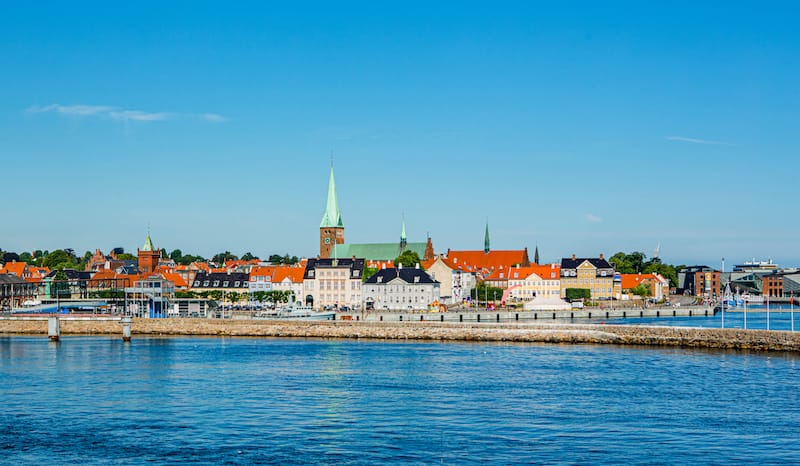
11. ElsinoreThe port city of Elsinore is more than just the place of Shakespeare’s Hamlet or the 15th-century Kronborg Castle– it is also known as Helsingør, the port city of Denmark’s North Riviera with its unique forests and beaches.

The castle should be a priority on your to-do and to-see list; consider a tour through the medieval fortress and Renaissance castle with impressive towers and a large, checkered ballroom.
csudx
Take a stroll through the historical streets of Helsingor Havn and marvel at the colorful architecture.

The monument of the historical figure Holger Danske which is in one of the many casemates of the city, and the Herakles og Hydraen statue on the coast are both iconic things to see in Elsinore.

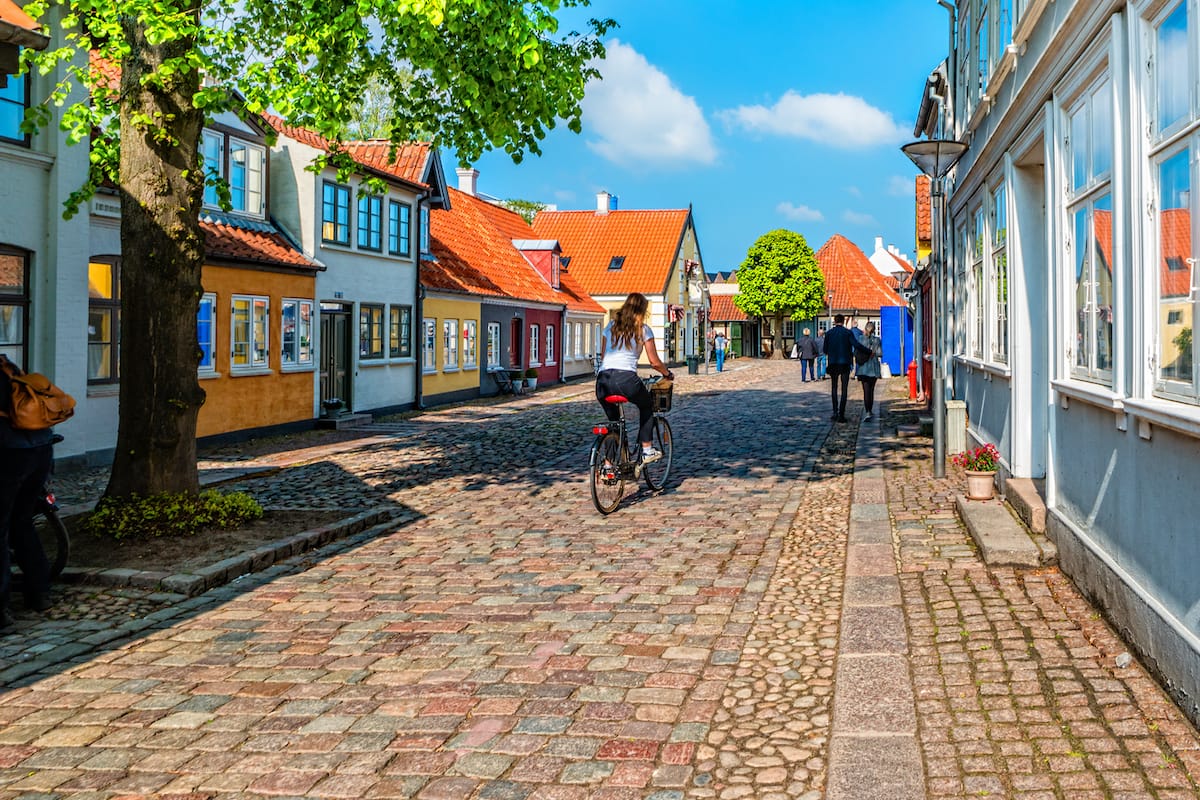
12. OdenseOdense’s iconic Egeskov Castle is a beautiful renaissance water castle from 1554 that sits in the middle of a small lake on top of oak piles raised from the lakebed.

The architecture of the Hans Christian Anderson Museum is built uniquely like a castle and temple all in one– and within you can exhibit the drawings and manuscripts of the beloved author.
hxuhi
Odense

To exhibit more art, the Galleri Galschiøt has a variety of artwork, including sculptures of one of Denmark’s most famous artists, Jens Galschiøt.

If you’re interested in classical music, then the Carl Nielsen Museum in Odense is another option to consider.

The open-air museum of Funen Village holds 30 historic buildings and patriotic activities to preserve the traditional character of the city.

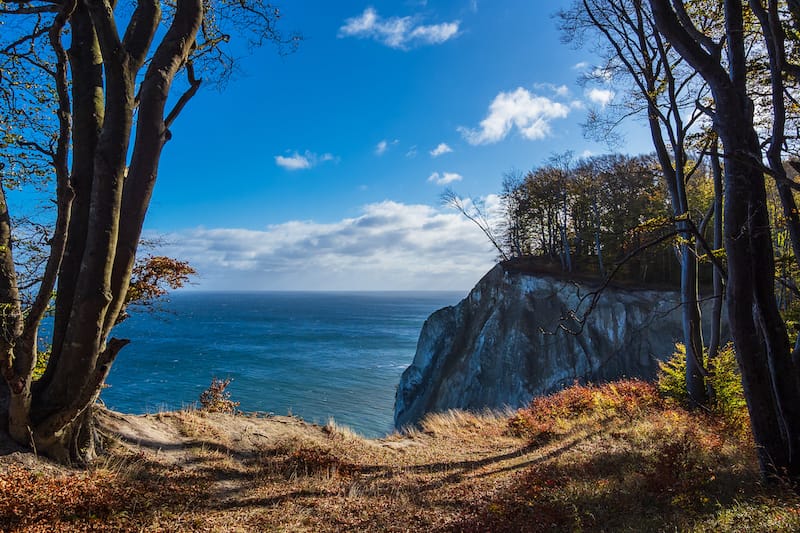
13. MønIn the Sjaelland Region of Denmark is the island of Møn, which is enclosed by the Baltic Sea and the Gronsund.

Also included in the territory of Møn are the islands of Nyord, Fago, Bogo, and Lango. Mons Klint, or the White Cliffs of Mon is known for their chalk formations and is a popular place for hiking, biking, and picnicking.
rvyjt
From kayaking in the turquoise waters to horseback riding in the forests, to star-lounging in the Dark Sky Park and cliff-top hot-tubbing– there is ample to do to take in the full experience of the island.

In juxtaposition, the stunning architecture of the local community includes the nearby Elmelunde Church, an 800-year-old church known for its stunning frescoes.

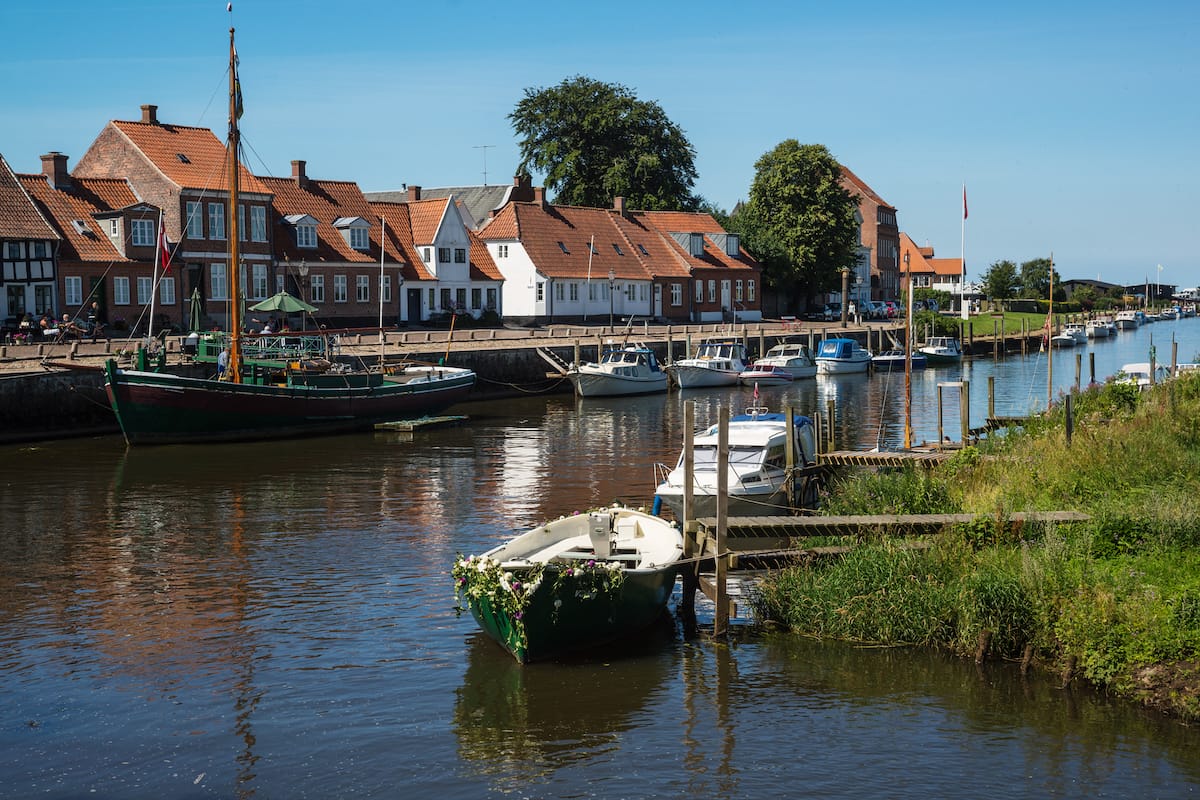
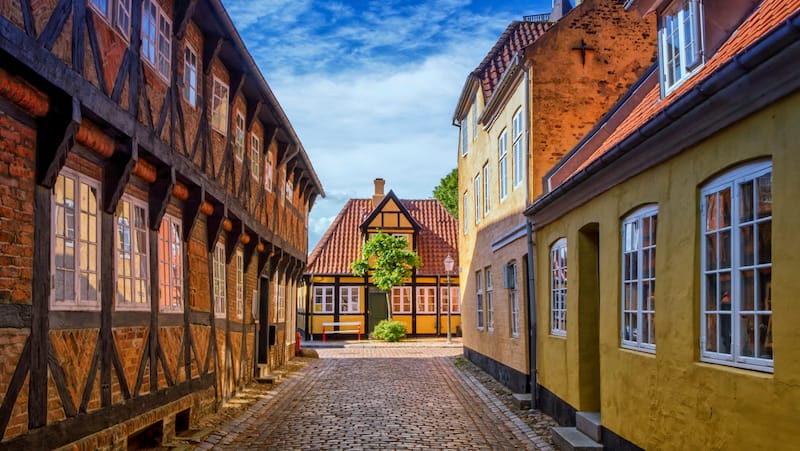
14. RibeThe picturesque and vibrant town of Ribe is also the oldest town in Scandinavia.

It was an important trade town due to its strategic location that connected all of Scandinavia and the Nordic countries.

You can learn about the old Viking culture of the city’s inhabitants at the Ribe Viking Center during the summer!
5fzlo
The charming architecture of the small town has Romanesque buildings of colorfully painted brick buildings, with cathedrals and towers– the oldest in Denmark being precisely the one in Ribe!

The Wadden Sea National Park has the largest mud flats in the world and is home to a plethora of animals, such as shrimps, mussels, and oysters.

At this park, people often flock to watch the migrating birds.

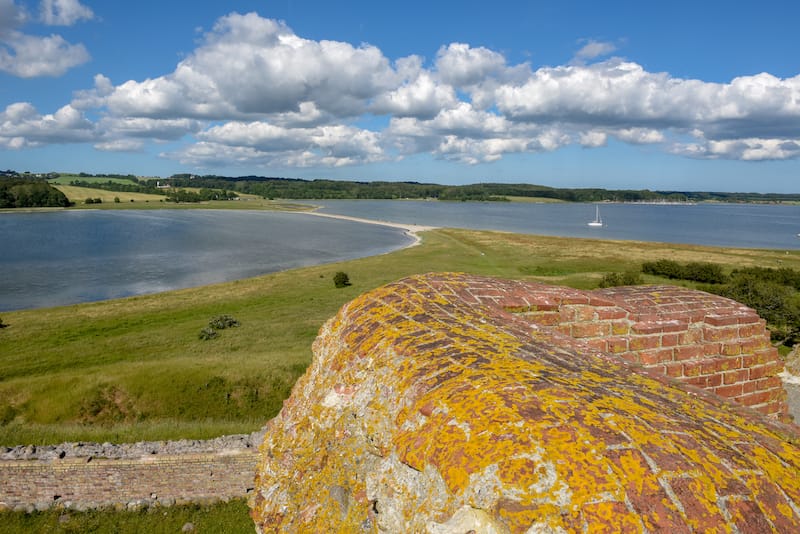
15. Mols Bjerge National ParkTake a hike through the many trails in the hills and wilderness of Mols Bjerge National Park.

Come across wild horses prancing around as you go hiking, backpacking, birding, and camping through the terrain.

A popular trail here is Bjerg-Etapen Mols Bjerge-Stien, a 12.4-mile loop trail of moderate difficulty, with an excellent view of Agri Bavnehøj over the dead ice landscape of Trehøje Plantage.
ukqyg
The Kløverstier hiking routes of Mols Bjerge Naturruten start near the city of Knebel that leads through the scenery full of small lakes in a 7.6-mile loop.

From plantations, forests, and landscapes blanketed in a variety of flora, the sights of the fairytale countryside will be unforgettable.

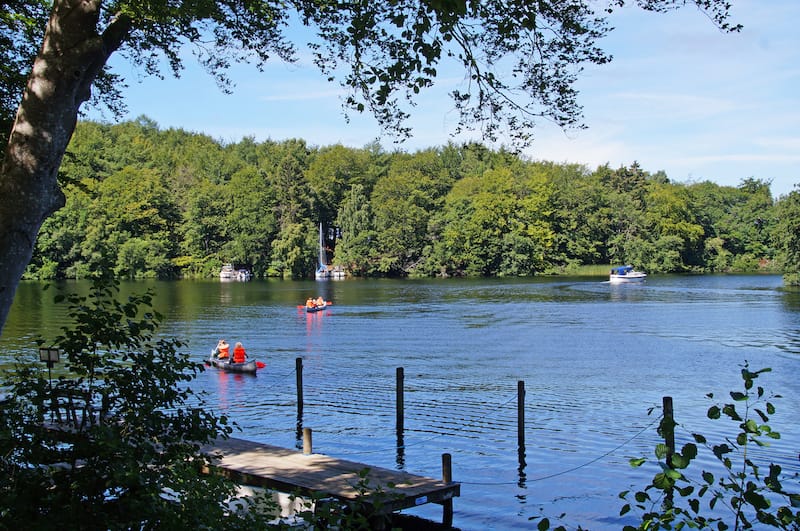
16. Søhøjlandet RegionThe Lake District of Søhøjlandet is considered one of the most scenic places in the country, from sparkling lakes to dense, lush woodlands, meadows, and the highest summits in Denmark.

Life in this region is wrapped around nature, whether in the urban life of shopping and cafe culture, to kayaking, biking, hiking, and mountain biking in the countryside.
8mmy1
Silkeborg

The highest natural point in the country is Ejer Bavnehøj, which sits 170 m above sea level.

Himmelbjerget or ‘the sky mountain’ is the most well-known in Denmark, with a stunning tower built on its summit, and is one of The Seven Summits of the Lake District.

The towns of Ry, Silkeborg, and Skanderborg, also have historical streets and architecture to enjoy.

17. BornholmThe Baltic island of Bornholm has an abundance of charming fishing towns and villages to visit.

The main town, Rønne, has the biggest harbor of Bornholm and is often visited by boats of all types.

The colorful architecture and gardens against the sea and rocky terrain of the island offer a pleasant contrast.

Other towns and villages include Gudhjem and Svaneke, which are known for their pretty buildings and stunning nature– and Aakirkeby, which is famous for its vineyards.
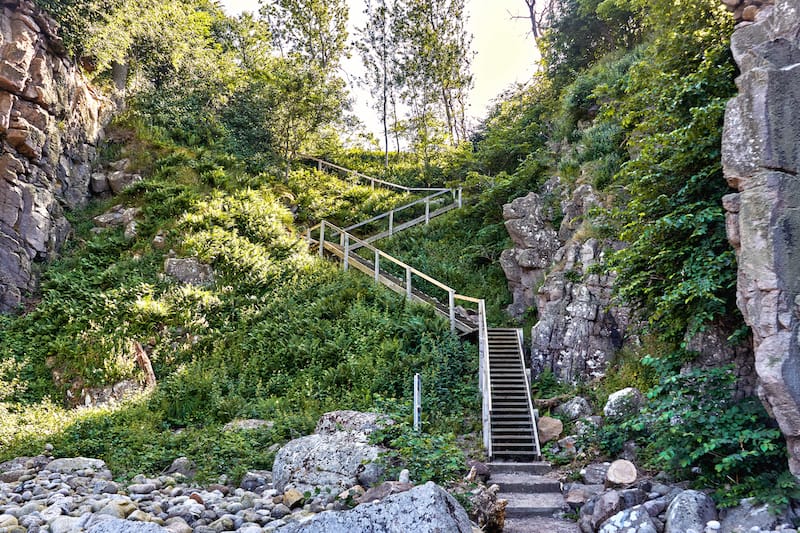
2kzjf
Bornholm

Enjoy the landscape of the island at the Hammershus Ruins, which is a millennia-old hilltop castle with panoramic views, and Dueodde Beach, known for its turquoise waters and fine sand.

Opal Lake and the rock formations in the north are also a sight to behold!

18. KertemindeKerteminde is called the Garden by the Sea and was a favorite settlement of the Vikings.

Vikingemuseet Ladby is a Viking ship grave of reconstructed ships from archaeological projects as well as possessions found within them and is an internationally renowned attraction.

Discover the historical architectural artistic expressions of Johannes Larsen at his home and museum and get a tour of his studio and see the artwork of 50 other artists.
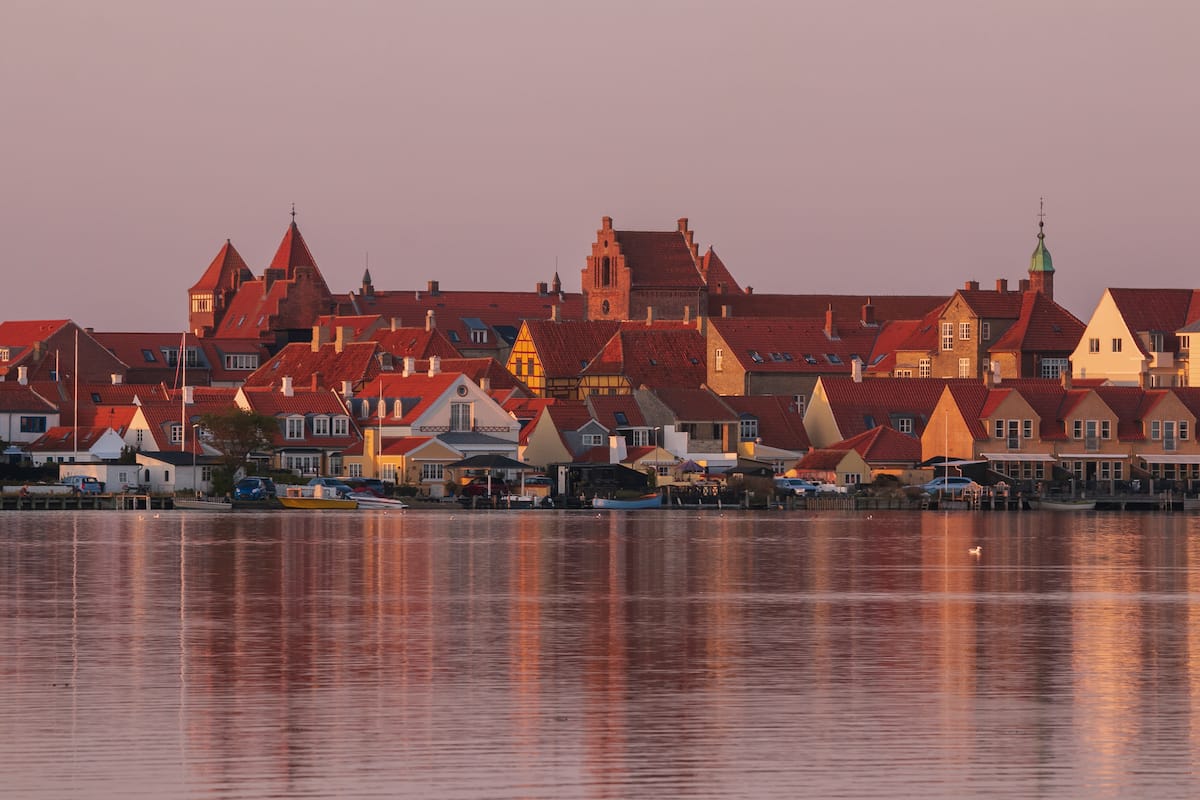
d30jg
Kerteminde

The grand estate of Lundsgaard, in addition to its beautiful architecture and farms, has a popular art exhibit inside, called Anexet ved Lundsgaard Gods.

Finally, experience the Hindsholm peninsula’s outer part, called Fyns Hoved, which is known for its picturesque green landscape because it receives some of the highest amounts of sunshine in Denmark.

19. BillundBillund is ultimately synonymous with its amusement parks: Legoland, Lalandia, Lego House, and WOW Park.

You can see Legoland from above in LEGOTOP® or explore a miniature world built out of millions of LEGO bricks in Miniland.

You can also try out the LEGO® Canoe through exciting waterfall trails!

Take a portal into another world through the Aquadome in Lalandia– immersing yourself in a tropical climate with an abundance of water activities, some of the famous being the Tornado, Twister, and Octopus Racer.
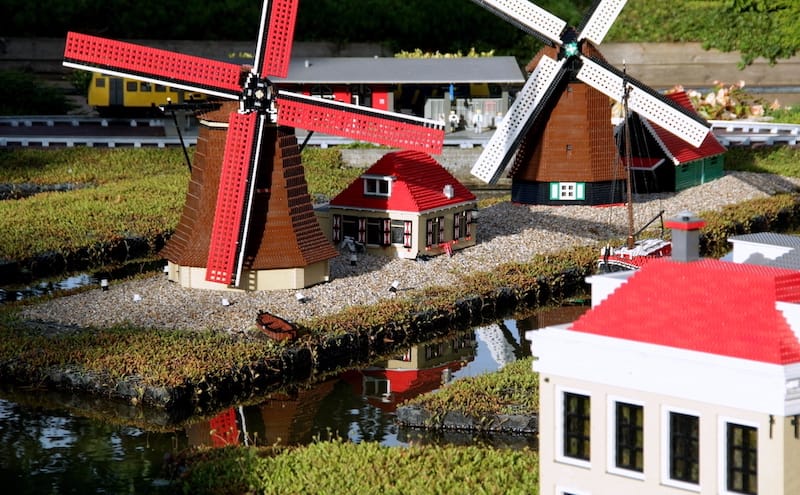
emw9k
Legoland in Billund

LEGO House has outdoor playgrounds and bricks enabling you to create your own inventions.

WOW Park is centralized in the nature of Billund; even in the treetops, underground, and with a Water World. There is ziplining, cave trekking, bridges to cross, and treehouses to explore!

20. The Danish Riviera The Danish Riviera is renowned for its stunning castles and gardens in addition to its stunning beach coasts.

The Royal North Sealand is home to the largest castle lake in Scandinavia, called Frederiksborg Castle in the center of Hillerød.

The Renaissance castle was built in the early 17th century by Christian IV and is adorned with lavish engravings and craftsmanship.
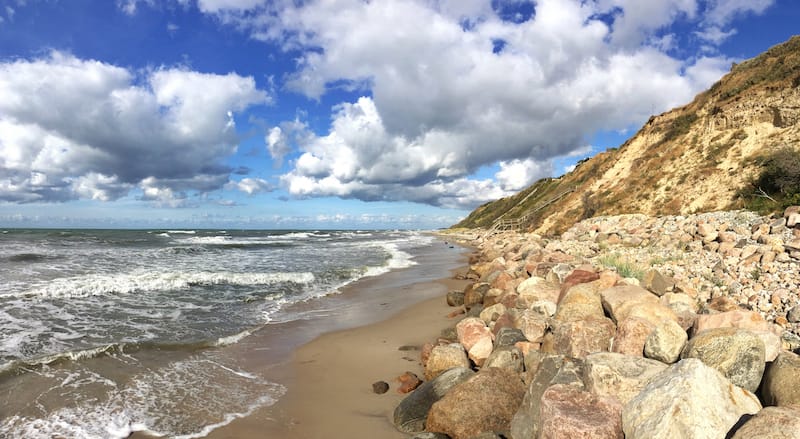
o2nqf
Danish Riviera

Today, it houses the Museum of National History of artwork, artifacts, and crafts of half a millennium’s worth of history, and a tour of the castle can be taken to see the impressive halls and royal gardens.

Fredensborg Palace is an 18th-century baroque palace that also has a prominent garden, and is used to this day as an important venue for the royal family.

21. Samsø Island The island of Samsø has a lot to offer, from hiking in the beautiful countryside to bicycling trails through the city and nearby wilderness to relaxing at the three harbors of the municipality.

The largest and most frequently visited is Ballen Marina in the southeast, Langøre Harbor has been used since the Viking Age in the north, and finally Mårup Harbor in the northwest.
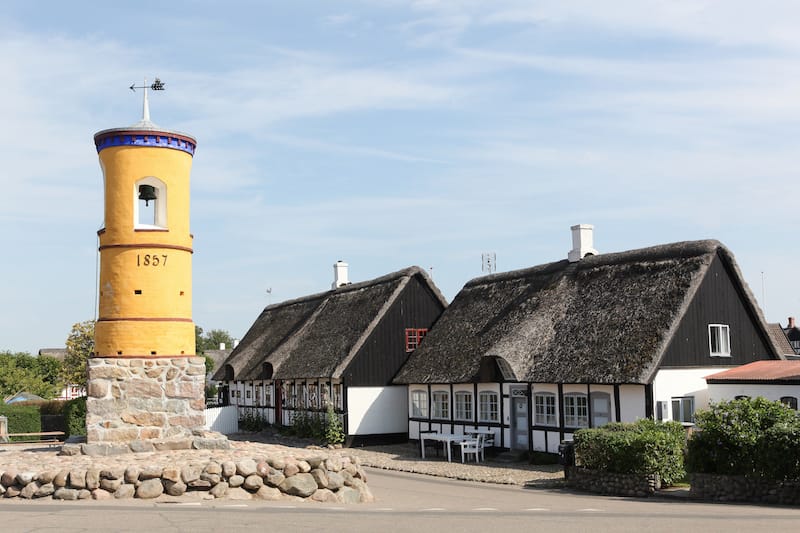
cndbm
Samsoe island

The north of Samsø is a popular national landmark known to be one of the hilliest areas in the country with also the largest grasslands, with stunning views overlooking the sea.

Hike the beach trails of Højklit or hike a trail with a fjord view of Grønhøj.

Finally, you can marvel at the stunning brick architecture of Samsø‘s churches: Kolby, Besser, and Tranebjerg Church.

22. Faroe Islands (Bonus)The Faroe Islands look like something out of a fantasy movie. All 18 volcanic islands are full of a plethora of things to see and experience.

It is perfect for those who love to have a good time and enjoy the nightlife of the Faroe Islands.

There is a Summarfestivalurin Music Festival, held in the second town in the Faroe Islands every first weekend of August.
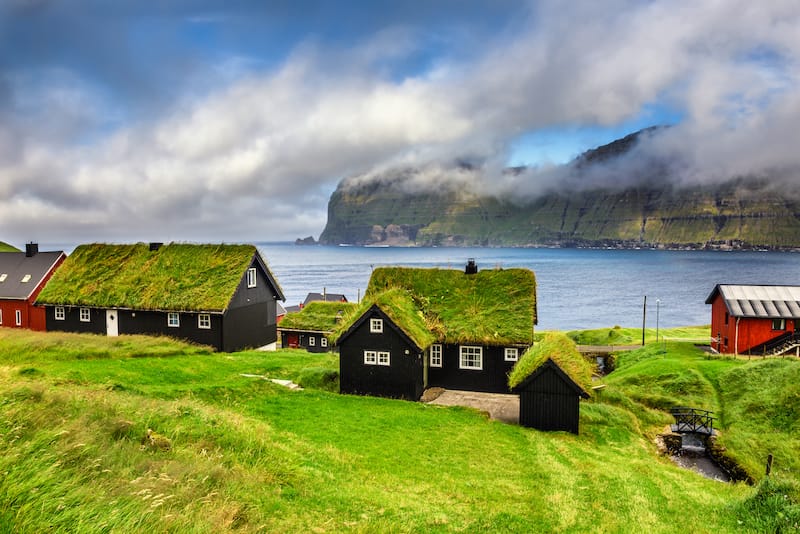
sf5k6
Faroe islands

There are also more active alternatives to take part in at the Faroe Islands such as visiting the Mulafossur Waterfall, an incredible view with an incredible feel.

The historical architecture in the cozy capital of Tórshavn and the Shire-like buildings blanketed by the grass against the background of the unrivaled natural beauty of the island are breathtaking, unforgettable sights.[……]
Read more

10 best things to do in Finland

Dreaming of a holiday in Finland but not sure where to start?Winter or summer, north or south, Finland has plenty of great experiences in store. Here are 10 things to put on your bucket list.

ndyyk
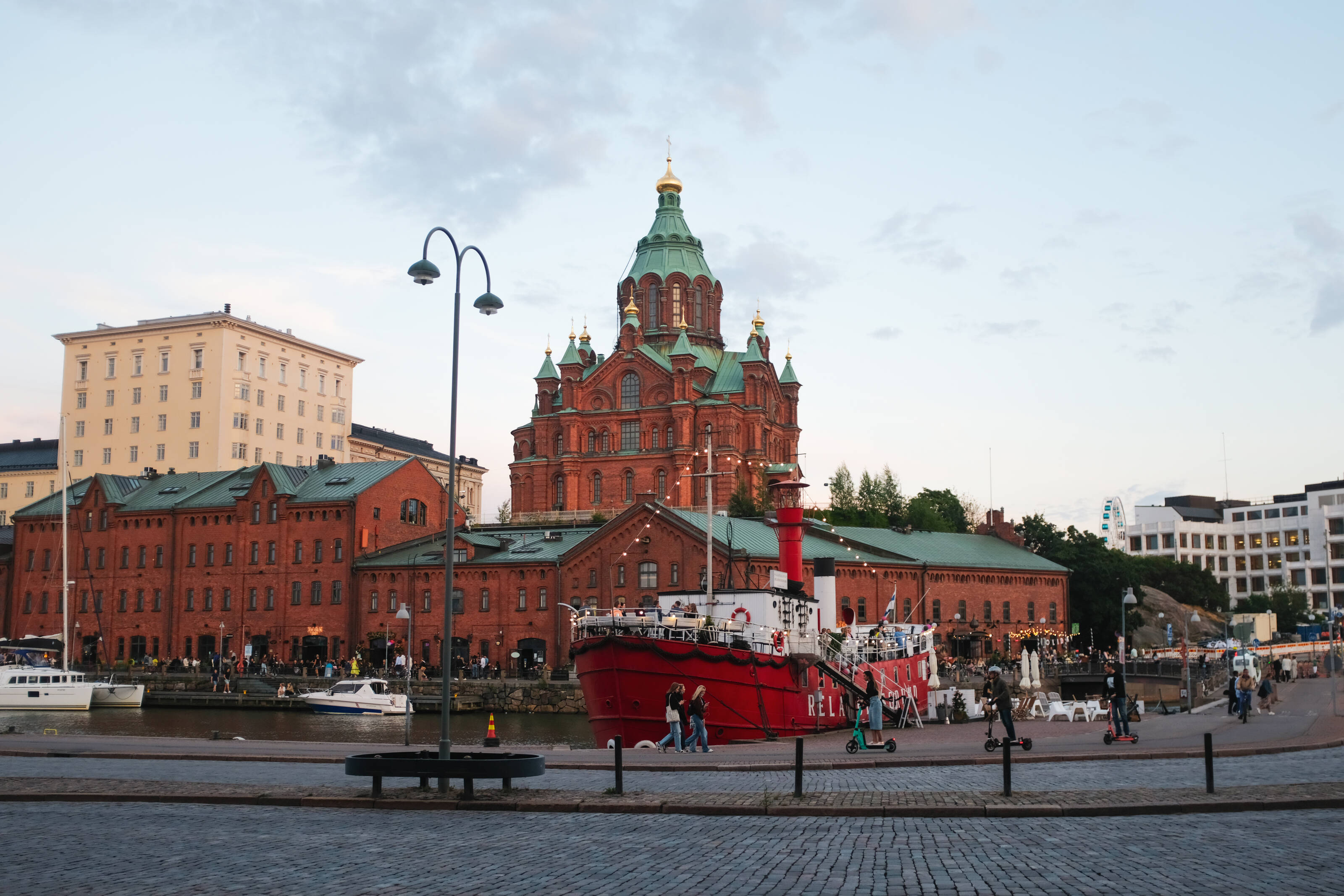
The capital of Finland, Helsinki, is typically the first stop for many visitors to this Nordic country.

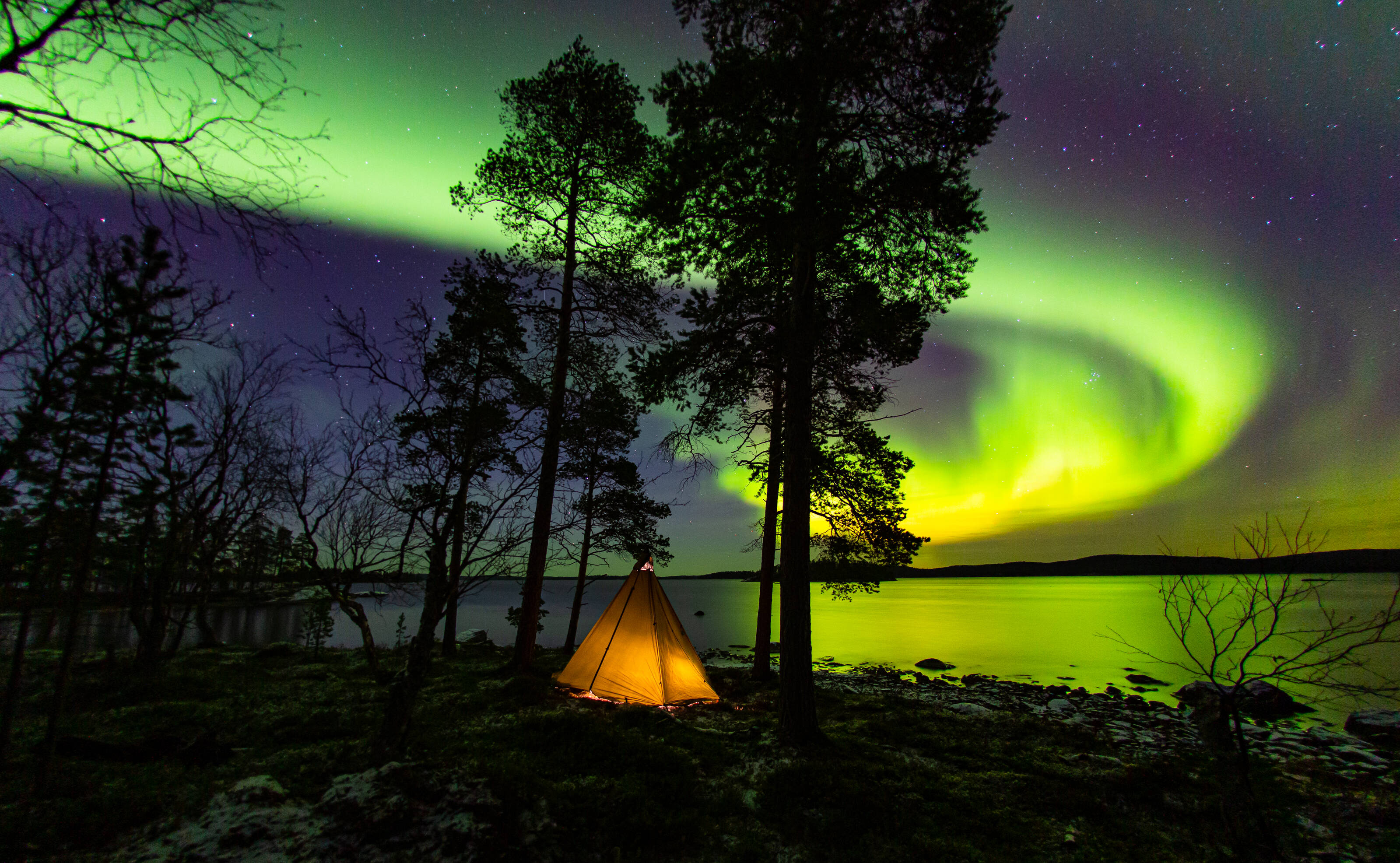
Credits: Mariia KauppiSleep under the Northern LightsFinland is a land of stark contrasts. In the summer months, the sun doesn’t set at all in the northernmost parts of the country, hence the nickname “The Land of the Midnight Sun.” In the winter, the opposite happens, and the sun disappears for months. This time, called “kaamos,” isn’t completely dark, though. The white snow, bright moon and stars, and – if you’re lucky – the colourful Northern Lights, create a surprisingly light and magical nightscape.

One of the best ways to experience these two extremes is to sleep in a glass hut or cottage, surrounded by nature. If the outdoors isn’t your thing, you’ll stay warm, dry and cosy while gazing at the night sky and hopefully, the Aurora Borealis.

rrrj7
The most active seasons for the Northern Lights are autumn and spring, when Earth’s orientation towards the sun maximises the probability of solar flares interacting with the planet’s magnetic field. Credits: Pertti TurunenVisit a public saunaFinland’s national pastime is going to the sauna – some people go every day. The reason for the Finnish love of sauna? Relaxing in darkness, often in silence, cleanses the mind and body. And with more than three million saunas in Finland, visitors and residents both have many to choose from. One easy option is to head to one of the great public saunas located in all of Finland’s major cities. You’ll find there’s a sauna for every style – from modern design meccas to old rustic classics – and they’re all authentically Finnish. Choose your favourite, then sit back, relax and rejuvenate!

xv7nh
Helsinki has many interesting public saunas, like Lonna, to try year-round.

Credits: André Alexander BaumannExplore a lighthouse islandFinland has the largest archipelago in the world. Where there are islands, there are lighthouses. And what lighthouses these are! While most lighthouses in Finland are now automated, they’re not abandoned, and many make ideal destinations for day trips or weekend escapes.

To see for yourself, head to a secluded island for a day or two – their distant location guarantees peace and quiet, save for the sounds of the sea. Even the trip over is sure to relax you – just hop on a boat or ferry and leave your worries behind.

5k5g1
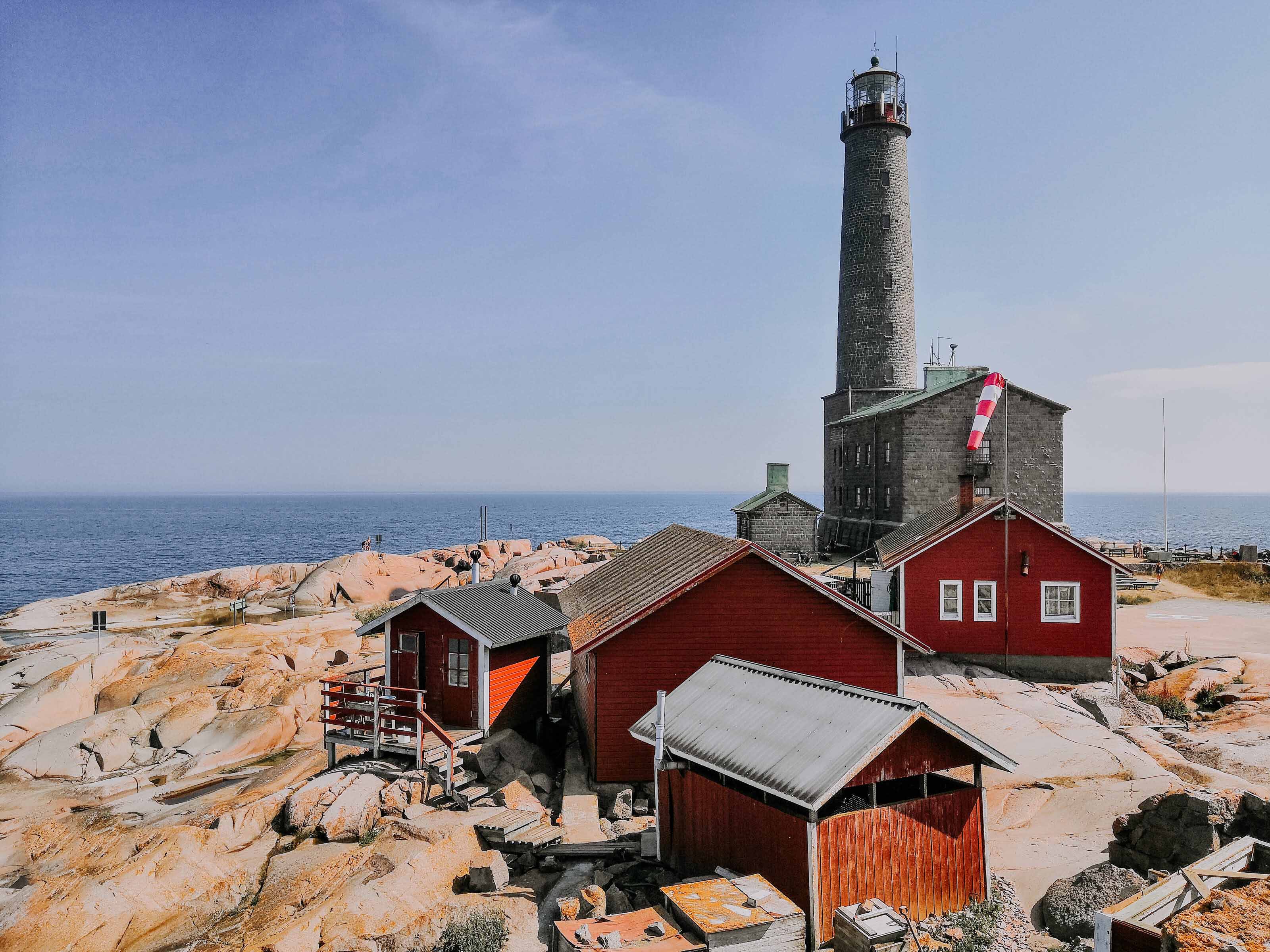
Bengtskär Lighthouse, located on an island near Hanko, is the tallest lighthouse in the Nordics. In addition to its height, it has a rich history. Bombs and grenades have been hurled at this lighthouse, and battles have even been waged inside it.

Credits: Julia KiveläStroll around an old wooden townIn the past, all of Finland’s houses were built of wood and usually painted red, with a few blue and yellow thrown in. Even today, Finland has many entirely preserved wooden towns that sit just as they did decades or centuries ago, and visiting these picturesque places is like entering a living time capsule.

The Helsinki districts of Käpylä and Vallila are good places to start your explorations into Finland’s wooden towns. Old Porvoo, an hour’s drive from the capital, is another easy stop. Beautiful wooden towns can be also be found in Rauma in the west and Loviisa in the south. All three offer charming little B&B’s should you wish to stay longer – and you will.

0paxx
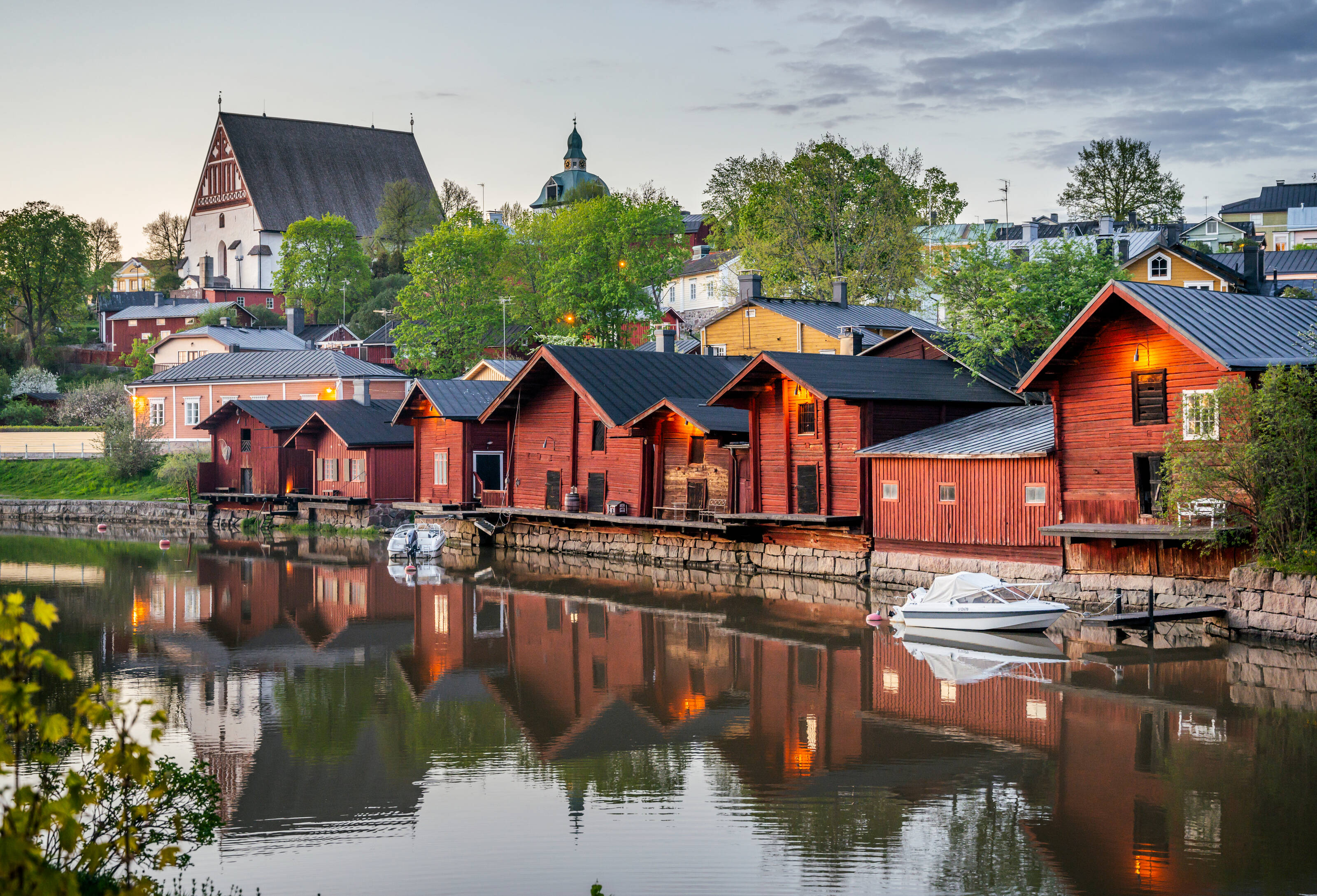
Porvoo’s river view is one of the most iconic sights in Finland. The red buildings on the shore were once used to store merchandise and exotic delicacies, but nowadays, many of them house lovely restaurants and B&Bs.

Credits: Niko LaurilaTry Finnish cuisineFinland’s cuisine is built around fresh, natural ingredients gathered straight from the water, land and forests. The country’s short but sweet growing season means many products are only available for a limited amount of time and are chock-full full of vitamins, flavour and colour.

Try iconic Finnish foods – or the latest versions of them – and you’ll be in for a treat. Whether its traditional salmon soup, plant-based meat and dairy alternatives, or mouth-watering bilberry pie, be prepared to clear some space on your list of favourite foods! You’ll also find many of these organic and delicious treats at Finland’s best restaurants.

ttbee
Finland’s best summer produce includes fresh berries, sweet carrots, red onions and new potatoes. The freshest ingredients are sold in market squares.

Credits: Harri TarvainenHike a national parkExploring and enjoying nature is easy in Finland! There are over 40 national parks scattered around the country’s islands, lakes, forests, peat lands and fells offering pristine nature and plenty of recreational activities, including hiking, canoeing, climbing and snowshoeing.

Most importantly, Finnish “Everyman’s rights” enable anyone to venture just about anywhere as long as they respect the environment and clean up after themselves. All Finnish national parks have marked hiking routes, nature trails, information boards and picnic sites, many of them with a campfire site. In most parks, there are also tent sites, rentable cabins and unlocked huts where anyone can stay, so pack your bags and go!

a85rc
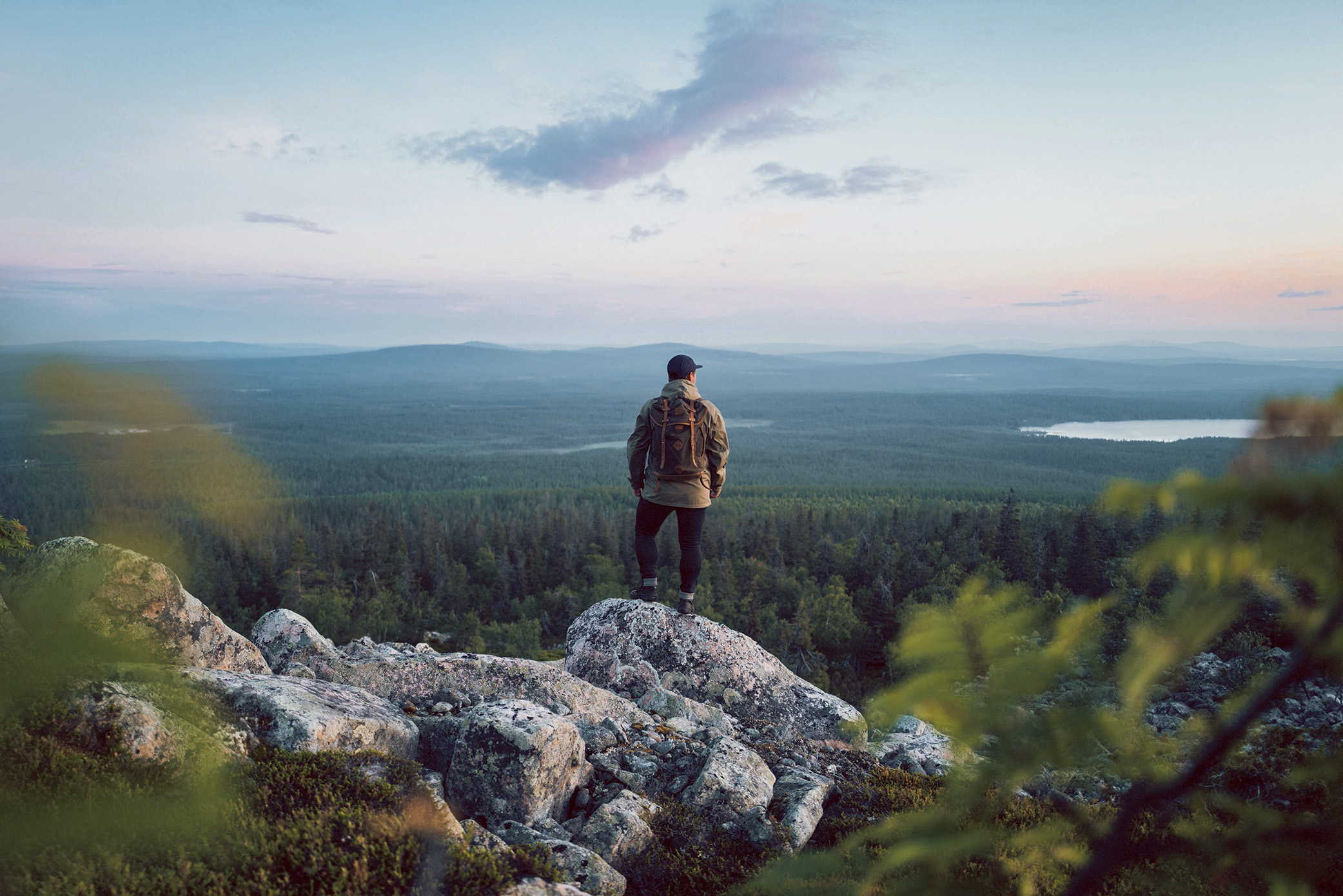
The view from Lapland’s Salla fell – Sallatunturi – is quintessentially Finnish. No high mountains and dramatic views but tranquil landscapes of forest, lakes, and rivers as far as the eye can see.

Credits: Daniel TaipaleSee iconic Finnish architecture and designFrom Helsinki to Lapland, Finland is a magnet for architecture lovers who want to explore everything from old wooden churches to works by famous architect Alvar Aalto and beyond. Helsinki’s newest design icons, like the Oodi Library, Amos Rex Museum and Löyly Sauna, have been featured in publications the world over. In Finland, even visiting a small-town library can give a design aficionado a thrill (like the new Fyyri library in Kirkkonummi!). Most of these places are best experienced in person, as many Finnish architects showcase the interplay between ever-changing light and nature.

Along with architecture, Finnish modern art and design also derive inspiration from nature. A design lovers must-see list should include iconic Finnish stores like Artek, Iittala and Marimekko, but the capital is also a perfect place to discover future design classics.

b4s2n
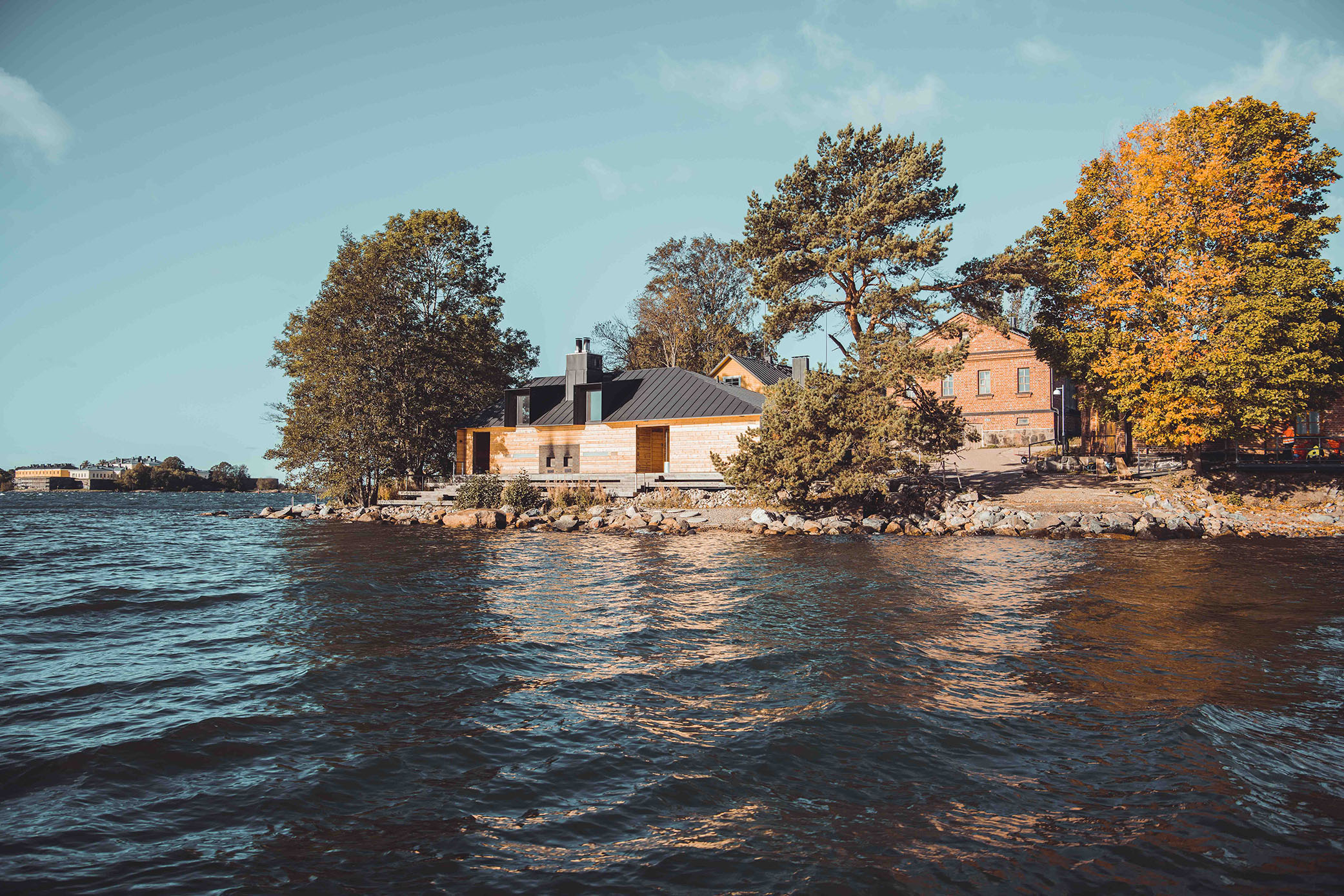
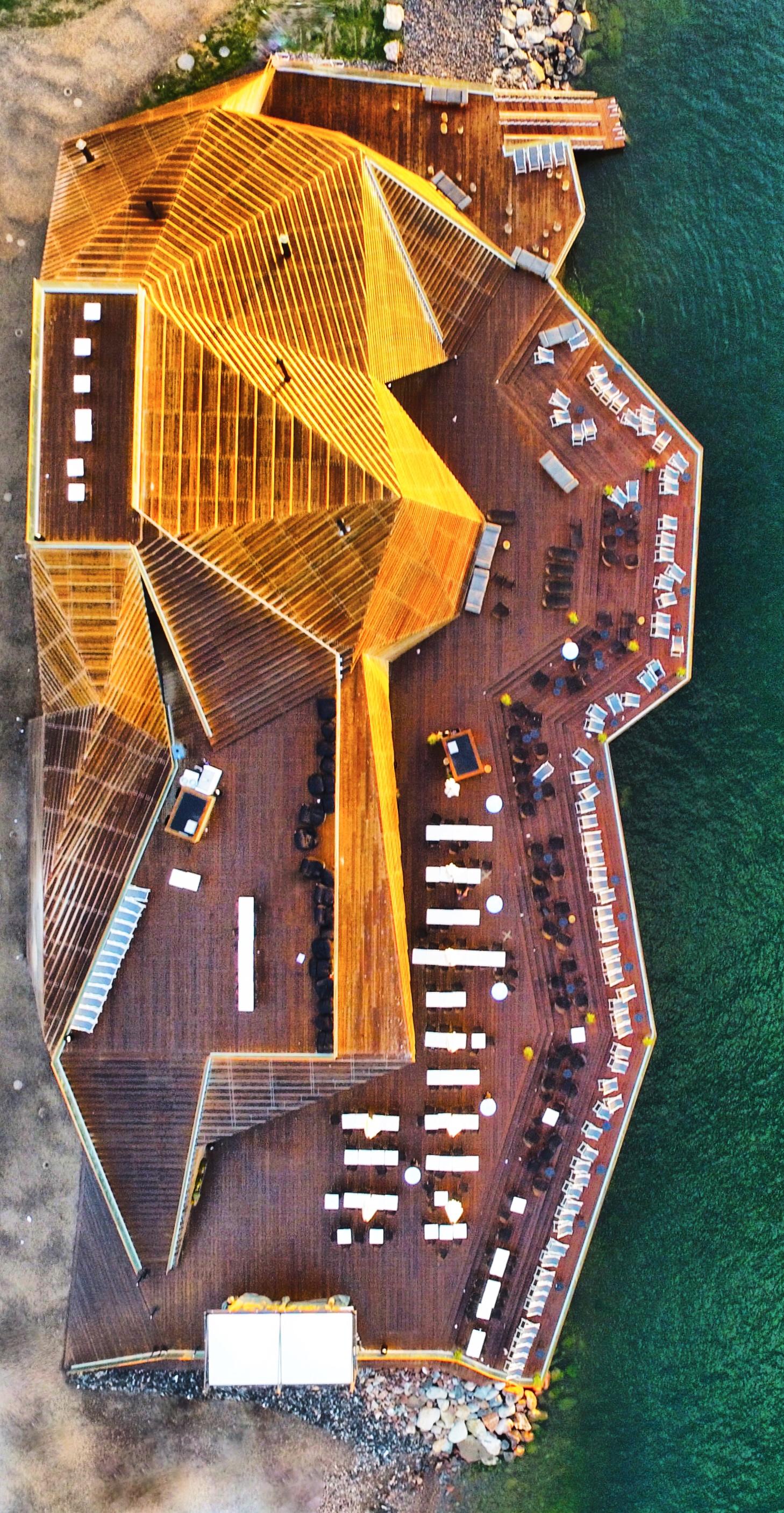
Löyly is one of Helsinki’s most famous public saunas and has become an iconic example of wooden architecture. Credits : Joel Pallaskorpi / Royal Restaurants

o0f4e
Celebrated Finnish designer and architect Alvar Aalto designed the Aalto vase in 1936. This Iittala-produced vase is still a staple of modern Nordic design.

sarvl
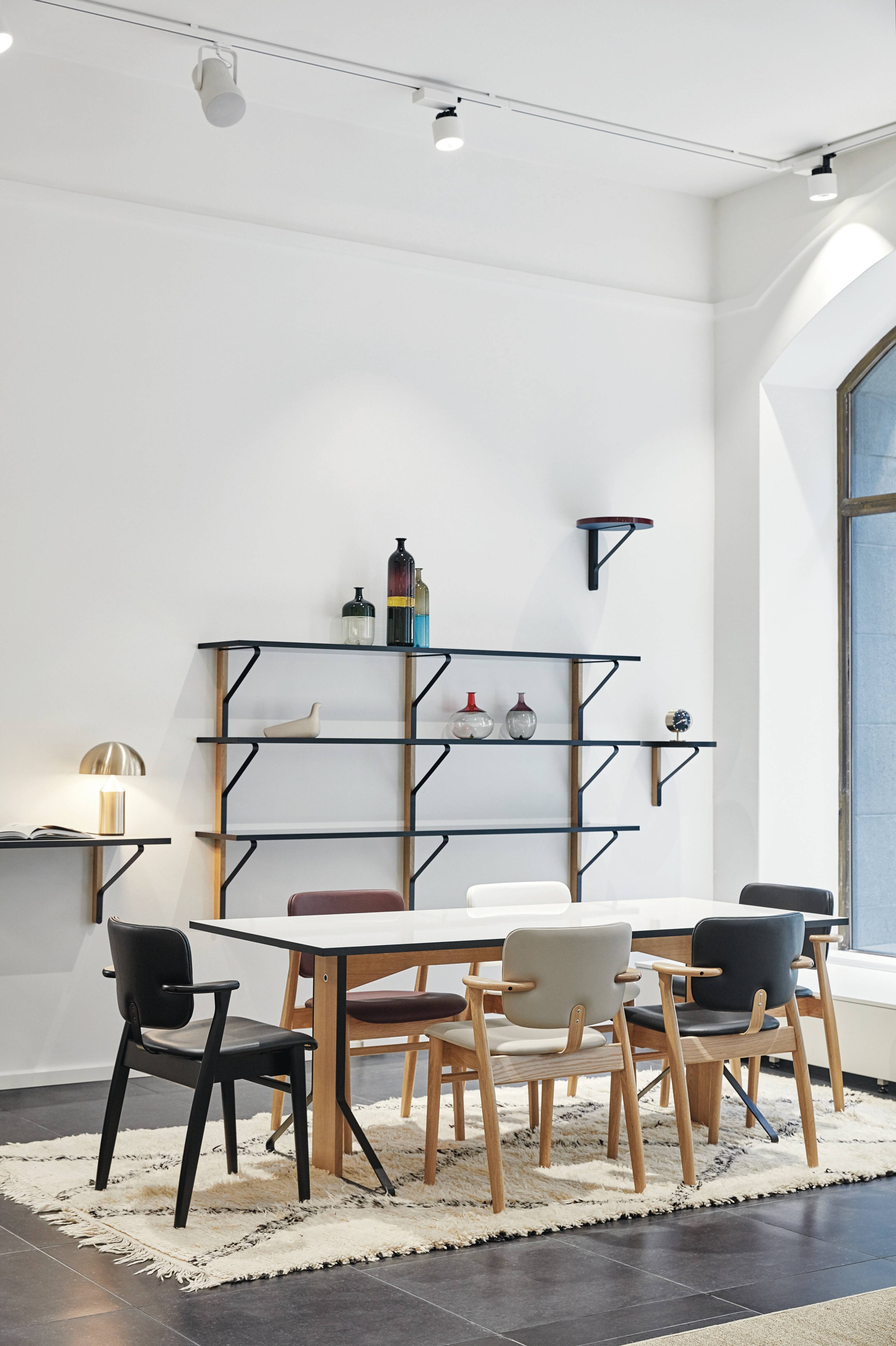
You’ll find classic Artek furniture – from shelves to tables – in many Finnish homes, public spaces, and offices.

Credits: ArtekMeet the real Santa ClausMany people know Santa comes from Finland. What some don’t know, however, is that it’s possible to meet him in person all year. Yes, Santa’s official office, which is located in Rovaniemi in the Arctic Circle, is open every day! There, both children and adults can enjoy a private chat with Father Christmas and revel in the enchanted atmosphere. Grab the kids – or your inner child – and have the experience of a lifetime.

zatcg
Breathe the world’s cleanest airOne of the best things in all of Finland is invisible, abundant and totally free. Just take a deep breath! In all seriousness, the air quality in Finland is the best in the world according to data from the World Health Organisation (WHO). Go for a walk by a lake or through the forest or simply rest on a smooth rock by the sea. Take in Finland’s gorgeous surroundings and breathe.

tzry1
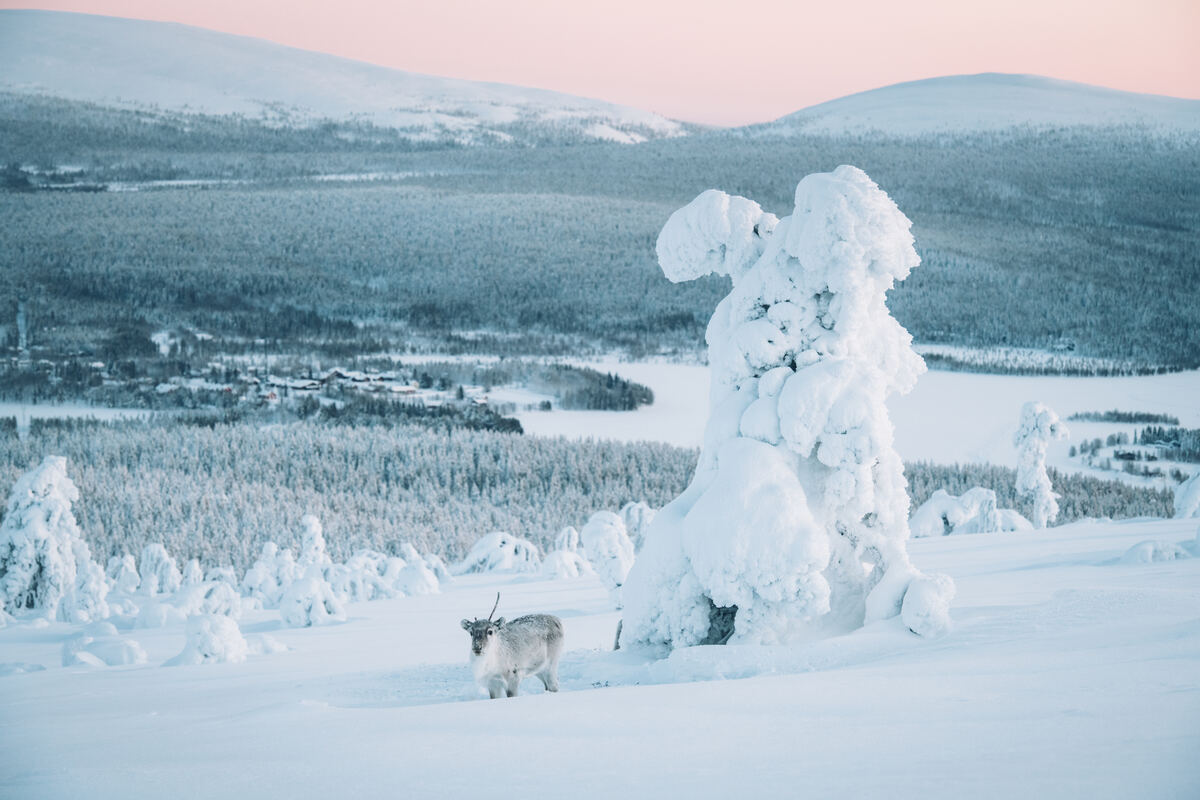
According to WHO data, the world’s cleanest air has been measured at Pallas, Lapland.

Credits: Eeva MäkinenCelebrate under the Midnight SunPerhaps the most Finnish celebration of all is Midsummer, which takes place at the end of June. Originally a celebration of the summer solstice, it’s typically spent with friends and family at a summer cottage away from the city. Lighting bonfires and bathing in saunas are two of the most common traditions, but some choose to spend Midsummer in the city, where young people have recently revived the open-air Midsummer dance tradition.

Even outside of Midsummer, the white nights of a Finnish summer are perfect for celebrations, parties and festivals – and Finns tend to make the most out of their short summer season.

bv8mz[……]

Read more

Fun Times in Finland

The flight to Helsinki, the capital of Finland, was only around two and a half hours. I spent that time finishing up some Theology homework and thinking of all the fun things my friend and I would do once at his hometown. The entire plane ride felt like 20 minutes thanks to a combination of doing homework and trying to figure out the Finnish words the captain would occasionally say over the intercom. Going into Finland, I only knew two words: “Kiitos,” which means “thank you,” and “Perkele,” which means “devil.”

Once at the airport, I tried to find a place to sleep. I was a little anxious that some of the people at the airport wouldn’t speak English, but I mustered up the courage and confidence to ask a person at a flight connection kiosk. She told me, in perfect English, that I could sleep in the area right beside the kiosk, which I am fairly certain was specifically designed for layover passengers. I thanked her, then made my way around the corner to the rest area.

ntzdz
An immersive place to spend the night…

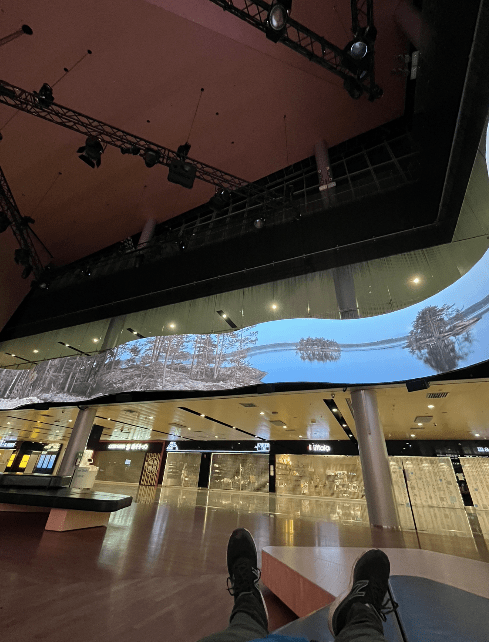
The layover room was immaculate: it was a giant room filled with speakers that played nature noises at a peaceful volume with a 360º LED display of the Finnish wilderness above my head. There were padded benches for passengers to lie on as they waited for their next flight. As the different displays and nature noises echoed as background noises and lights, I passed out hugging my backpack, which contained everything I had brought for the trip.

e92po
Nordic themes abound! And not another soul in sight!

lr4p5
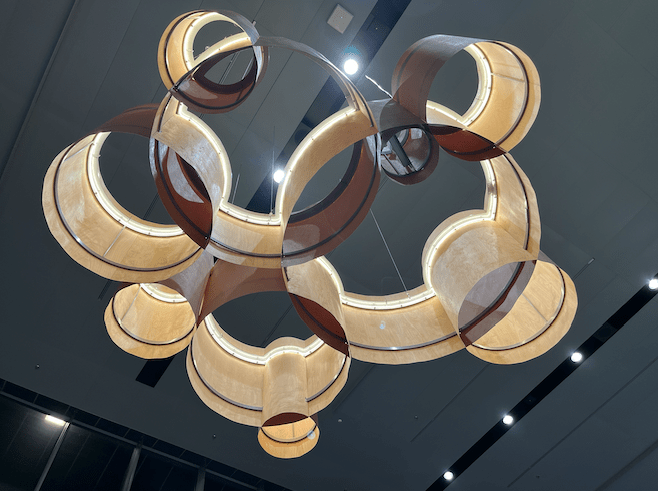
This reminded me of a wasp nest…

plmqe
Santa wasn’t home…

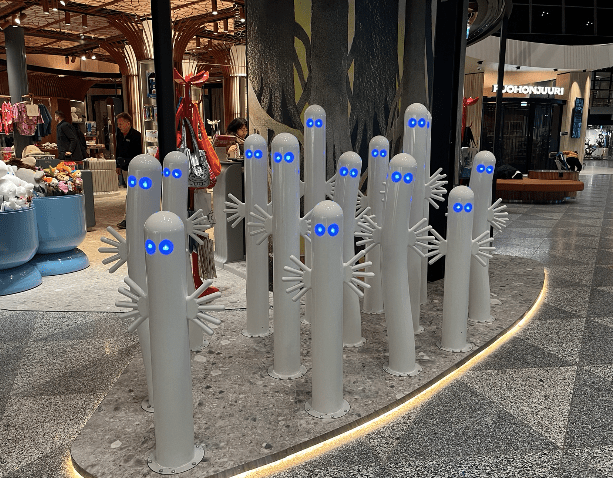
I awoke a few hours later to an empty terminal. Nobody had disturbed me during my slumber, and I am confident that there weren’t even any night guards patrolling the place. The lights and sounds of the layover room had been shut off, mostly because it was still late at night. As I walked around the terminal, I passed by a Moomin Cafe (Moomin is basically the cartoon “mascot” of Finland), got jumpscared by the floor escalators roaring to life for the day, walked into a Santa House for tourists (apparently in much of Europe, many middle and upper-class families will fly to Finland to “see Santa” as that is where the parents tell the children where he lives), and saw a self-serve pizza machine. After loitering around and admiring the Nordic themes of the terminal, I decided to finally go through border patrol.

41suq
Horrifying creatures staring into my soul at 4:30am

Going through border patrol was a bit awkward: typically, most international travelers would go through customs first and then find another place in the airport to sleep. The lady at the kiosk that I had talked with previously said that it was fine if I stayed the night in the terminal even though I would not have my passport stamped until the morning. Since no flights had arrived for a solid seven hours since I arrived, I was the only person in the massive passport and security room. There was only one passport kiosk open, and the burly Finnish border guard looked at me with confusion as to why I was the only passenger at going through security at 5am. Even though he stamped my passport after I told him my reason for visiting, I could see the skepticism in his eyes as he continued to gaze at me as I walked past the checkpoint.

vojbr
my first meal in 12 hours

So nutritious!

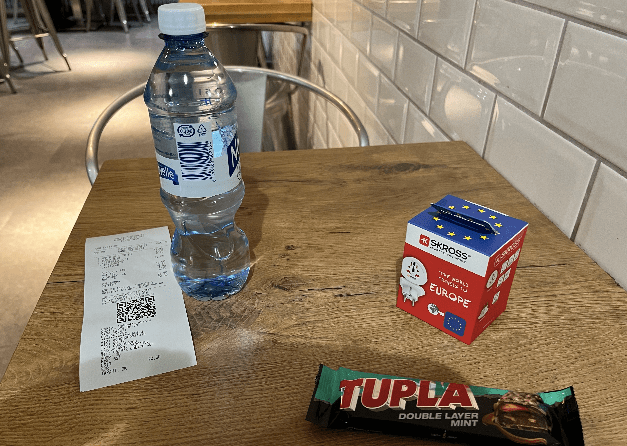
My layover in Helsinki was 10 hours in total, and I had another connecting flight to Kajaani airport that morning. I had gotten the only flight into and out of the regional airport during my stay, so I prayed to God that there would be no delays. As I waited, I realized I had forgotten my charging adapter in Dublin for my phone. So, at 6:30am, I bought an adapter along with a Finnish protein bar and water to act as my breakfast for the day.

kxs46
This was the first time I was outside of the airport building in Finland. It was cold, to say the least.

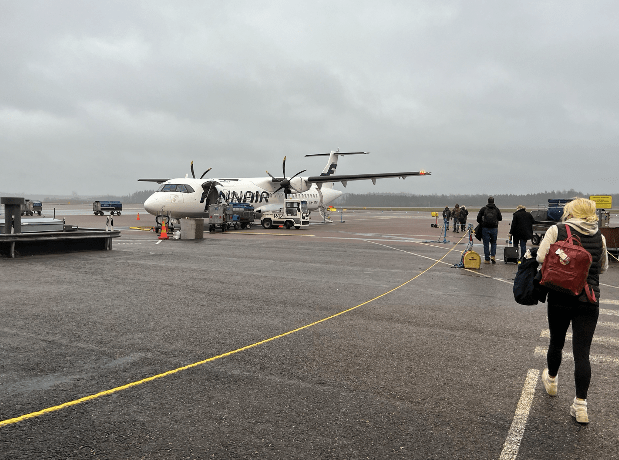
Shortly after eating my “scrumptious” travel breakfast, I heard the roar of a prop plane’s engines pulling into my gate. It was also my first time traveling on this type of plane, and I got a window seat right next to the beautiful fan blades. There were around 15-20 people total for the entire flight, which I expected for a flight that was heading towards a town in the middle of the Finnish wilderness. The small-ish regional plane took around five minutes total from gate push-off to getting in the air to my flight to Kajaani, which was by far the fastest I’d ever experienced such a turnaround. I fell asleep for most of the one-and-a-half-hour flight.

khvjt
My first thoughts of Finland was that it reminded me of a flatter Colorado.

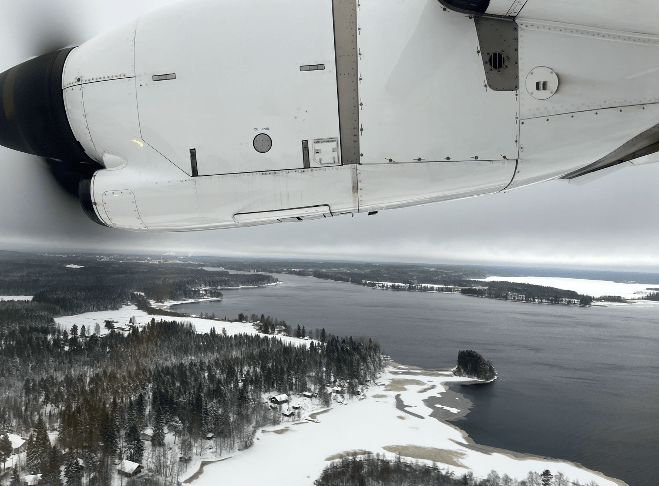
Five minutes before landing, the captain played a pre-recorded message in both Finnish and English saying that the plane would be landing soon. As I peered out the window, a massive lake appeared with its surroundings covered in six inches of freshly fallen snow. As the plane landed on the regional airport’s only (and snow-covered) runway, I took a deep breath of Kajaani’s fresh air. The entire airport building was no bigger than a typical American McDonald’s, and it had the city crests of Kajaani and all the nearby settlements in Finland’s Kainuu province. I texted my parents that I had landed safely and that the Finnish town gave off a vibe similar to that of Colorado. After waiting for twenty minutes in the five-seat large waiting room, I heard a whistle from just outside the doors. My friend and his mother had come to pick me up in their silver Mercedes-Benz, and thus I departed the airport and towards a weekend filled with fun and adventure.[……]

Read more

15 Best Day Trips from Madrid, Spain

1. Toledo

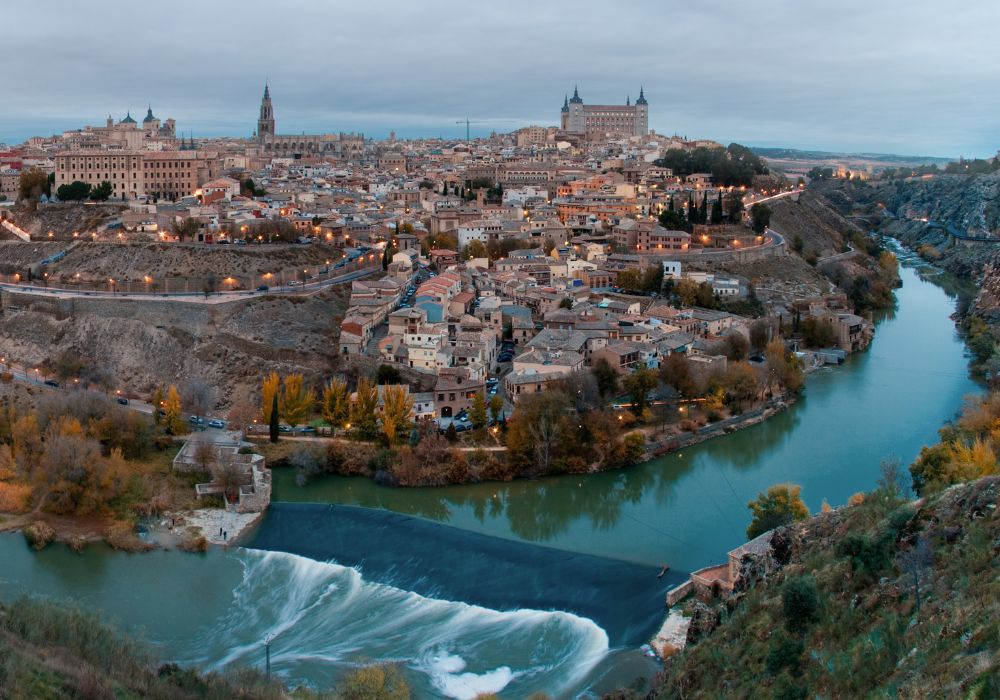
Toledo rightfully leads off the list of best day trips from Madrid. This UNESCO World Heritage site is only a half-hour away from Madrid by train and offers impressive sights throughout.

Since it’s so close, even if you’re just visiting Madrid for the weekend, you could head to Toledo.

Deemed “The City of Three Cultures”, Toledo is home to churches, synagogues, and mosques – each as impressive as the last. Explore the winding medieval streets as you climb your way to the panoramic views waiting at the top of the city.


To get a mix of history and gastronomy, take this Wine and Tapas tour of Toledo from Madrid. You’ll and learn about this interesting location while sipping on wine, and snacking on local favorites. Find out more here.

Getting there: By train, go to the Puerta da Atocha station and board the AVANT train, which takes you directly to Toledo (no other stops). Tickets start at €13.90.

If you’re driving, head south on the A-42 and you’ll be in Toledo in one hour.

Of course, there are planned excursions you can sign up for to get the most out of the day trip to Toledo.

This highly-rated tour of Toledo includes visits to the prominent Cathedral, the 13th century Santa María La Blanca synagogue, and a visit to El Greco’s The Burial of the Lord of Orgaz. You’ll also visit Segovia and Avila (optional). Click here to learn more about this interesting day trip from Madrid.

2. Segovia

In a similar vein to Toledo is Segovia – another one of Spain’s world heritage cities. The prominent Alcázar fortress claims the best views of the city, but many who visit are equally impressed by the remarkably intact Roman Aqueduct that dates back to 50 A.D.

Segovia is easily walkable, and among the twisting streets and various balconies, you almost always have a picturesque view.

With that in mind, you’ll want to take in the sights at all times during your day trip, so here are some restaurants that offer outdoor seating:

Restaurante Narizotas

Asador David Guijarro

Restaurante Teteria Tuma

Getting there: You can drive, take the train, or join a day trip.

Driving will take you about an hour and fifteen minutes, via the A-6 and AP-61.

Taking the train to Segovia is easy enough. Start at the Chamartín-Clara Campoamor station and board the AVANT train. Get off at the Segovia Guiomar and transfer to the Yellow 12 bus for a non-stop ride to the José Zorrilla station. From there, you can walk into Segovia. The whole journey takes one hour.

Another option is to take this day trip with a guide, which includes transportation, tickets, and visiting Segovia and Avila. If you’d rather see Segovia and Toledo on a day tour, this is an excellent option.

3. Aliva

Aliva, located northwest of Madrid, is yet another world heritage city.

Its walled perimeter instantly transports you back to its medieval roots, and the 1.7-kilometer walkway along the walls is open to the public. The cathedral, allegedly Spain’s oldest Gothic church, is built into the city walls.

When it’s time to eat, check out any of these delicious stops:

Gloria Bendita (traditional Spanish food)

El Molino de la Losa (Steakhouse – definitely a splurge as it’s pricey)

Revolutum (Casual bites, like salads and burgers)

If you’re there in the summertime, the city hosts plays and performances that are open to the public.

Getting there: Aliva is a bit of a haul from Madrid so prepare and plan accordingly. Getting there will take around 5 and a half hours by car on the A-1. A better option to have everything arranged for you so you can sit back and relax is this excellent day trip.

4. Salamanca

At this point, it’d be easier to point out which cities in Spain aren’t World Heritage sites. But, just one look at the awe-inspiring sandstone architecture that composes Salamanca gives it away. The city is over 2,000 years old, pre-dating any occupation by the Romans.

You’ll want to spend most of your time in the old city, which is home to the University of Salamanca, and the old Cathedral. Like Madrid, Salamanca has a Plaza Mayor which serves as a scenic place to grab a bite and people-watch.

If you’re looking to switch it up from gazing at architecture, check out the Museum of Automobile History to see vintage luxury and racing cars, or go to the Museum of Contemporary Art, which heavily contrasts the motifs of this ancient city.

Getting there: Drive from Madrid to Salamanca on the A-6 and A-50. The trip takes a little over 2 hours.

Salamanca is one of the better day trips from Madrid by bus. You could take one from the Moncloa station to Salamanca which will take 2 and a half hours and cost $26.

5. Patones De Arriba

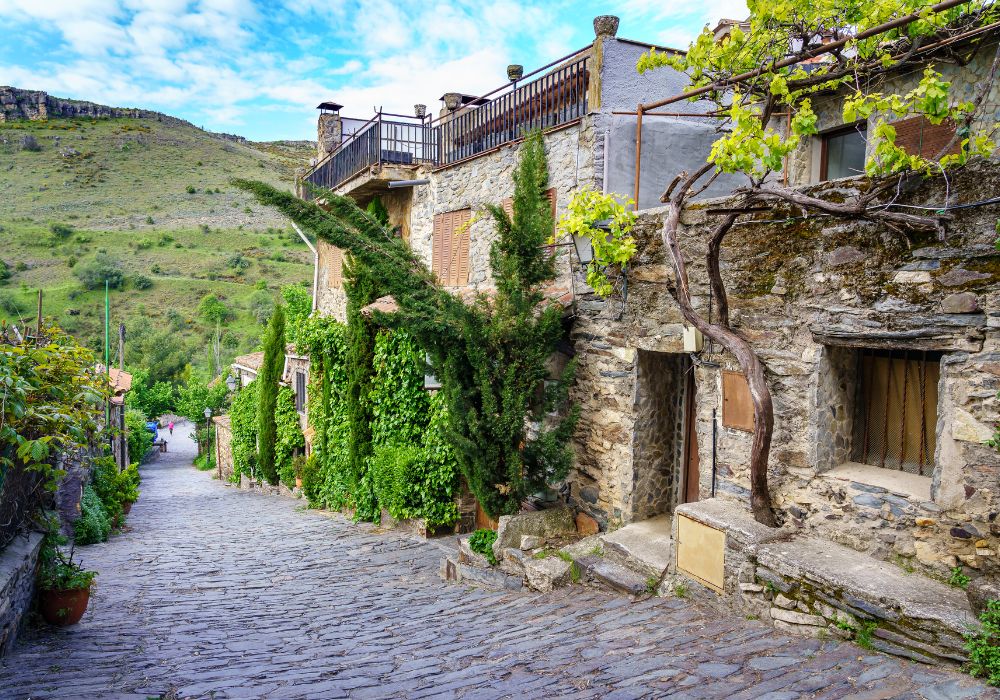
Take a day to hike up to the old mountain town of Patones De Arriba. Its mountaintop was so secluded that it operated as it’s own independent kingdom until the 18th century.

Passing by olive groves and remnants of shepherd’s huts, you can’t help but feel like you’re being transported back in time.

Old town street with mountain views, stone facades and green plants in Patones De Arriba, Madrid.
Assuming you’ve worked up an appetite during your hike up to the town of around 520 inhabitants, stop in to refuel at El Lavadero de Patones or El Rey de Patones. Both offer affordable and delicious steaks, Mediterranean dishes, and more.

Getting there: By bus, go to the Castellana – Nudo Norte station in Madrid and ride the ALSA 197 to Malacuera-san Francisco, then transfer to the 197 bus and ride until the Patones-av. Madrid stop.

6. Córdoba

Córdoba is located in the sunny (or sunnier) south of Spain. The city was a focal point for the Romans, and later the Moors, as made evident by the impressive mosque-turned-cathedral which has stood since 784 AD.

To explore the sights of the city, you can take this fully guided walking tour, or opt for a bike tour that hits the highlights of Córdoba.

Foodies in Córdoba should check out this wine tasting, or go for the olive oil tasting to really hone your palette. If you’re looking to get your hands dirty, take this paella cooking class and learn some skills to take home with you and share.

Getting there: You can take the train from Puerta De Atocha to the Cordoba-Central station. The prices range from $60 – $110, and the ride will take an hour and forty-five minutes.

By bus, go from the South Bus Station in Madrid to the Córdoba Bus Station. The trip takes roughly 4 hours and costs $20 – $30. By car, take the A-6 to E-5. The drive will take approximately 4 hours.

7. Royal Palace of Aranjuez

As one of the shorter day trips near Madrid, the Royal Palace of Aranjuez is an easy addition to your itinerary.

The palace is one of the places that the Spanish royal family calls home – mainly during the spring months. It was built during the reign of Philip II in the 16th century, around the same time he moved the capital of Spain from Toledo to Madrid.

The magnificient Royal Palace of Aranjuez on a bright day in Spain.
To get the most out of your visit to Aranjuez, make sure to see the following:

Plazuela de la Mariblanca

Chapel of San Antonio

Courts of Aranjuez

Plaza de Couples

Royal Palace (of course!)

The Kings and Queens’ garden

To fuel up along the journey, you’ll be stopping at various tapas bars for drinks and food. A day trip like this is a fun and easy way to explore a lot of what’s just outside of Madrid.

Getting there: By car, take the A-4 to the E-5. The trip will take 50 minutes. By bus, take the green 432 bus down to the Infantas-estacion de Autobuses, which is a short walk from the Palace.

8. Cuenca

The city of Cuenca is perched atop the mountains in eastern Spain. It was established back when the Moors occupied the country.

Many of the houses take after the castles and churches of other cities around Madrid in that they’re built along the edges of cliffs. A walk on the San Pablo Bridge will give you the best views of the cliff houses (aptly named the “hanging houses”).

You could also spend some time at the ruins of the Cuenca Castle, but make sure to check out the secret tunnels that Alfonso the 8th had constructed during the Spanish civil war.

If you want a fine dining experience, reserve a table at Figon Del Huecar or Trivio. For budget-friendly eats, go to Meson Fidel or Meson El Tormo.

Getting there: Driving to Cuenca from Madrid will take about 2 hours along the A-3 and A-40. I recommend taking the train for ease – begin at Puerta De Atocha in Madrid, and in 54 minutes, you’ll be at Cuenca Fernando Zobel.

9. Puerto de Navacerrada (Ski Resort)

Puerto de Navacerrada is part of the Guadarrama Mountains and it offers some casual slopes for a day of light skiing.

If you’re not visiting in the winter, you can still take the chairlift up for a scenic ride, or hike up the 1,858-meter mountain (there are three different hiking trails).

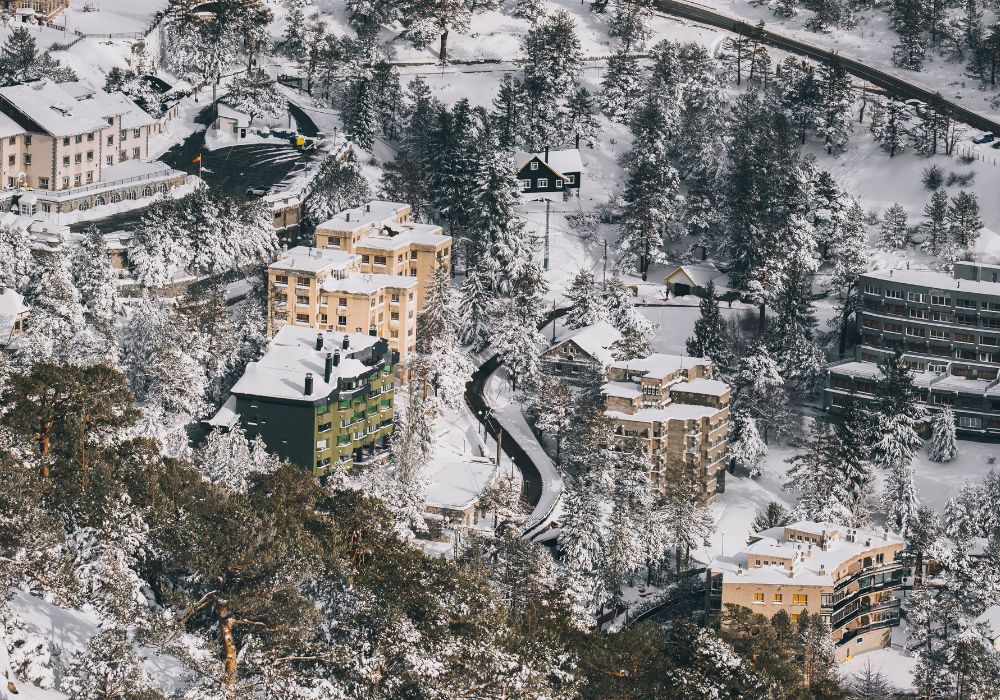
Puerto de Navacerrada village at sunset after winter snowfall in Madrid.
Getting there: If you’re driving, take the A-6 to the M-601 which will take you about an hour. Otherwise, you can take the green 691 bus from Moncloa from Puerto de Navacerrada which will be roughly an hour and a half ride.

10. Valencia

Located on the southeastern coast of Spain, Valencia was built up at the junction of the Turia River and the Mediterranean Sea.

Valencia boasts numerous museums, beautiful beaches, and is the birthplace of paella; making it one of the best weekend trips from Madrid.

Regarded as one of the more bike-friendly cities in Europe, getting a lay of the land on this popular bike tour is a great start to your day trip.

If you’re looking for more active experiences, you could take this walking tour of the city, or just hangout at the beach.

Otherwise, explore the various museums that the “City of Arts and Science” has to offer, including:

The Art and Science museum

Almoina Archeology Center

National Ceramic Museum

Museum of Military History

Museum of Modern Art

and many more…

Within the center of Valencia is Blanqueries, a Michelin-starred restaurant offering modern cuisine in an environment that’s casual enough for a decently dressed traveler.

If the timing works out, go to Valencia during the “Las Fallas Valencia” festival in mid-March.

This party stretches over five days to welcome the spring season and is celebrated with colorful costumes, floats, and a boatload of fireworks. Las Fallas attracts over 2 million people per year, so the city reserves hundreds of streets for pedestrian traffic only.

I had the pleasure of being among those 2 million people a few years ago. The parade floats are more works of art than floats, the crowds at times mimic those of Times Square on New Year, (as a heads up, kids get a kick out of wantonly tossing percussive fireworks on the streets).

Getting there: By train, start at the Puerta de Atocha station in Madrid and get on the AVLO train to Valencia, which runs non-stop to the destination and gets you there in under 2 hours. Tickets can range from around $40 to highs of $100 and more, so plan accordingly.

Driving is a less appealing option as taking the A-3 will take a little more than twice as long as the train, at 4 hours in total.

11. Hiking Trails Outside of Madrid

Some of the best day trips around Madrid include various hiking trails and a short ride outside the city. Chief among them is the Sierra de Guadarrama National Park.

The park is home to numerous hiking trails of varying difficulty, with some of the shorter ones taking two and half hours, and the longest taking around 5 hours.

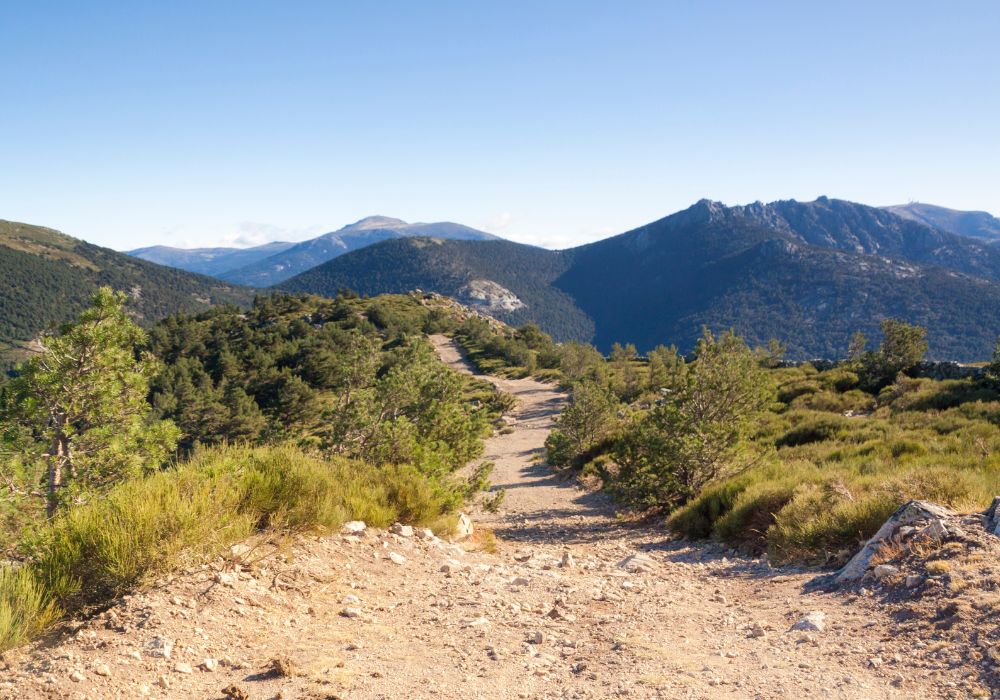
A panaromic view of Sierra de Guadarrama National Park during sunrise.
Make sure to bring food and water, as there are limited options once you’re out there.

Getting there: Driving takes an hour and forty-five minutes via the A-6 and M-604.

Or, you can catch the Green 691 bus near the Moncloa station in Madrid, which despite having 23 stops to Ctra. valdesquí-puerto de Cotos only takes an hour and forty-five minutes.

12. Seville

As the largest city in southern Spain, Seville has a lot to offer and is certainly worth a visit.

Some of its top sites include the Real Alcazar of Seville (you may recognize the area from Game of Thrones), the Plaza de Espana, and the park of Maria Lusia.

Get a guided tour of the city on electric scooters to help beat the heat and once you’ve soaked up the sun, hone your cooking skills in this paella workshop.

After building up an appetite, check out these great restaurants:

Bodega Palo Santo

La Sede

Infanta Sevilla

Antonio Jesus of Oducia

Pizzeria da Simona

Getting there: Driving takes about 5 hours along the A-4 and E-5. Taking the train from the Puerta De Atocha to Sevilla-Santa Justa takes just 2 and a half hours. You can also take the bus from South Bus Station to Sevilla Coach Station, but the trip is over 6 hours long.

13. Bilbao

An industrial port town with a resurgence of culture, Bilbao is a great day trip from Madrid. Bilbao’s Guggenheim museum is the main attraction, but along with its art scene comes a great restaurant scene.

Foodies should check out this fun food tour with wine!

Guggenheim Museum Bilbao in Spain
To get a lay of the land, amble about the city (Bilbao is very walkable), or hop on the recently installed Metro system. However you get around, make sure you stop by the old town.

Getting there: The bus will take you 4 hours and 15 minutes from Madrid, and is pretty cheap (tickets max out at €45, and sell as low as €19). The train ride is just under 6 hours and averages around the same price as the bus.

14. Valley of the Fallen Monument

The Valley of the Fallen Monument stands an hour outside of Madrid. It’s a somber memorial with a dark history, a history that tends to be overshadowed by World War II.

The monument is closely related to Francisco Franco, the dictator who ruled Spain from the end of its civil war in 1939 until his death in 1975. The monument was built under his regime and is the resting place of over 33,000 people, most of which were victims of Franco’s militant forces.

Franco described the monument as “an act of atonement”, and it even served as his resting place, albeit temporarily. Given the juxtaposition of Franco sharing a tomb with people he victimized, public outcry led to the removal of his body years later.

Getting there: Driving to the Valley of the Fallen will take you about 50 minutes via the A-6.

Otherwise, you can take the train from Principe Pio in Madrid to El Escorial, then take a cab to the monument – all of which takes around an hour.

15. Wine Country

Madrid (the autonomous region, not the city itself) is home to some world-renown wines. The vineyards responsible for these famous grapes are a short day trip from Madrid.

To learn about (and taste) a lot of wine, you can book a wineries tour which departs from the city of Madrid. You’ll visit three vineyards, try wines of all varieties, and learn about the history of winemaking in Spain – you can’t go wrong!

A wine regine of Spain from vineyard view.[……]

Read more

UK family travel blog

It may surprise you to know that we are actually a UK family travel blog. I am British, I was born and raised in Wales and my kids were born in London. We left the UK to travel and have returned for long trips and visits many times. This is our UK travel blog, guide, and tips section. It will help you plan your trip or UK itinerary. You can jump straight to a place, attraction, or destination in the UK from the links below.

UK beach. Beautiful sandy beach in the UK
The UK has some beautiful beaches and we do, indeed, swim from them and otherwise enjoy them. I love UK beaches in winter, rough seas and stormy skies on the British coastline are something you should experience. For me a deserted winter beach is far more beautiful that a crowded summer seaside scene.

All of our UK travel blog posts are in one place here. (we are updating today, somr parts are temporarily removed – sorry!)

Wales and London have their own separate sections because the volume we have on London is just too huge.

You may find our post on the UK with kids useful too, if you’re first time family travellers.

The United Kingdom is more correctly known as The United Kingdom of Great Britain and Northern Ireland, The UK or U.K. It is a sovereign country separated from the main European continent by water.

It is a part of the continent of Europe, but Brexit is yet to determine if it will remain part of the European Union.

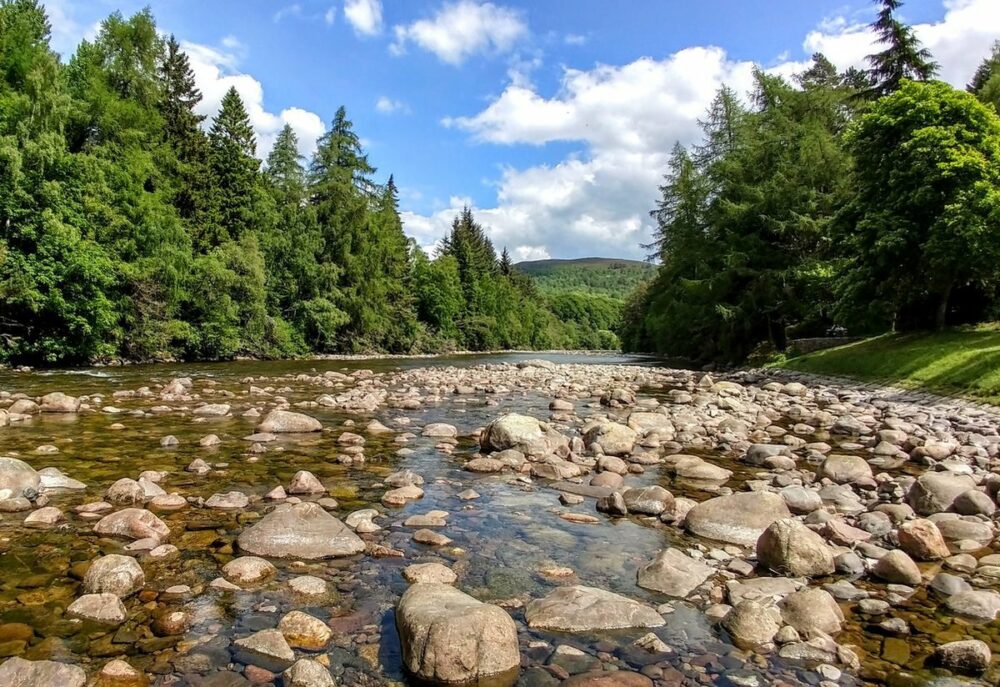
UK beautiful rivers and mountains river in Scotland Balmoral Castle
What a beautiful place the UK is. There are many remote, unspoiled, wild places in the UK. This one is in Scotland and is accessible to everyone, it’s in the grounds of Balmoral Castle. This is the River Dee. The backdrop for many a Royal photoshoot.

The United Kingdom consists of four countries, England, Wales, Scotland and Northern Ireland.

Yes, they are all countries.

I wrote a short post explaining why Wales is a country.

We are all British, but a Welsh person can never be English.

As a Welsh person, I do, sadly, have to point this out rather often.

The UK and England are not the same thing.

The British Isles are different again. The British Isles consist of the islands of Great Britain (the mainland), Ireland, The Channel Isles, The Isle of White, the Hebrides, and over six thousand smaller isles.

It’s complicated, I know.

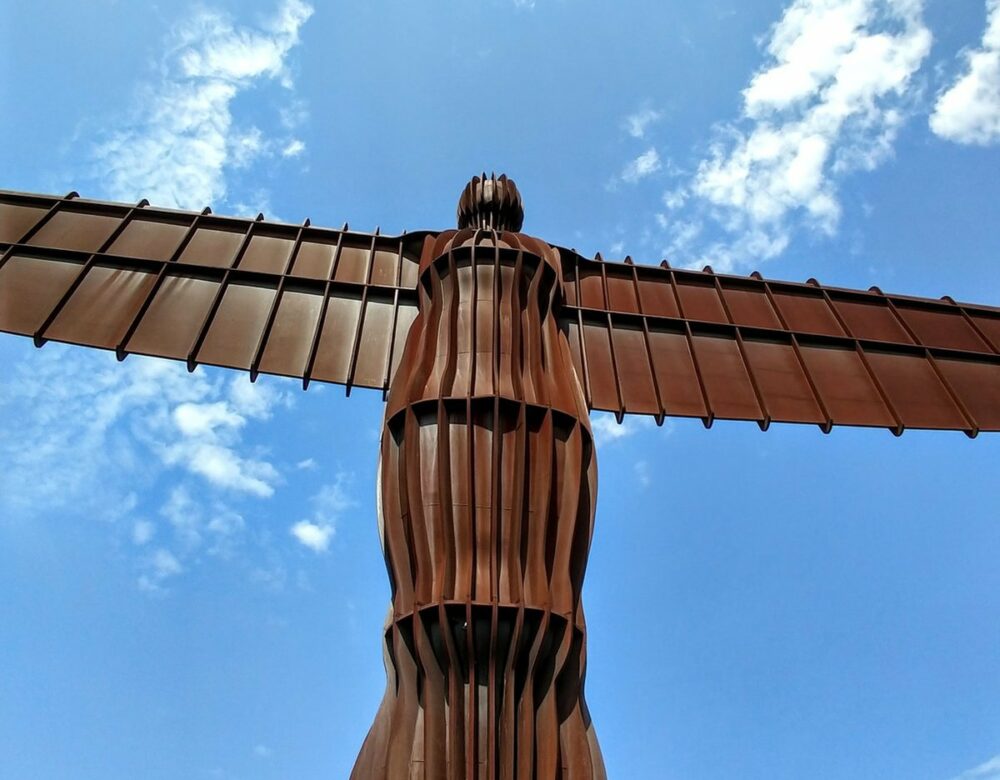
British contemporary art the angel of the north statue in the north of england UK
The UK isn’t just about history, castles and beautiful wild places. The UK does modern and contemporary well too. The is the Angel of The North Statue in the North of England, UK. We took a UK road trip, as a family, to see some amazing sites such as these.

That’s the geography lesson over, now what’s on the UK travel blog?

This post may contain affiliate links that earn us commission should you choose to use them.

UK Travel Tips and FAQs

I’m not going to cover current safety, border openings, visas and so on here because it’s just too complex.

You’ll need to check your local and UK travel advice and consider your travel insurance very carefully.

I’m just going to tell you about the fun parts of UK travel here.

Some of the most beautiful and remote places to visit (outside cities) in the UK are:

The Lake District.

Cornwall’s fishing villages and beaches.

Pembrokeshire Wales and its rugged coastline.

The Brecon Beacons, Wales.

Snowdonia and Mount Snowdon, the highest mountain in Wales (1.085m).

Ben Nevis, the highest mountain in Scotland and The British Isles (1,345m)

The Dark Hedges, Northern Ireland.

Lake Windermere, Cumbria.

Fingal’s Cave, The Isle of Staffa, Scotland.

The Old Man of Storr, The Isle of Skye

Stonehenge, Wiltshire.

Durdle Door, Dorset.

The Isles of Scilly, Cornwall

The Giant’s Causeway, Northern Ireland.

The Wye Valley and Tintern Abbey Monmouthshire

Scafell Pike, the highest mountain in England (978m)

Devon’s beaches.

Dartmoor Devon

London

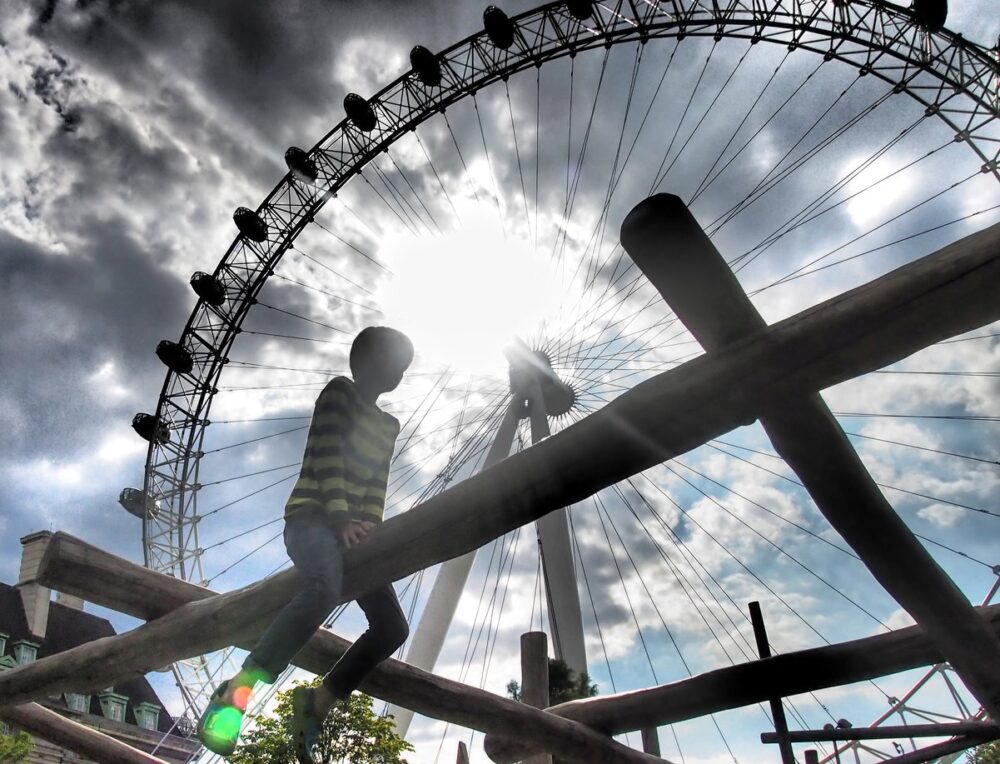
family at playground in London UK
This playground beneath the London Eye on the South Bank of the River Thames was a family favourite when my children were small. London is our home, we love it and can share so much information with you.

London was home to us for almost a decade and my children were born there, in Twickenham Middlesex, a short walk from the River Thames in South London.

We were very close to Richmond Upon Thames, and, in fact, lived there a few years too.

You’ll find our guide to London for kids very comprehensive as not only is it “home” it’s also one of our very favourite places in the world.

There is so much to do in London for all ages and interests and it’s a firm global family travel favourite. The posts below highlight a few places and attractions we chose to share on our UK travel blog.

Wales

n0lxt
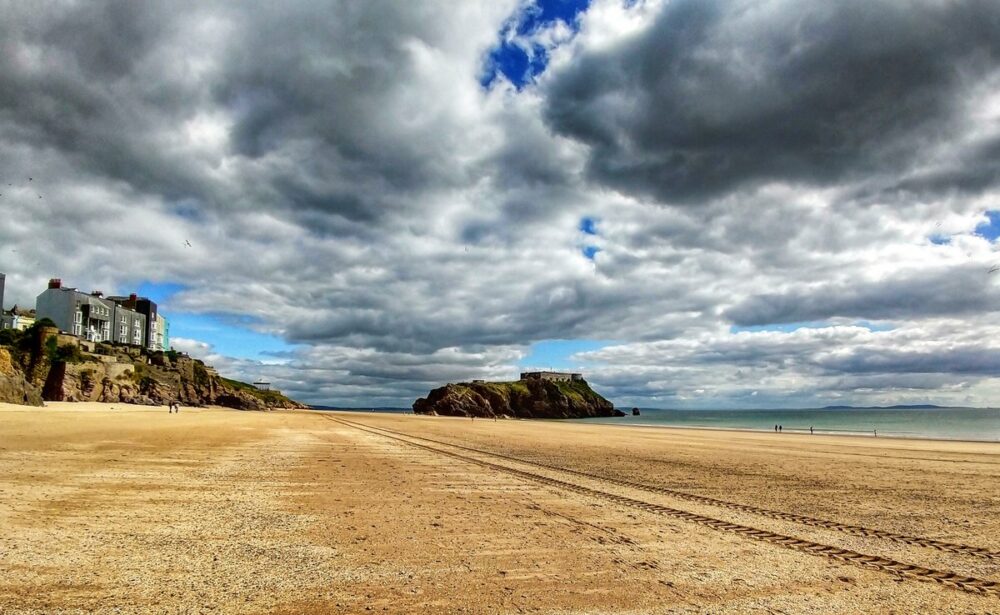
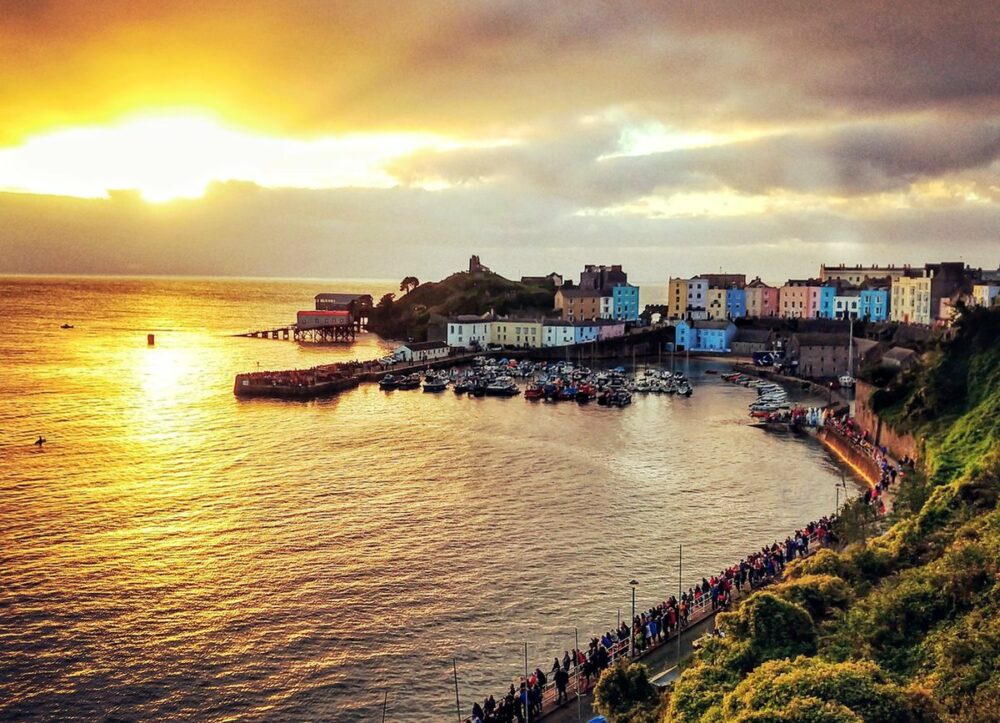
This place is my childhood holiday destination. I love it and it was important to me to share it with my children. This in Tenby harbour in Pembrokeshire. I took this photo as the assembled crowd sang the Welsh National Anthem at dawn. It was beautiful.

Wales is the country of my birth and I love it just as much as England.

We have a separate Wales travel blog focussing just on the country of Wales and a huge post on Wales with kids.

I most love Wales for the rugged coastline and beaches, Tenby, in the photo above, is a childhood favourite of mine and still a place I love to take my own kids.

Wales is, of course, famous for castles, it seems we have a castle on every street corner at times. Some are free to enter, others have an admission price.

Scotland

My son, then about 13 years old, almost at the top of Ben Nevis in Scotland. One trick we employ as family travel bloggers is to divide and conquer. This child wanted to climb Ben Nevis, the other didn’t. We got around this by doing it separately. My husband ran up there before breakfast, D and I wanked up more sedately once he got back. The views are pretty amazing and there was snow at the top, even in summer.

We had a tradition of letting the kids pick which country to visit for their birthdays. One year they chose Scotland. I’m not quite sure why they chose Scotland, I think they were looking for normality, British food, and a mild climate.

Read more on our Scotland travel blog page.

They really enjoyed some of it, particularly the Highland Wildlife Park.

Three of us climbed Ben Nevis, one sat it out.

It’s not a hard climb and in summer we did it in jeans and T-shirts with no gear.

My husband ran up there and back before breakfast.

The Royal Yacht Britania at Edinburgh was a stand-out for me, not so much for the kids.

England (Outside London)

7j3q9
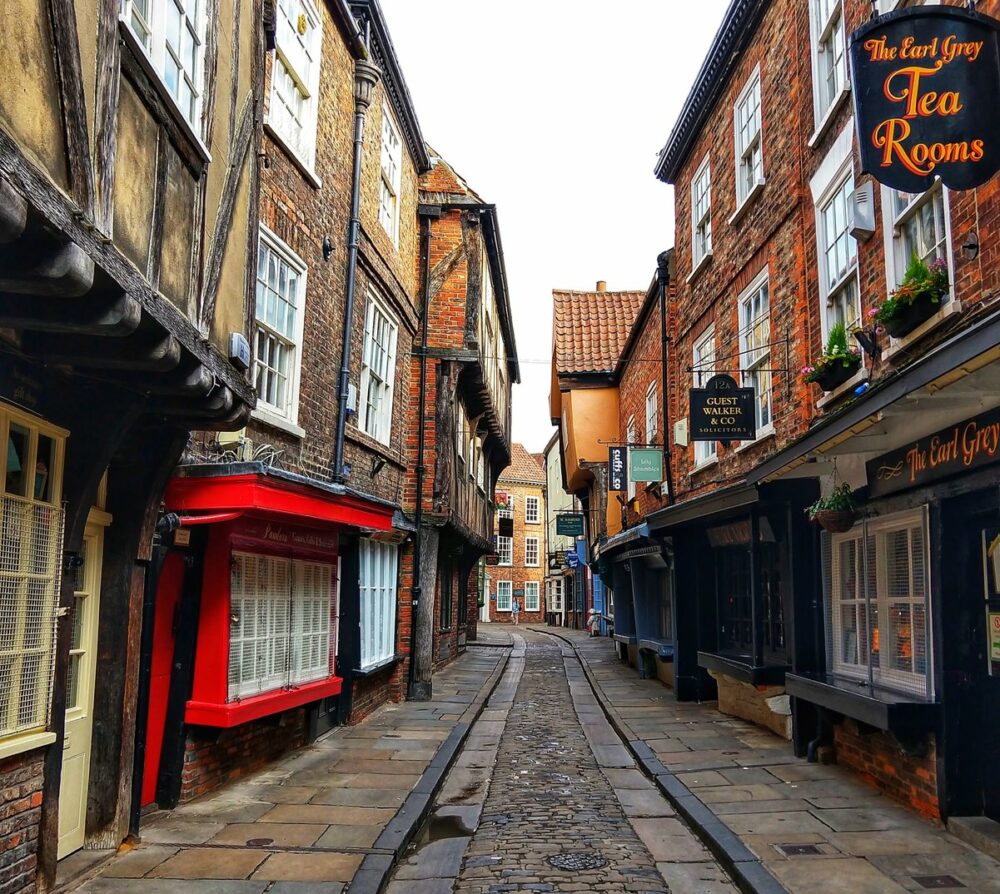
Amazing York in England. This is one of England’s top must-see places, but there are so many more. I had to get here very early in the morning to take a picture of this historic street uncrowded.

That’s all we’ve got for you for now on our UK travel blog. Our family loves the UK and given the choice, we’d be living there today. Circumstance is keeping us away. One day, we will be back. To our home.[……]

Read more

THE COMPLETE TRAVEL GUIDE TO PARIS, FRANCE

gcj1w
To call our recent trip to Paris spontaneous is a bit of an understatement.

We had been in Sibenik, Croatia for three weeks, and while we loved the small coastal city, we were starting to feel the grass grow beneath our feet.

Travis and I were just one month in to our new full-time travel lifestyle, and as much as we hated to admit it, we were bored. We had done everything in the area multiple times, and we were on a first name basis with the waiters at the restaurant around the corner.

It was time to shake things up.

After some blanket “Europe” searches on Google Flights we narrowed it down to two cities where we could fly to that day: Paris and Berlin.

Torn at the prospect of both destinations, we turned the decision over to fate and flipped a coin.

Heads: Paris. Tails: Berlin.

We landed in Paris that night with no plans, no lodging and no expectations, and a week later we left with a newfound love and appreciation for the beautiful city.

While Paris is by no means an uncharted destination, here’s my take on the city of lights…

Where to Stay

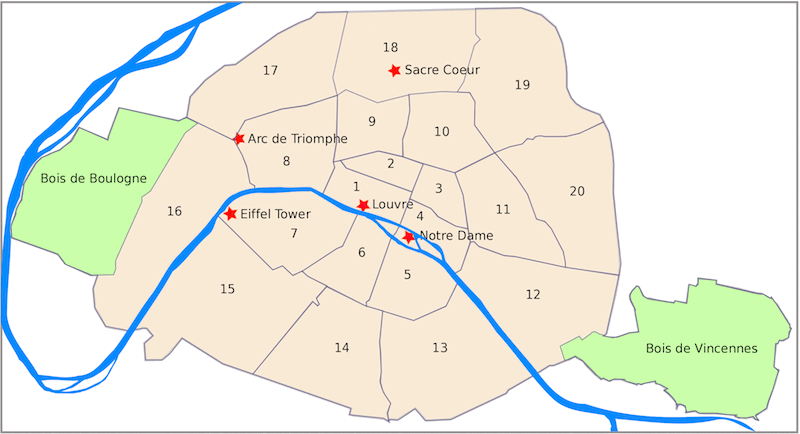
This sounds obvious, but Paris is a huge city, and where you plant yourself is crucial to maximizing your time, money and energy. The city is divided into arrondissements, or districts, each with a different flavor and ambiance.

dx44v
Paris by Arrondissements (Credit: Paris Discovery Guide)

There are a million and one hotels in the city, many that are quite pricey, so I would recommend utilizing Airbnb to stay in an apartment in a central location. New to Airbnb? Here’s $40 off your first stay!

Use the Cathedral of Notre Dame as your landmark, which is smack in the center of the city.

When most people visualize their stay in Paris, they picture staying right by the Eiffel Tower.

In actuality, it’s a few miles from most other attractions in the city, and the neighborhood is commercialized and filled with tourists. Same goes for the Louvre, so my recommendation is to stay in one of the following areas:

Le Marais

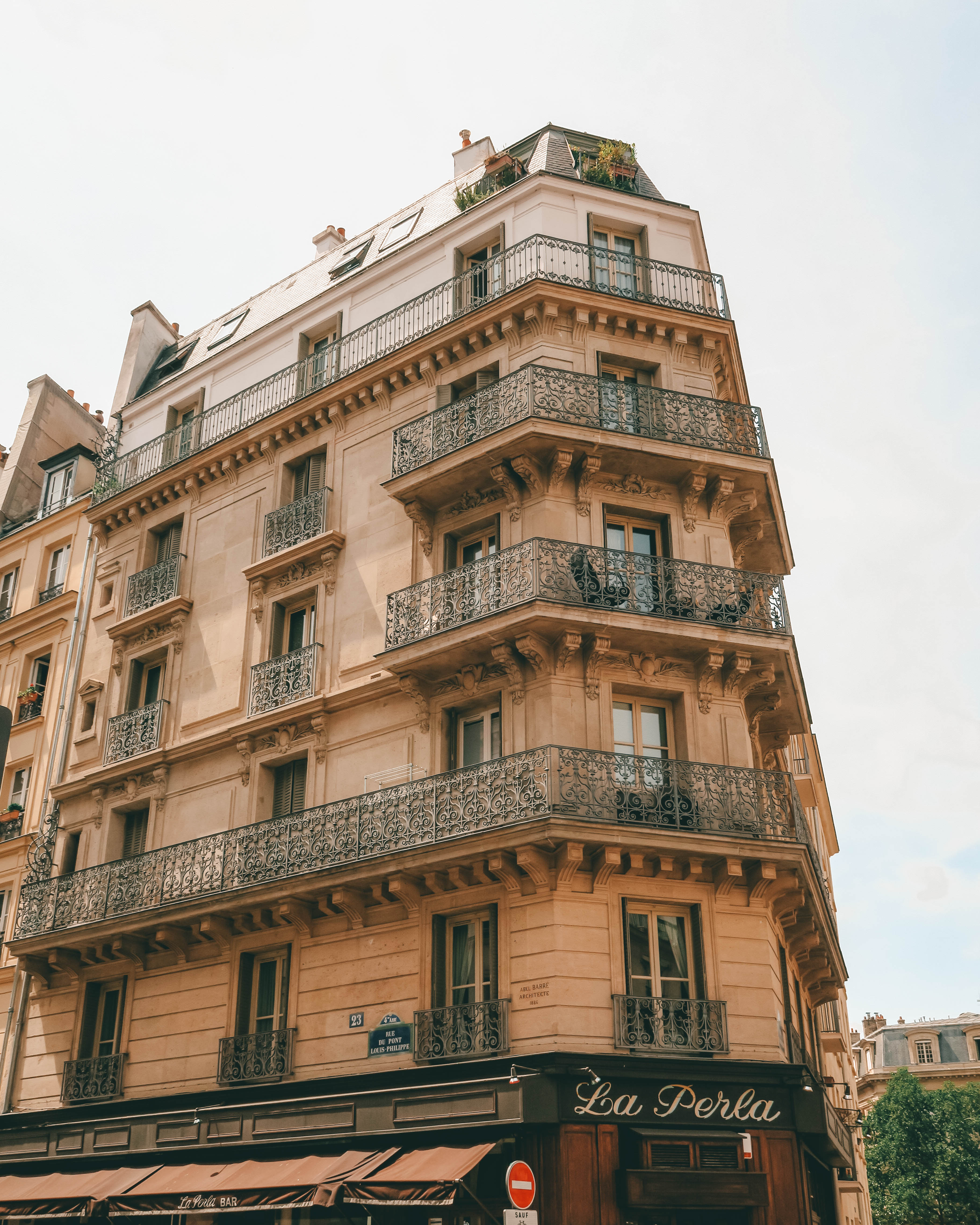
Located just across the river from Notre Dame in the 3rd and 4th arrondissements, Le Marais has the chic local vibe that you’ve been dreaming about. Stay here for some of the city’s best dining, shopping and street wandering.

r61gn
mvdsw
trlz0
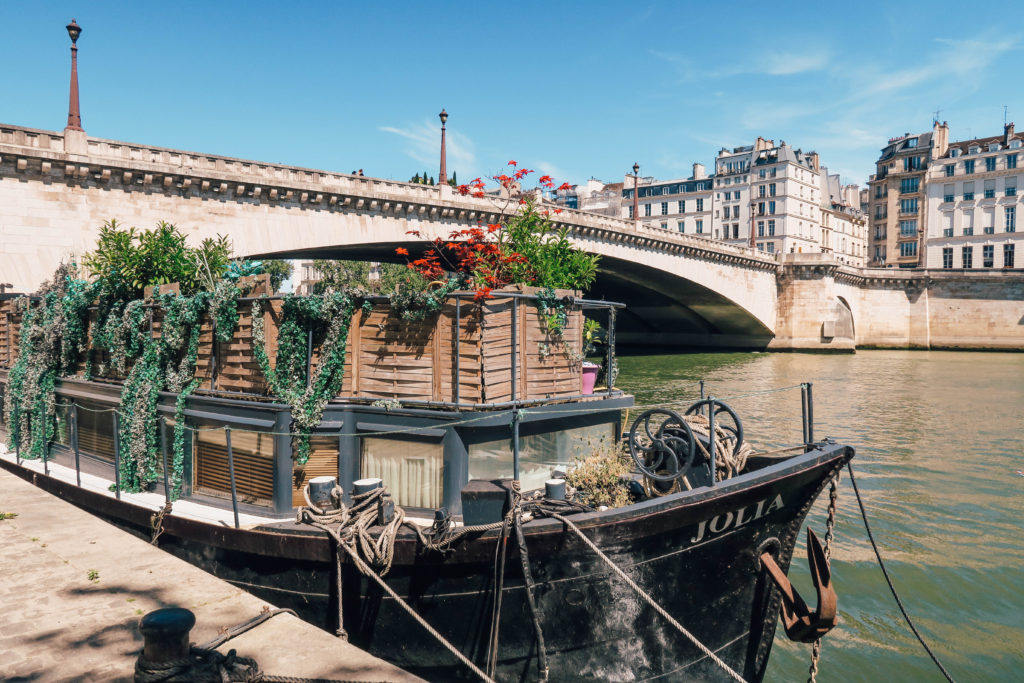
The streets of Le Marais / the Cathedral of Notre Dame / A houseboat on the Seine near Notre Dame.

The Latin Quartier

You’ll find fantastic lodging options here in the Latin Quartier, situated southeast of Notre Dame in the 5th arrondissement. The architecture is quintessentially Parisian and the streets are lined with quaint cafes and shops.

Saint-Germaine is another happening neighborhood located adjacent to the Latin Quarter and is home to one of the city’s best restaurants and bar scene.

6th Arrondissement

This centrally located district is home to the Jardin du Luxembourg, and is known both historically and today for it’s cafe culture, restaurants and art galleries.

How to get around

The Metro

Paris has an amazing metro system, and with good reason — they invented the world’s first subway system in 1898 to prepare for the World’s Fair.

Take advantage of the Metro and pick up a card for your whole visit. Don’t worry, you’ll still get your steps in! GoogleMaps is also very in-tune with the metro and will articulate your train route with pretty good accuracy.

Uber

Fortunately Paris is one of the European cities that still has Uber, and cars are readily available.

What to do

Take a bike tour

The best way to see the city is by bike — take a bike tour on your first day in the city to get your bearings, catch up on your French history and see the major sights.

We liked it so much that we did two bike tours on our visit, and our favorite company by far was Bike About Tours.

crn1f
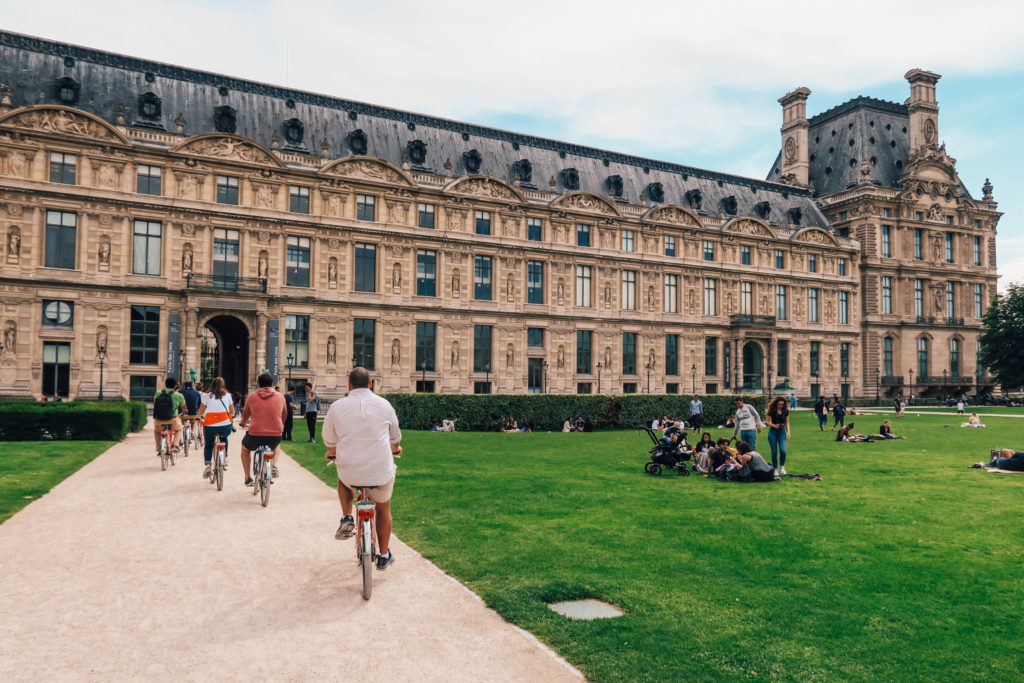
Biking through the grounds of the Louvre

The owner is also a Florida native who has lived in Paris for 15 years, and they offer tours of the city as well as to Versailles and Champagne.

Our tour with their guide Tom was a major highlight of our trip! They also have a cute coffee shop in Le Marais, Le Peloton, where you can rent a bike a la carte.

Have a Picnic at the Eiffel Tower

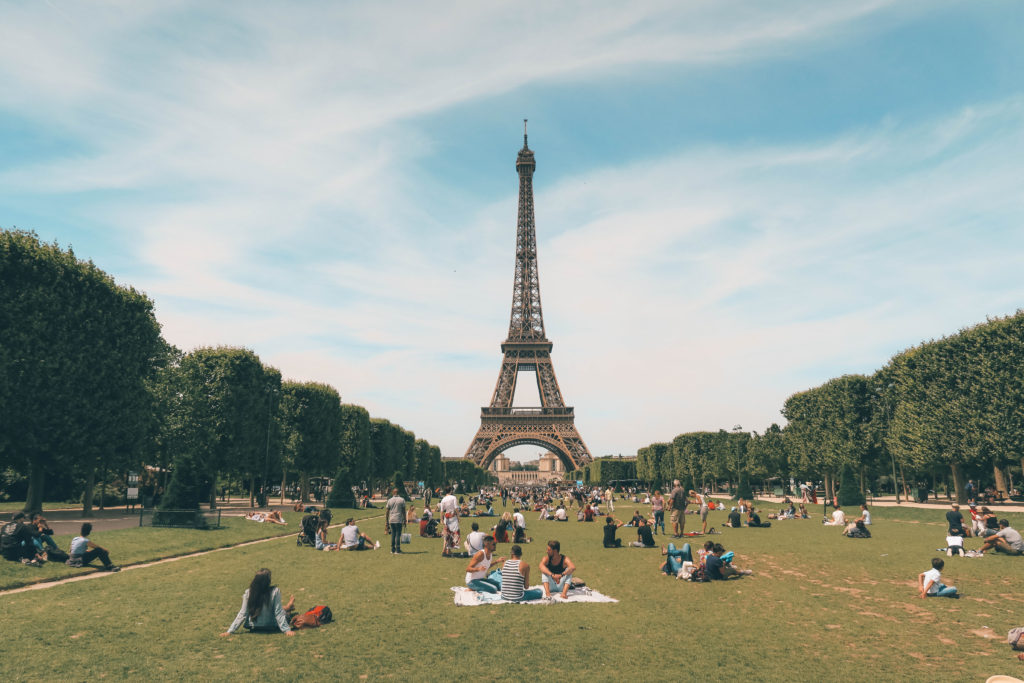
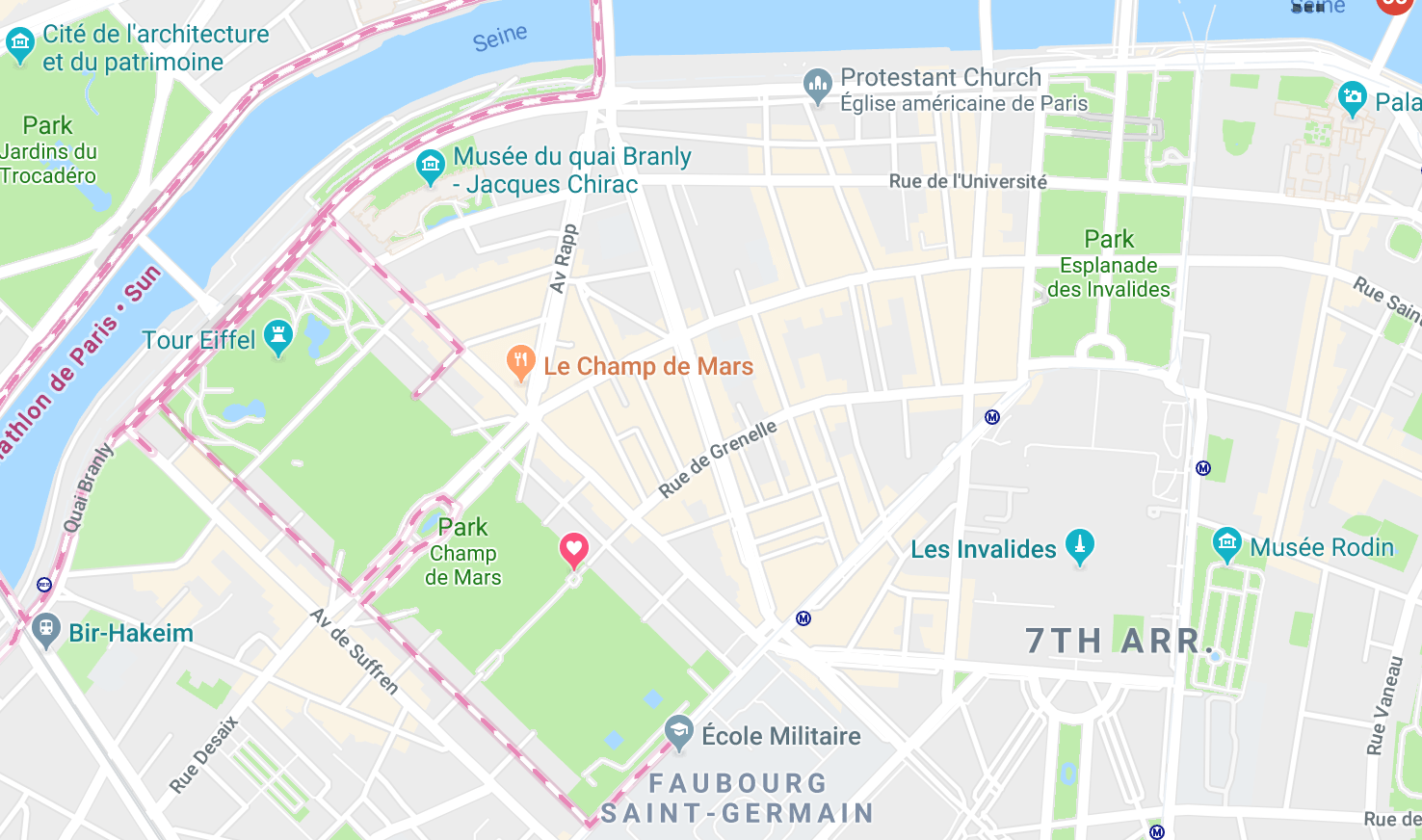
For the best views of the Eiffel Tower, pack a picnic and head to Champs de Mars Park.

Gather the five ingredients you need for a true French picnic: bread, cheese, meat, wine and fruit, and enjoy. No time to grab food beforehand? Grab a crepe and some wine at the stand by the carousel.

ngngu
8j36w
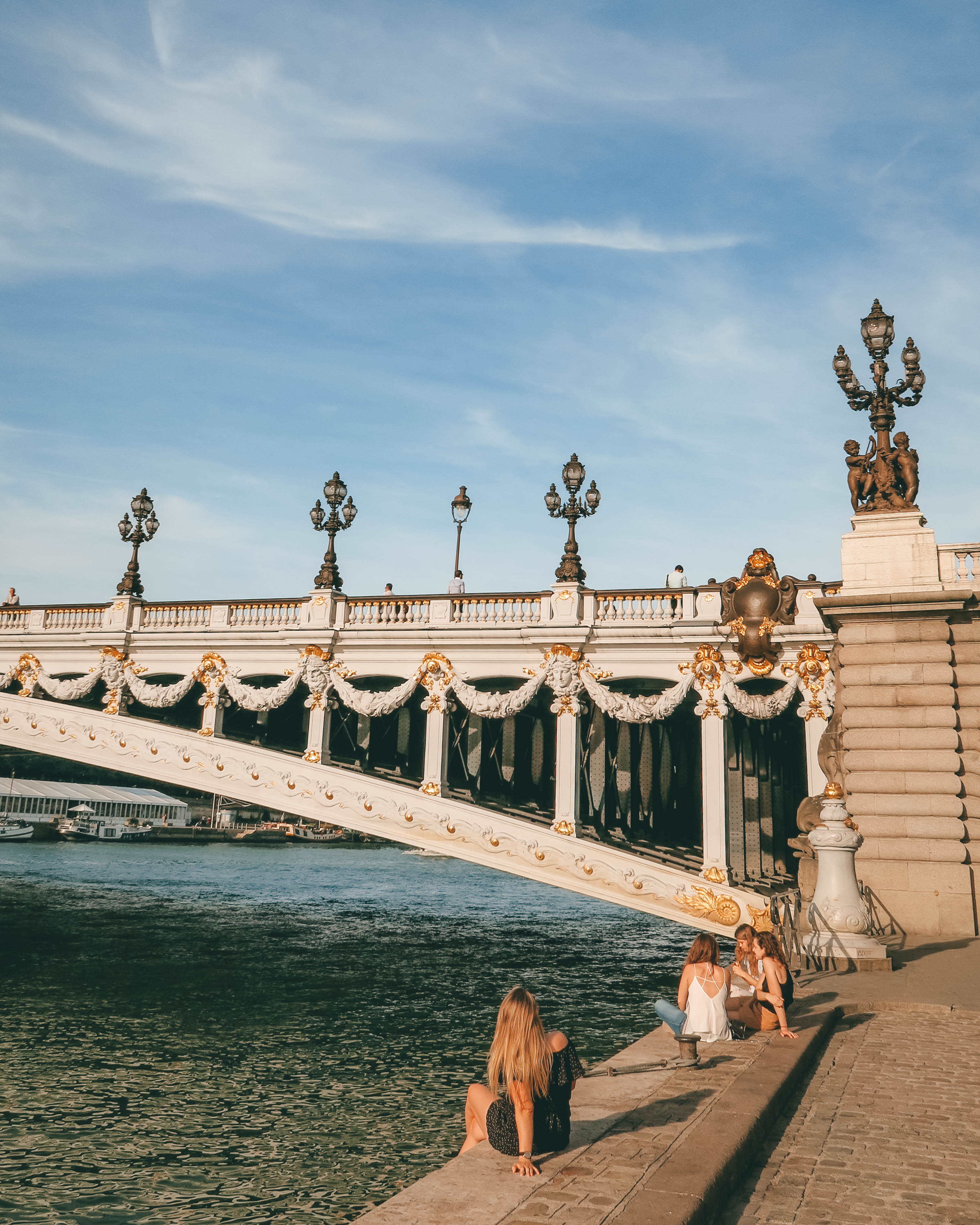
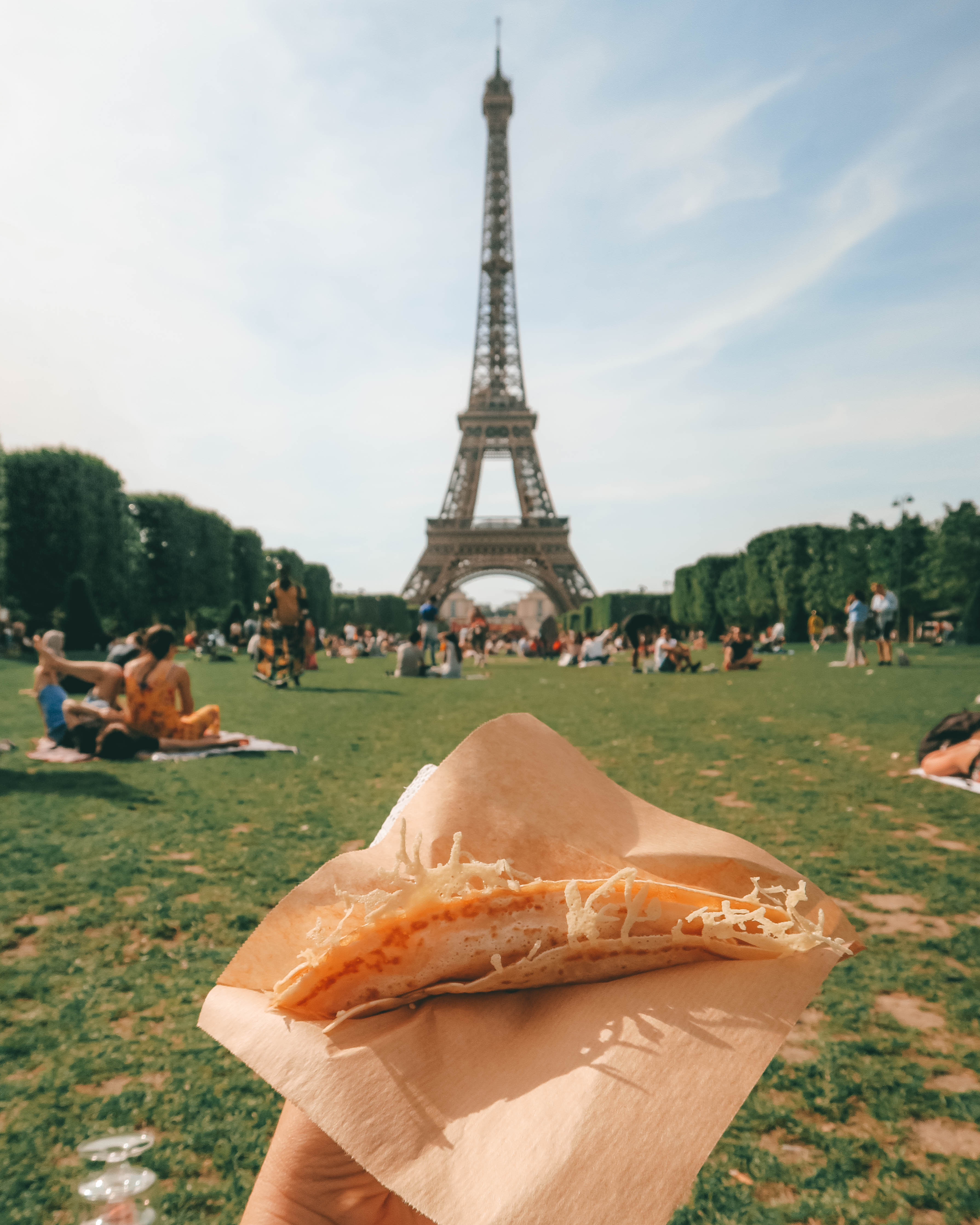
The Pont Alexandre III Bridge / A delicious crepe on the Champs de Mars.

A deceiving thing about the Eiffel Tower is how far away you actually need to be for your photo to turn out… I’m talking one where either you, or the top of the tower isn’t cut off.

For the perfect photo spot, this is your best bet. Head here for your pictures and picnic, then you’re a straight shot through the park to visit the tower itself.

7zcly
Park Champs de Mars, the best picnic and photo spot near the Eiffel Tower

Pro tip: Beware of the people in the park asking if you speak English then to sign a petition, they are pickpockets!

Wander the Le Marais neighborhood

This area was my favorite in the entire city. Head towards Notre Dame, and walk northeast from there.

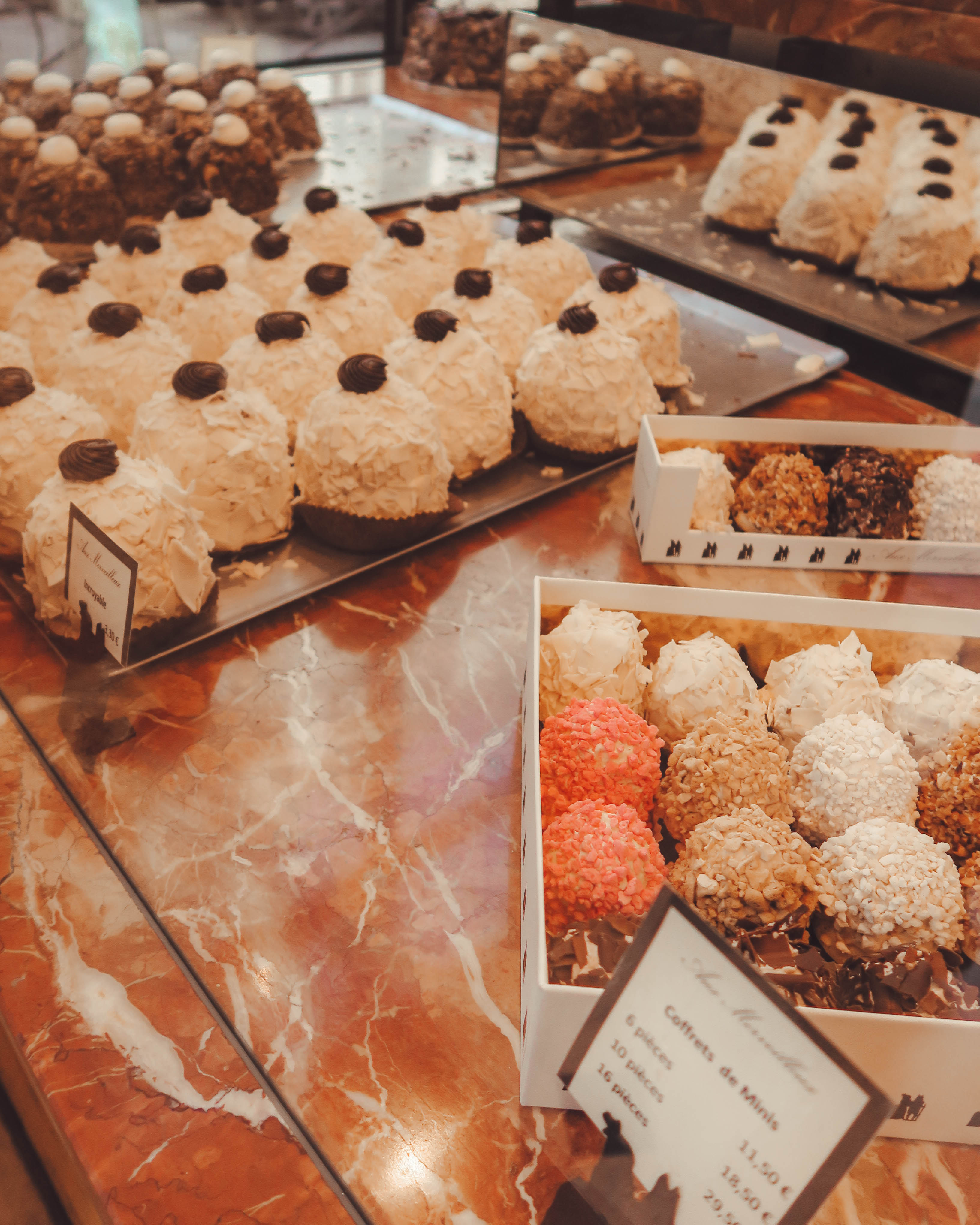
Admire the beautiful architecture, browse the vintage shops on the Rue de San-Antoine, and drop into Aux Merveilleux for merveilleux and meringues.

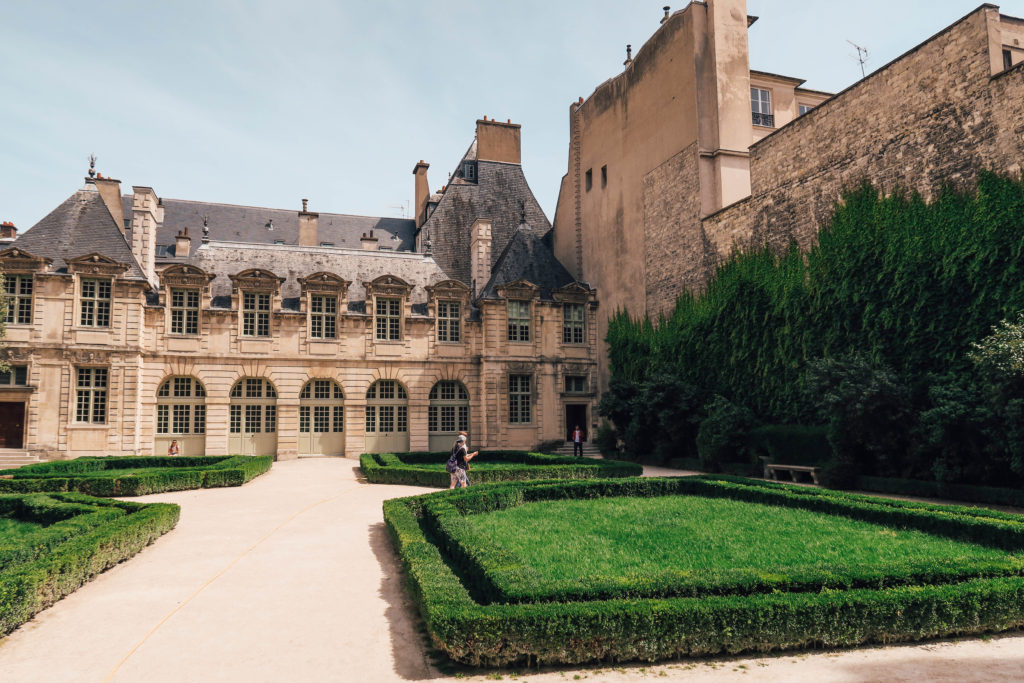
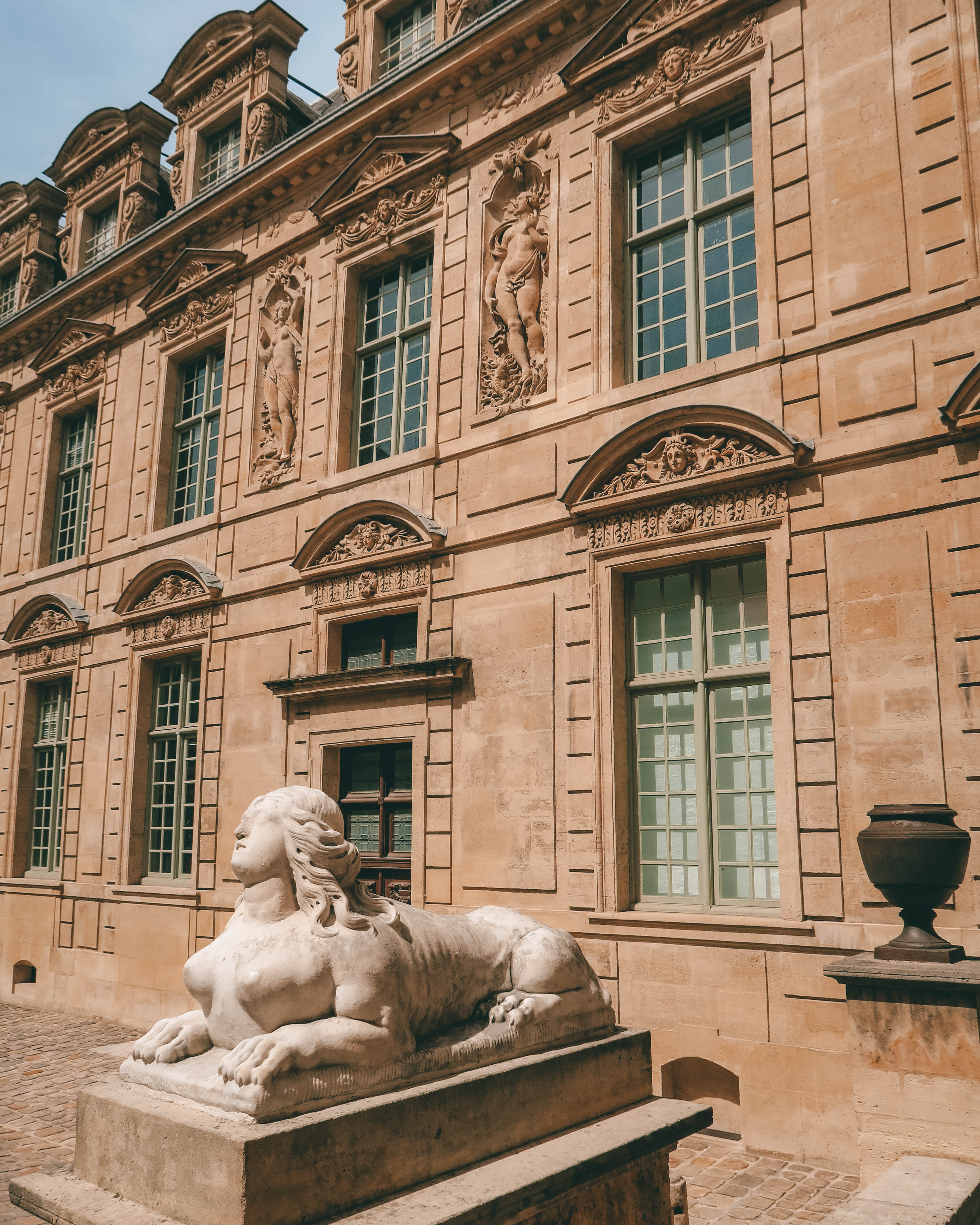
Grab some cheese and smoked salmon from one of the shops and wander through the stunning garden of the Hôtel de Sully (it’s not an actual hotel, hotel in French often means a city building).

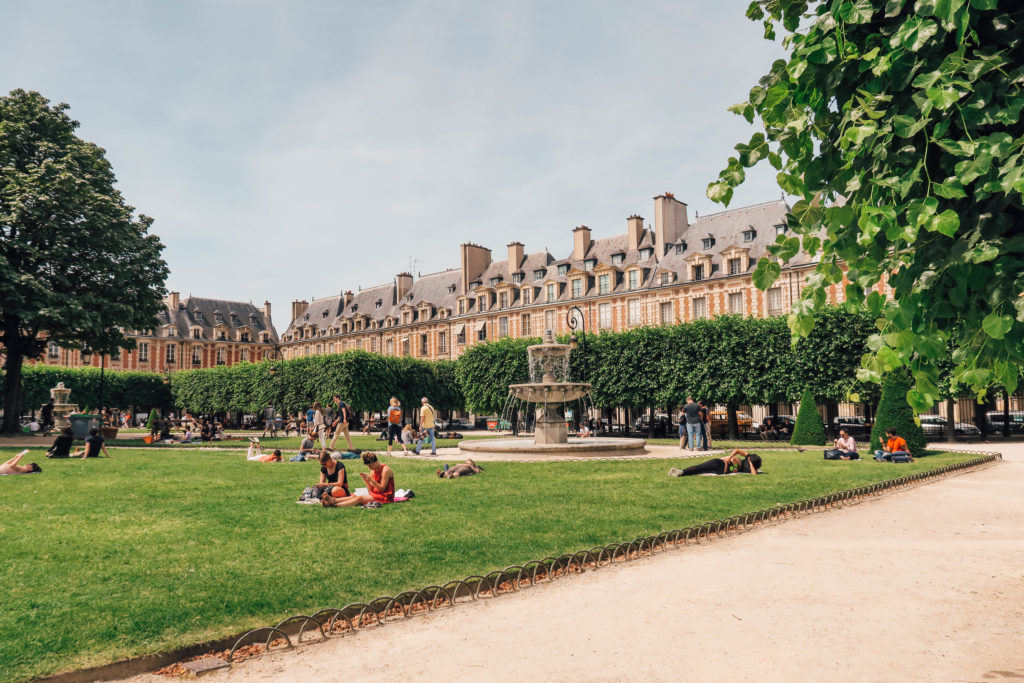
Next, keep walking to the Place des Vosges, the oldest planned square in Paris, and enjoy a picnic in the park. This spot is prime for people watching, and be sure to catch the street performers — you’ll see everything from opera singers to a magic show.

vmcm2
vsvzv
19ipp
itlcp
Hotel de Sully / Cofrettes at Aux Merveilleux / and Place des Vosges.

Visit the Museums

It goes without saying that a trip to Paris isn’t complete without going to the the Louvre and the Musee d’Orsay, but doing a little homework before your visits will make it much more enjoyable and efficient:

Book tickets online in advance for the Louvre and the Orsay.

Check the wait times prior to your visit on the app Affluences.

Download Rick Steve’s Audio Tour app to your phone the night before – he hits the highlights of each museum and pulls in expert opinions when appropriate. There is so much in each museum that you’ll want to make a plan and know what you’re looking for.

Don’t forget the Louvre is closed on Tuesdays, and the Orsay on Mondays.

y3q38
13edv
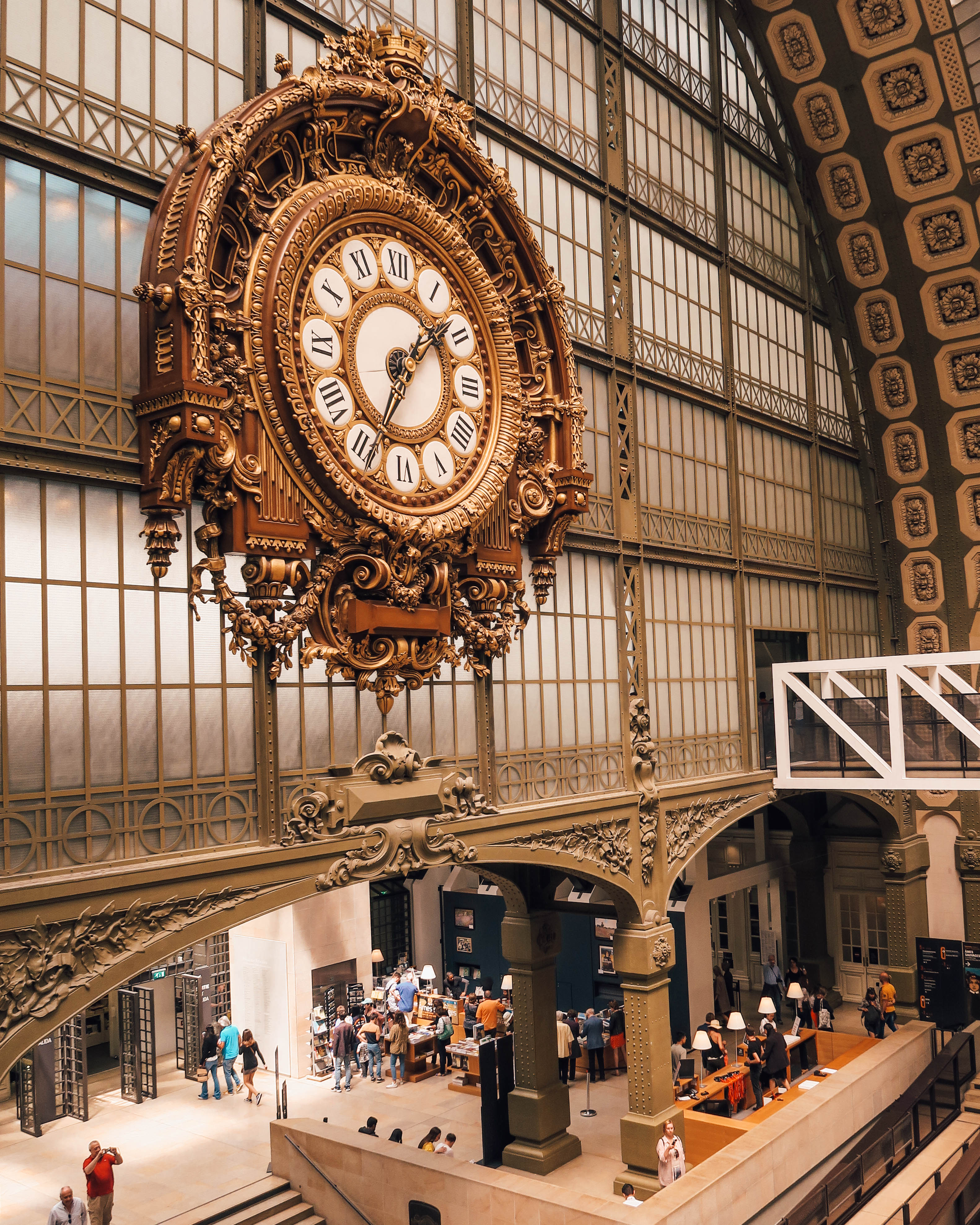
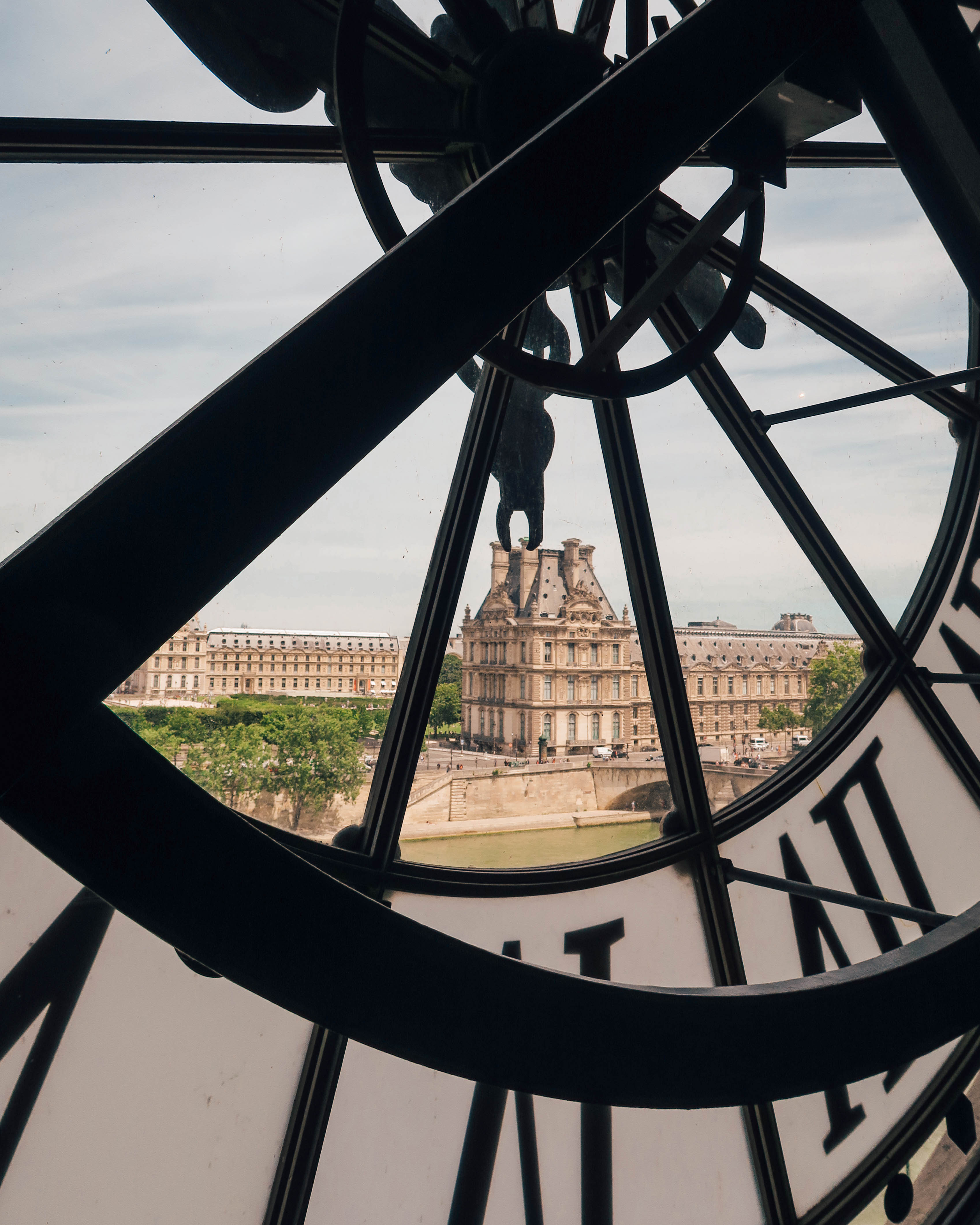
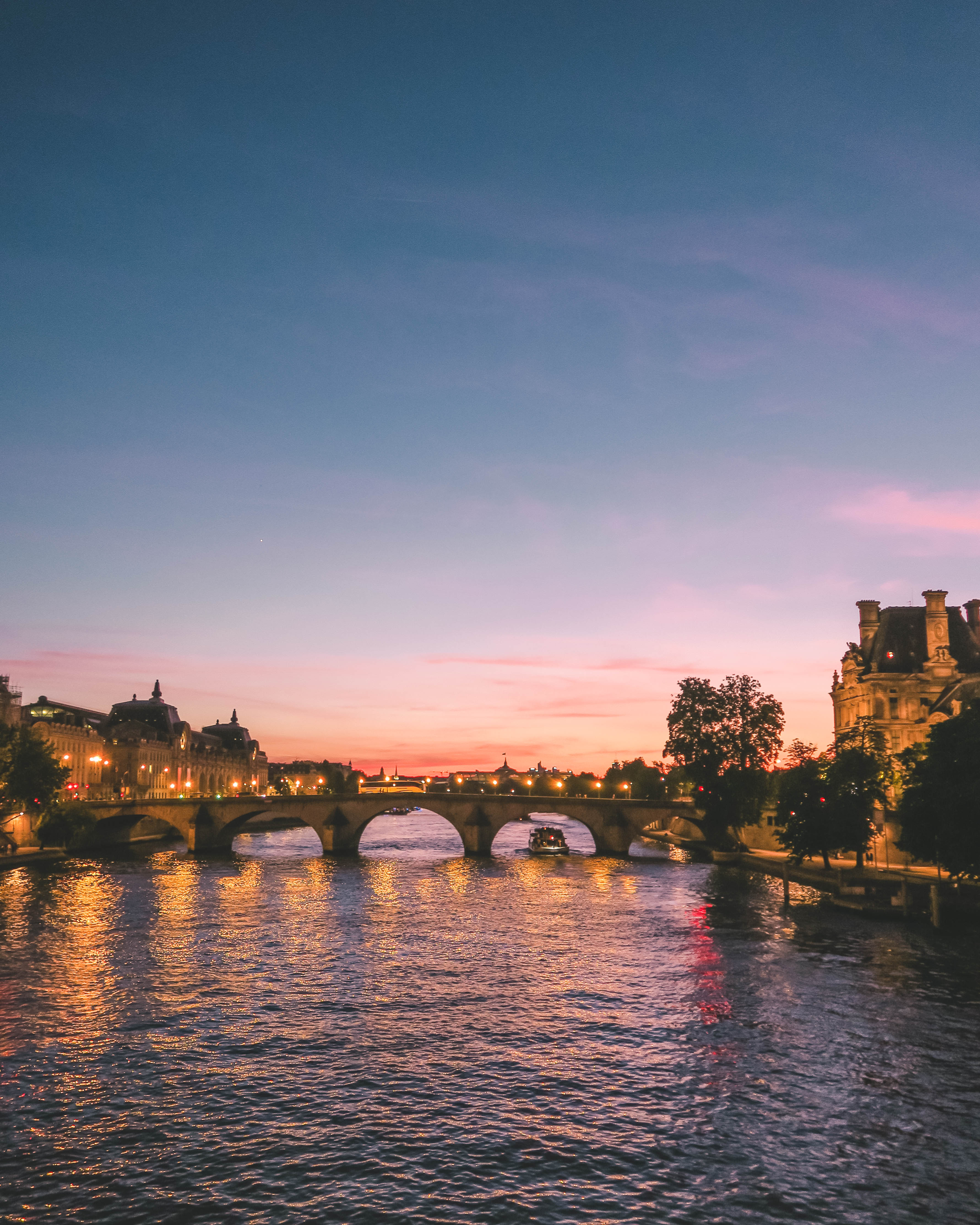
Tale as old as time at the Musee d’Orsay / View of the Louvre from the Orsay clocktower

A few other museums that are well worth the visit:

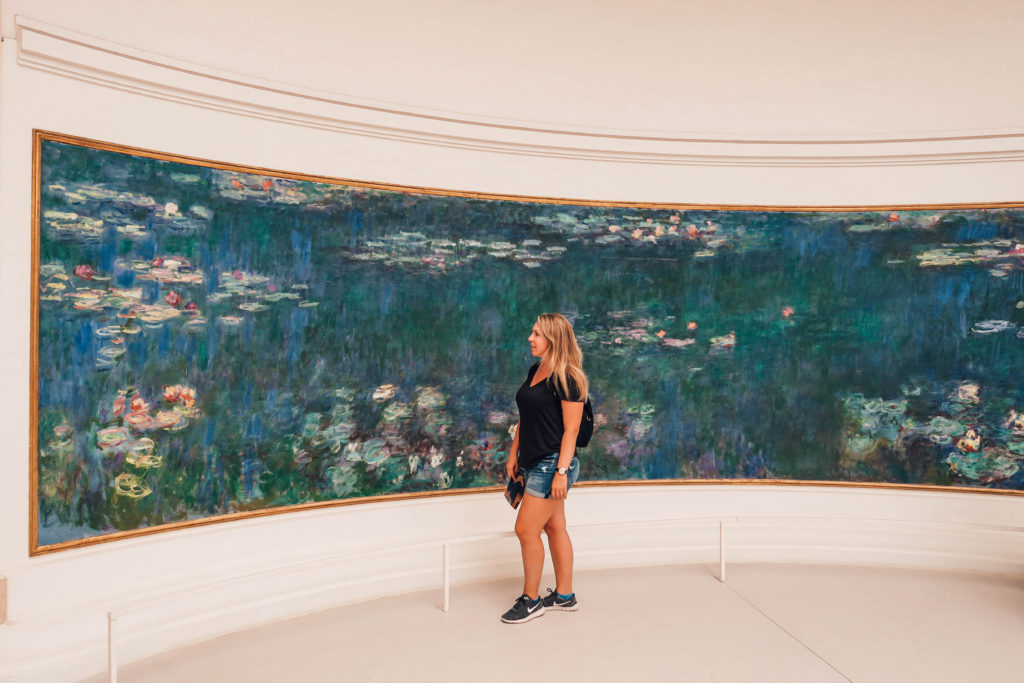
L’Orangerie– This little gem is my favorite place in all of Paris. The small museum tucked in the Tuileries Gardens houses Monet’s career-culminating masterpieces, the Water Lilies.

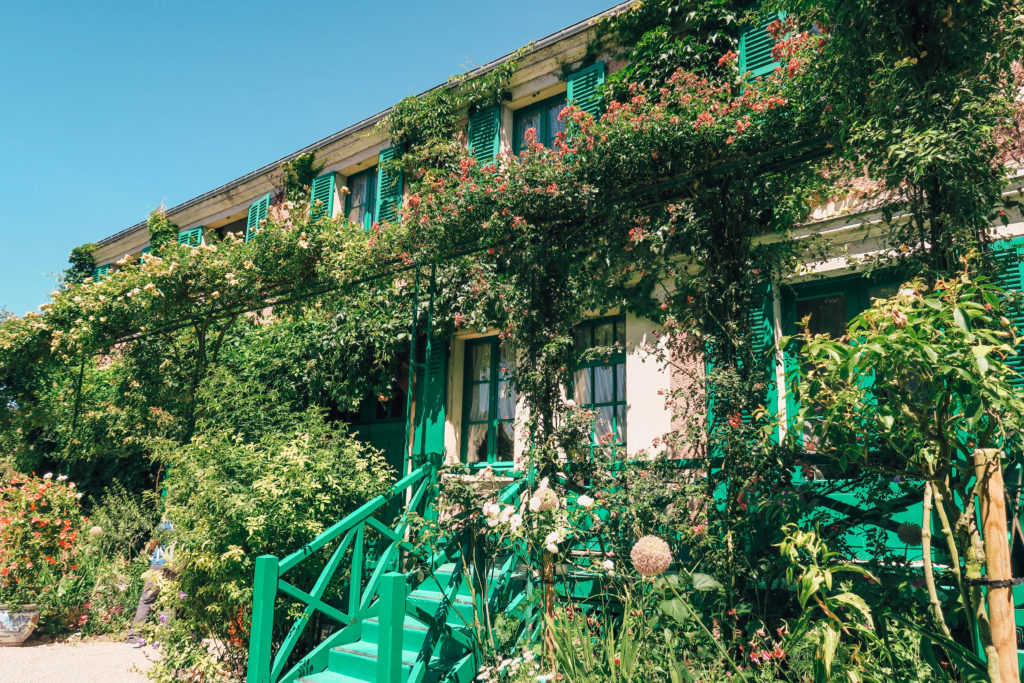
The artist donated the works to the French state following after Armistice Day to celebrate the end of World War I. Extra credit: Visit Monet’s home at Giverny in the morning, then say hello to the Water Lilies in the afternoon.

hqxpg
Leave me here for a few hours, I’ll be just fine…

Musee Rodin – Check out the museum that pays homage to Auguste Rodin, one of the world’s most famous sculptors that you’ve probably never heard of. His works The Thinker and The Gates of Hell influenced many that followed, and the museum grounds are gorgeous.

w6mp0
1frpw
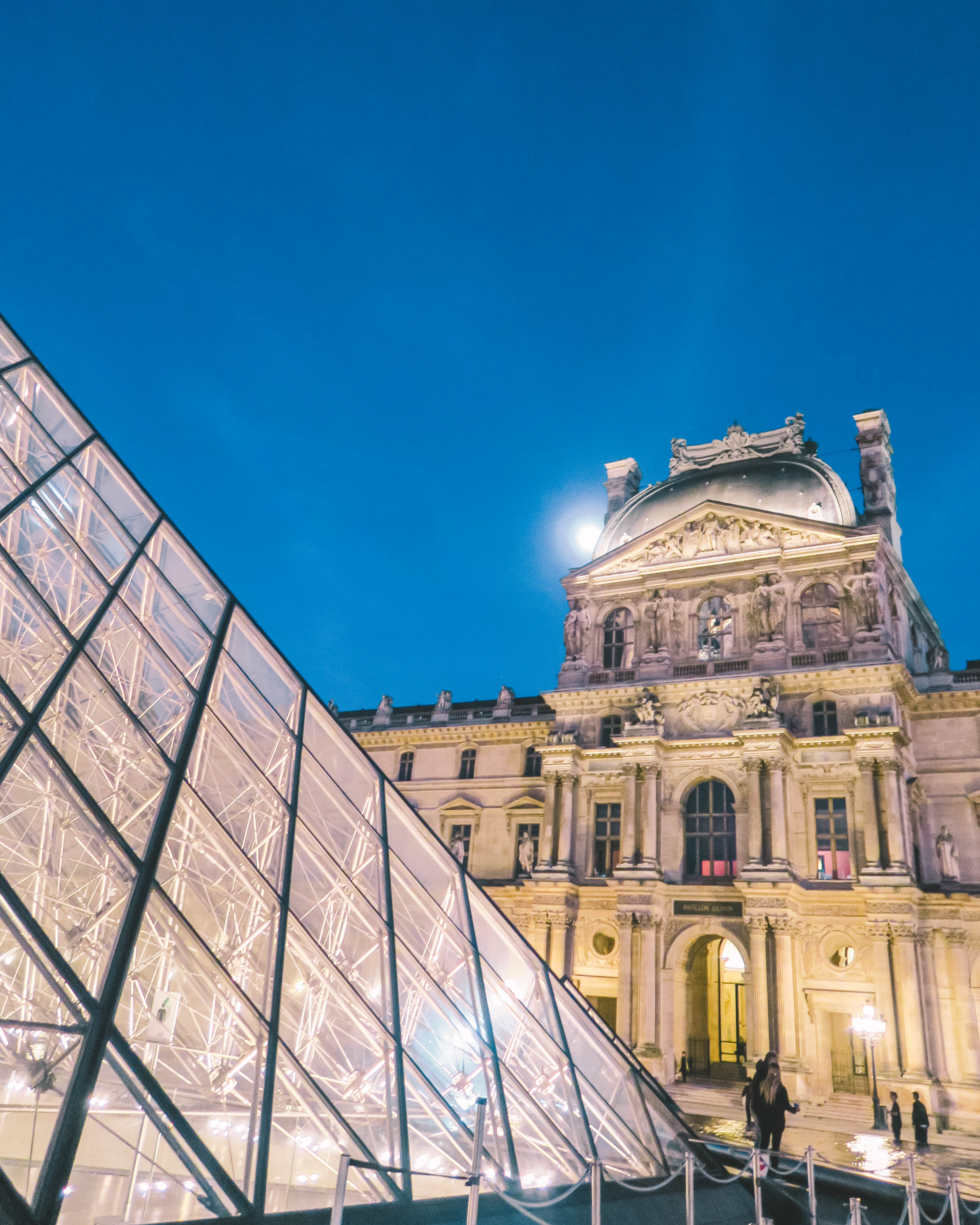
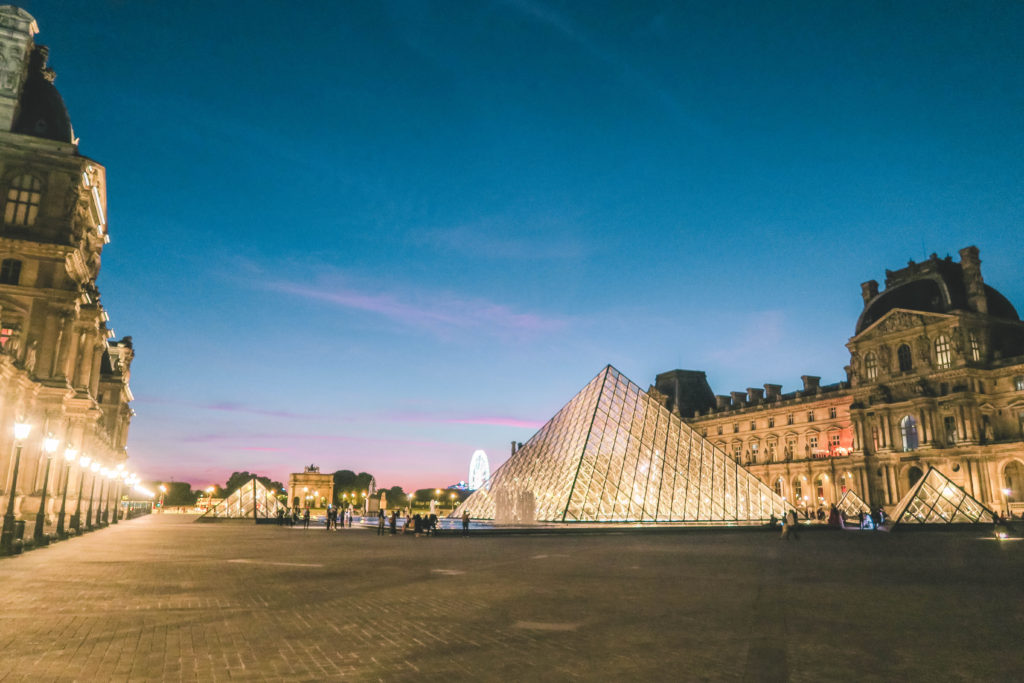
The Louvre and the Seine River by night.

Take a day trip

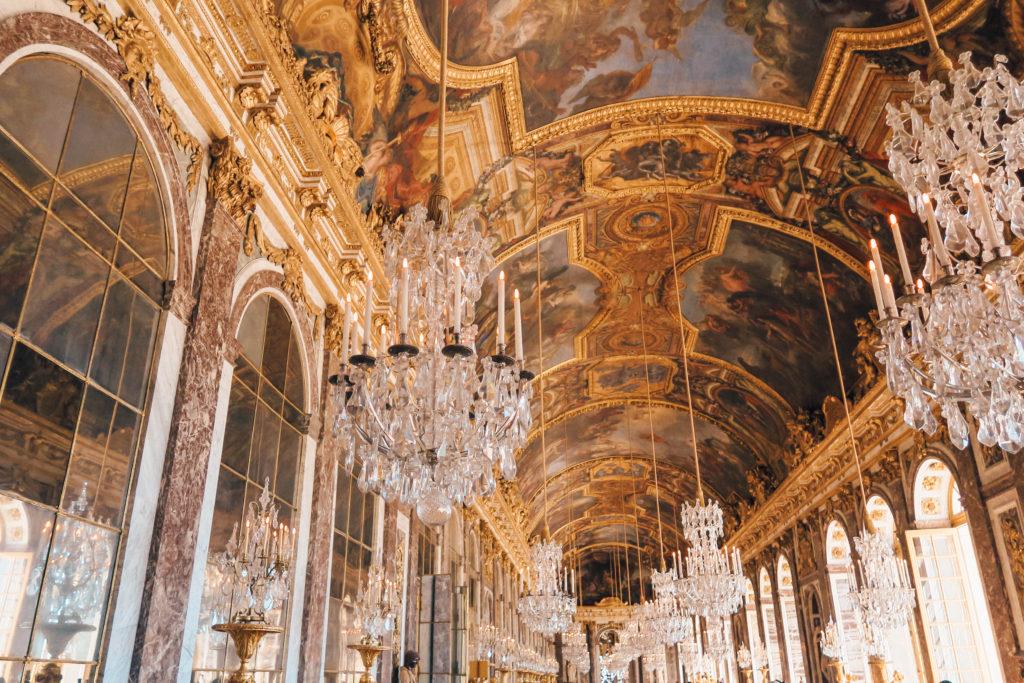
Chateau Versailles – For all things King Louis and Marie Antoinette, take the train to Versailles, about 30 minutes outside of Paris.

The former palace to the French kings is the definition of opulence and grandeur, and is well worth the jaunt out of the city.

wyuiw
The Hall of Mirrors at the Palace of Versailles

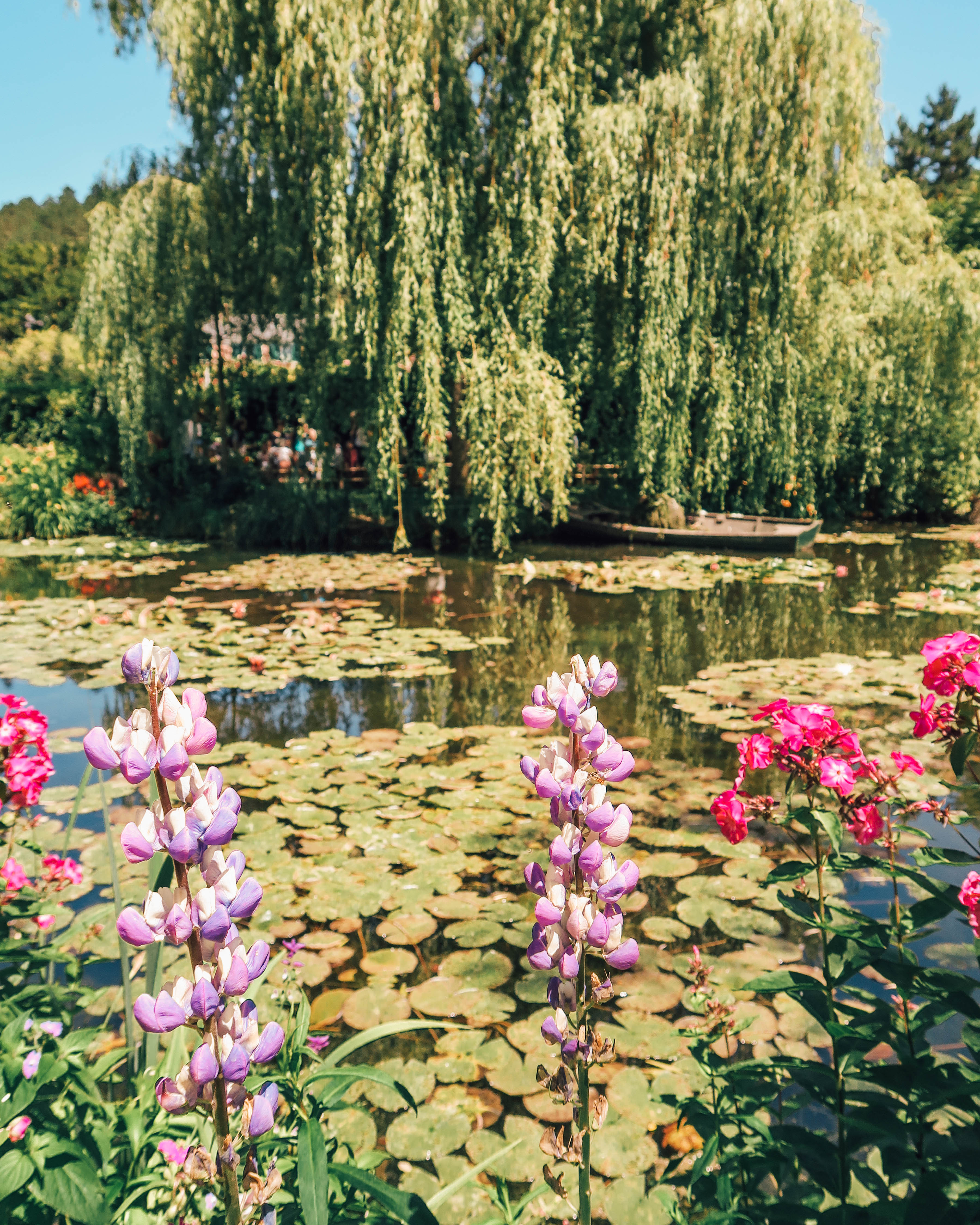
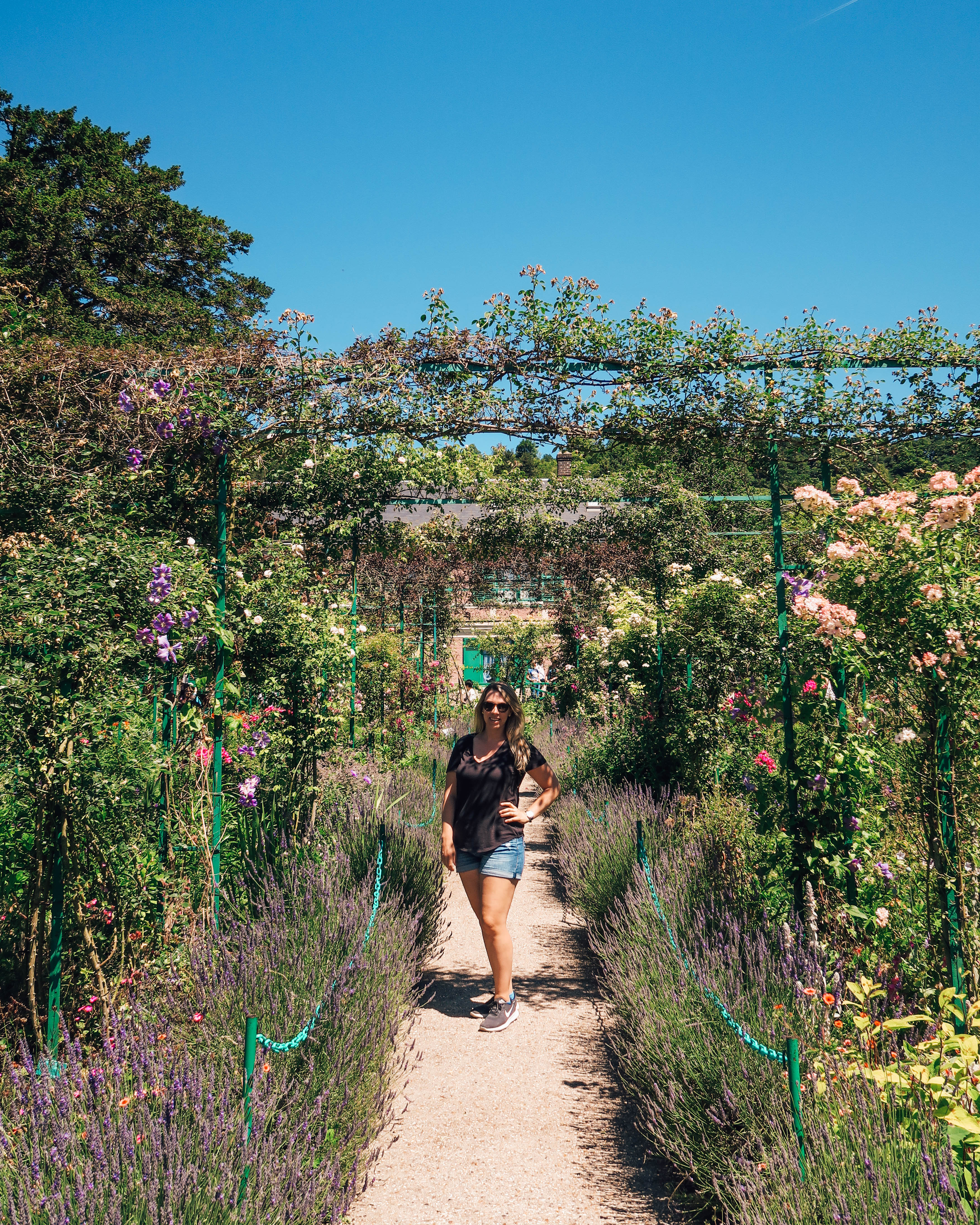
Monet’s Home Gardens at Giverny – Make the pilgrimage to the father of the Impressionist movement’s home and witness the inspiration for so many of his works, including the picturesque Japanese garden.

To get there, take the train from Gare Saint-Lazare to Vernon/Giverny, then rent a bike from one of the vendors directly across from the train station for the easy but enjoyable 30 minute ride to Giverny. There are shuttle buses as well, but where’s the fun in that?

2wuvz
krq38
auhwc
Claude Monet’s home and gardens at Giverny

Pro tip: Be sure to buy your ticket online at least the day before — online same-day purchases are not allowed, and the lines can be quite long. Arrive first thing in the morning or late in the afternoon for better lighting and fewer crowds.

The D-Day Beaches of Normandy – Pay homage to the Allied Forces who died during the World War II D-Day invasions of June 6, 1944 with a visit to Omaha Beach, Utah Beach and the Normandy American Cemetery. Take the train from Paris to Bayeux then hook up with a tour operator who will ensure you hit all the sights.

Where to Eat + Drink

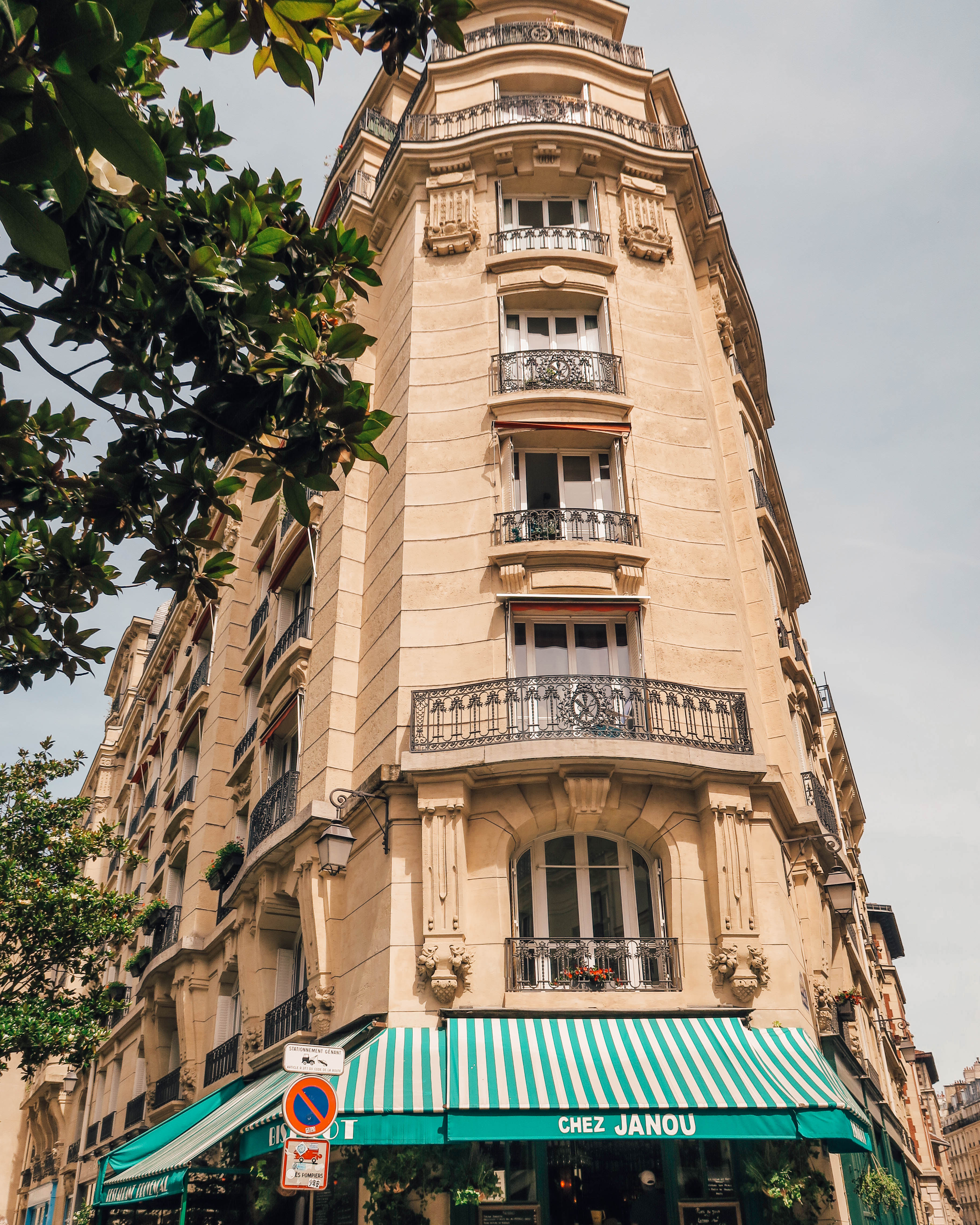
Chez Janou – Chez Janou is a diamond in the rough. Located in the heart of le Marais, it’s one of the few places in Paris where the water is free and the menu isn’t in English. Arrive when they open, as every seat in the house fills up fast.

364ex
pyfr4
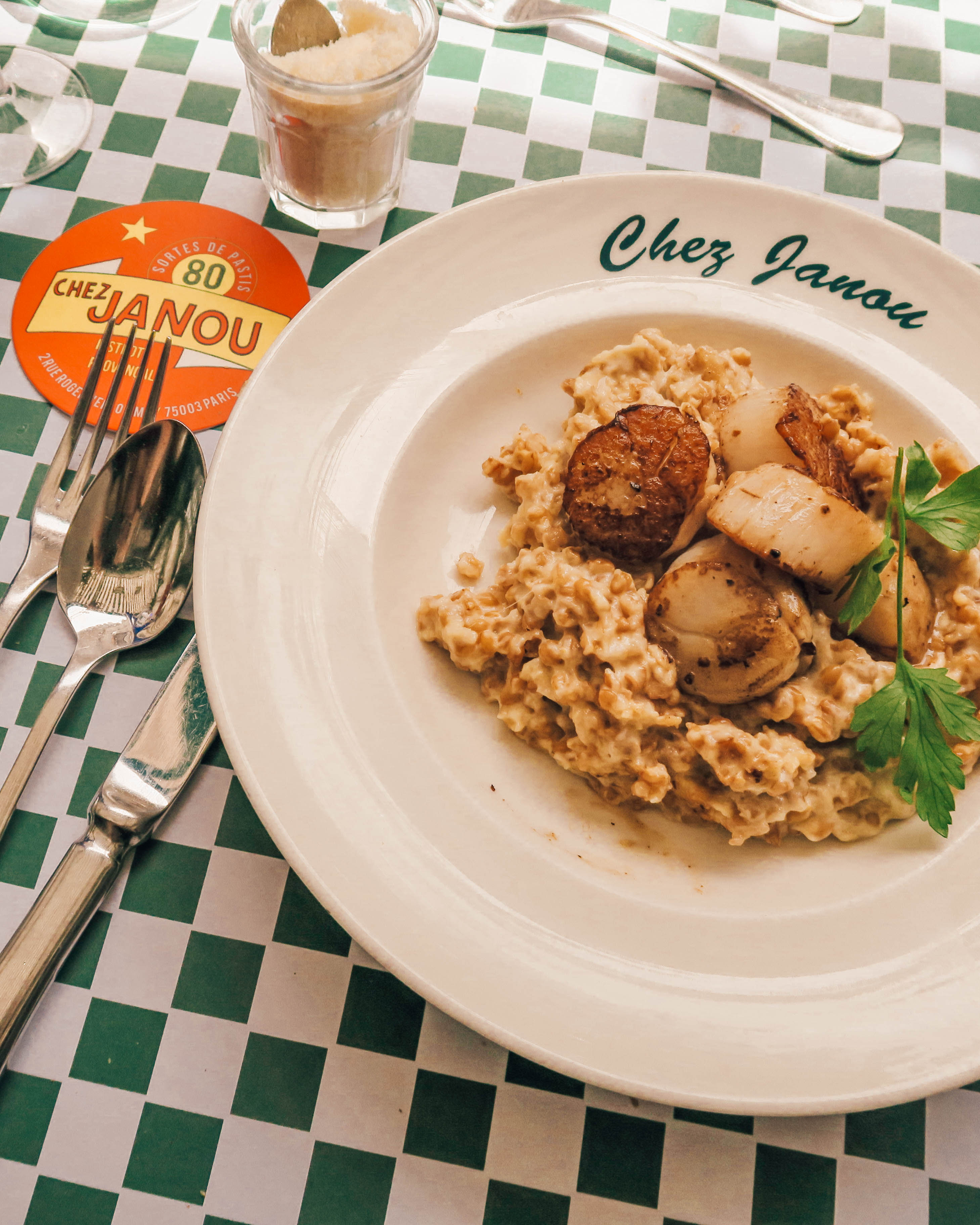
The scallop risotto at Chez Janou making our French food dreams come true

Semilla – For modern French food and the world’s best goat cheese, head to Semilla. The brainchild of some of Paris’s most renown restauranteurs, it’s open format kitchen, exposed wood beams and marble tables are a welcomed contrast to the traditional French bistro. Semilla is also one of the few restaurants in Paris that is open on Sunday’s.

chgf2
The mouth-watering lamb with dill, almonds and scalloped potatoes.

Freddy’s – If you can’t get a table at Semilla or are killing time until yours is ready, check out Freddy’s, the wine bar next door, also a popular spot with locals for wine and tapas.

Le Petit Prince – Translating to “the little prince,” this quaint eatery in the Latin Quartier is quintessentially Parisian, complete with a Yorkshire terrier scurrying at our feet during dinner. Don’t miss the Scottish salmon with dill sauce, the duck and scalloped potatoes and culminate your meal with the strawberry tiramisu… You’re in France, you can’t skip dessert!

3pv6w
nt2zg
A delicious dinner at Le Petit Prince

L’Ebauchoir– A lovely French bistro situated on the lively Rue de Citeaux near the Musee d’Orsay. If you have to wait, pop across the street to the wine bar, or better yet visit the oldest wine bar in the city of Paris that’s just around the corner, Le Baron Rouge or “the Red Baron.” The wine is cheap, the selection is extensive and you may get lucky enough to catch an impromptu monologue by a local actor.

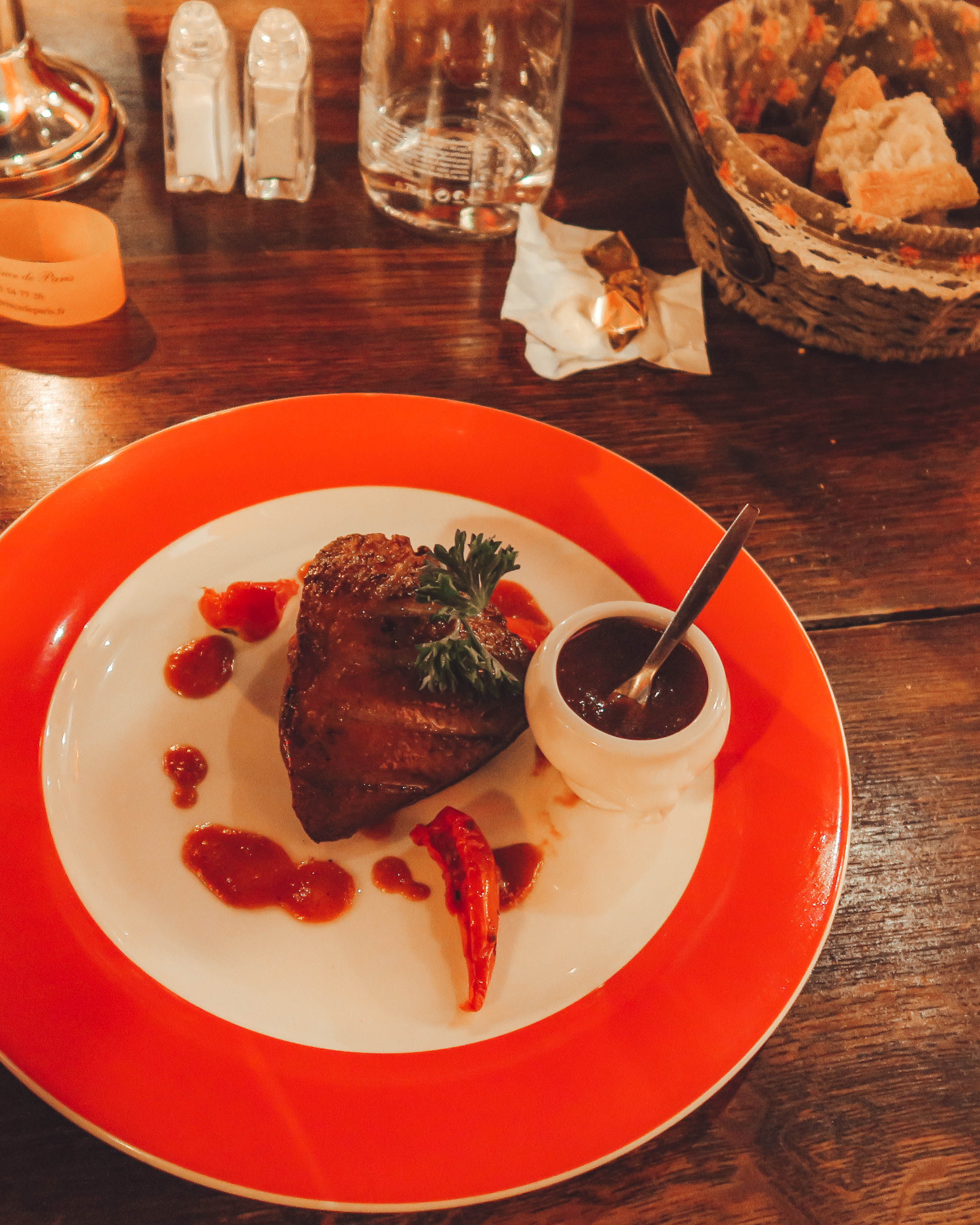
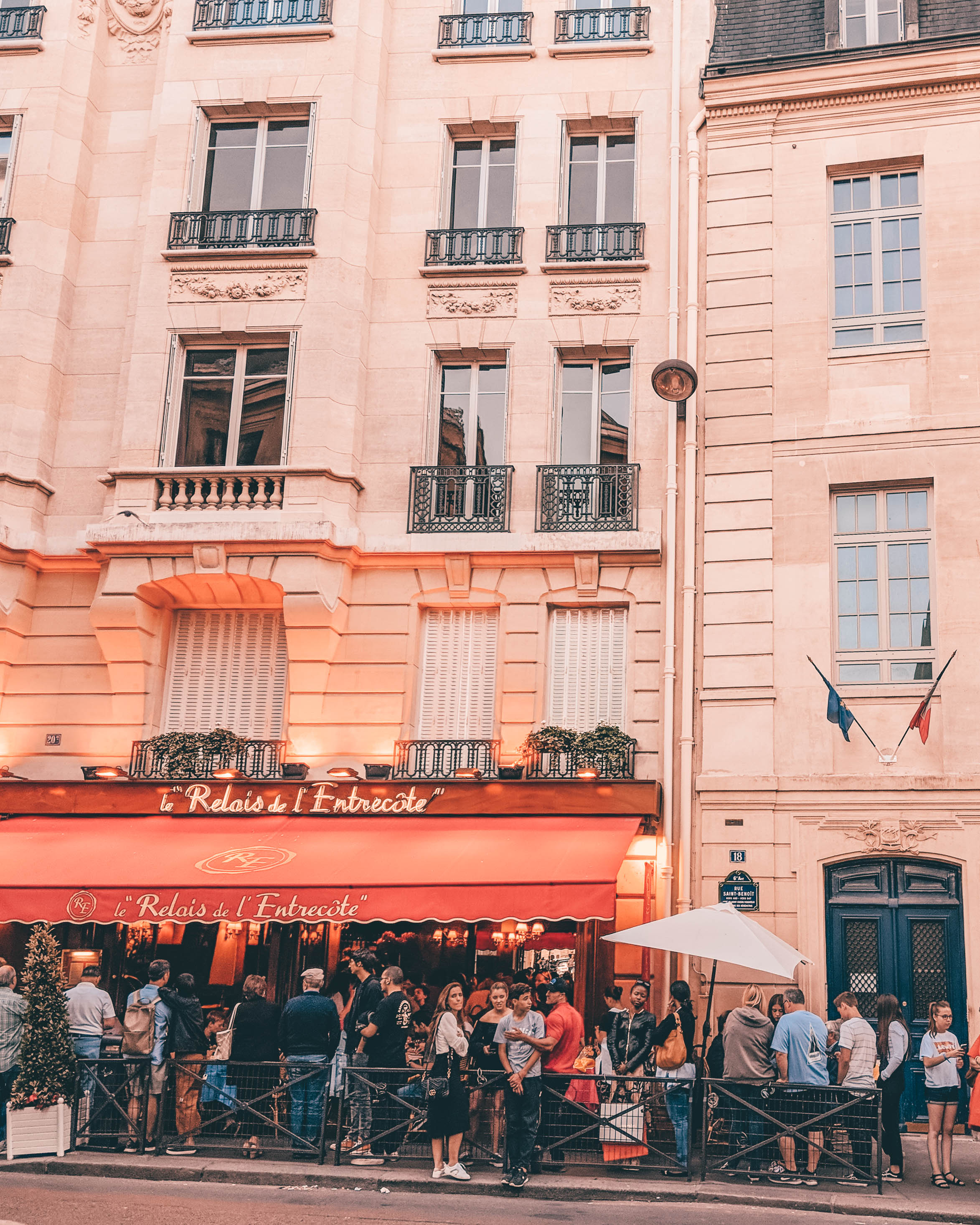
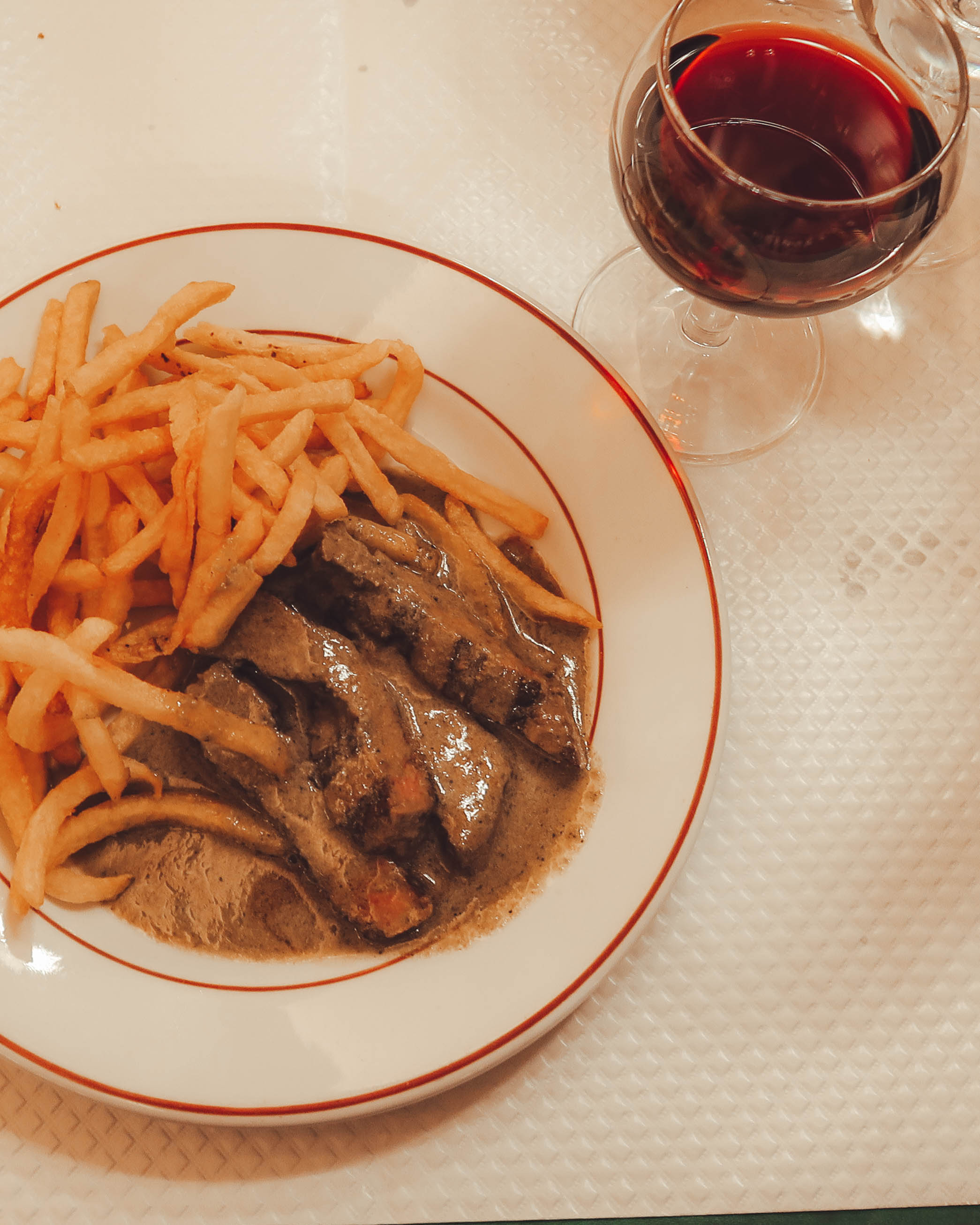
Le Relais de l’Entrecôte– When there’s only one thing on the menu, you know it has to be good. Located in the Latin Quartier, your meal comes with a green walnut salad, multiple helpings of steak and fries and of course, dessert. Arrive early — the line can wrap around the block, but it moves quickly and you can enjoy the street performers while you wait.

uw5vu
ikxc5
Steak and fries worth the wait at Le Relais de l’Entrecôte

Saint Germaine – For some of the best bars in the city head to Rue Princesse in the Saint Germaine neighborhood, in the city’s 5th arrondissement. Our favorites were:

Tiger – Get there early and try the Oh My Dog!

La Petit Saint Germaine – For cheap drinks, great dance music and bartenders that are having as much fun as you are, check out this small but lively spot.

Eden Park Pub – For a cozy atmosphere and the best happy hour in town, start your evening here.

Little Red Door – In le Marais check out LRD for some of the best cocktails in Paris. Get there early!

xuzcu[……]

Read more

14 Secret Spots and Hidden Gems in Copenhagen You Must Visit for your next Denmark trip

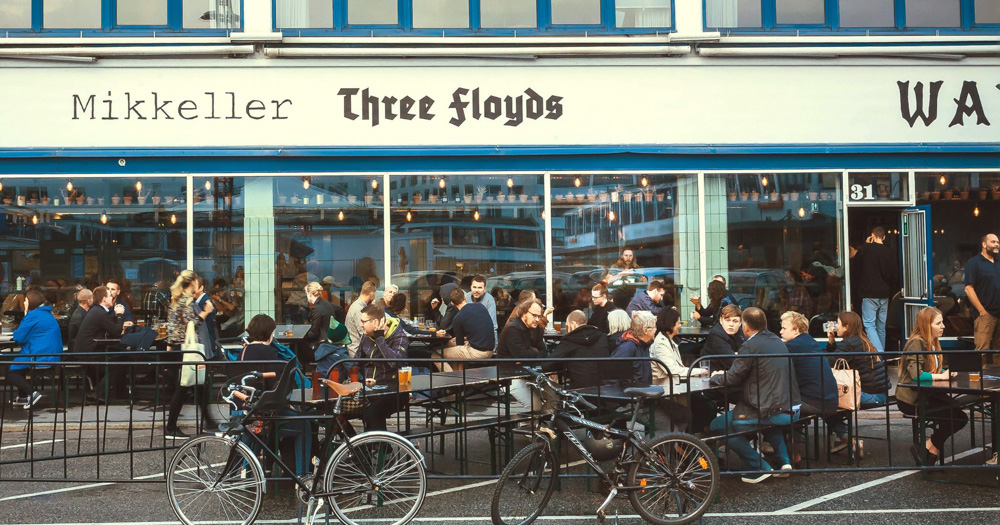
Get ready to embark on a whimsical journey through the enchanting streets of Copenhagen, where hidden gems await your discovery.

While iconic landmarks like the Little Mermaid and Tivoli Gardens are undoubtedly captivating, beyond the well-known attractions lies a treasure trove of vibrant, cheery, and off-the-beaten-path wonders just waiting to be explored in the city of Copenhagen. From colourful canal side houses, charming cobblestone streets, cosy cafe scene, contagious energy fills the air with these must-see hidden gems in Copenhagen. Copenhagen, the Danish capital, is renowned for its captivating landmarks, but it’s time to dig deeper and uncover the hidden gems that make this city truly shine.

As we dive into the heart of this Nordic wonderland, get ready to be dazzled by the unexpected, enchanted by local traditions, and captivated by the joy that radiates from every corner. These hidden gems are not just about ticking off a checklist, but about immersing yourself in the unique charm and cheery spirit of Copenhagen. So, put on your explorer’s hat and let’s embark on this journey of delightful surprises!

Copenhagen hidden gems:

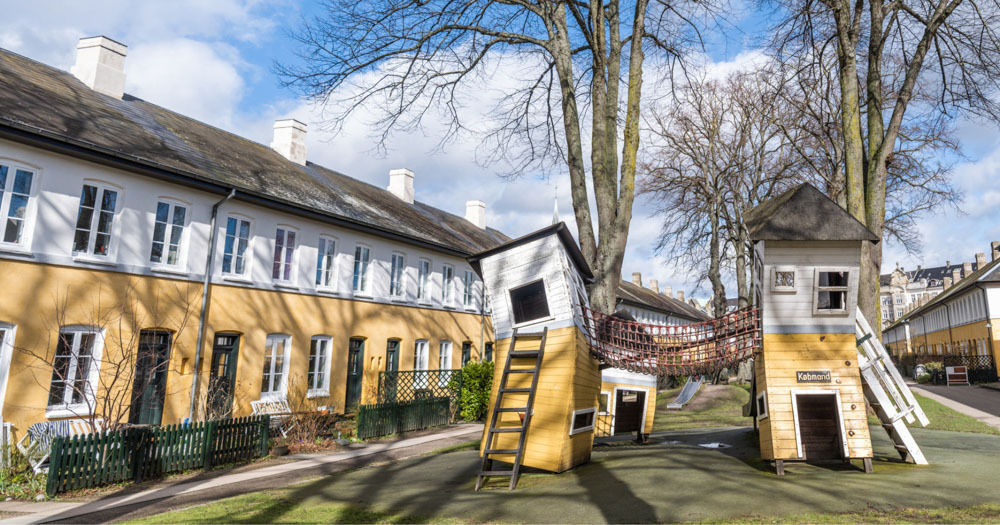
Nyboder

Stepping into Nyboder is like stepping into a living piece of Copenhagen’s history. This quaint neighbourhood, with its charming yellow houses and cobblestone streets, exudes a sense of nostalgia. It’s a Copenhagen hidden gem that allows you to immerse yourself in the city’s rich maritime heritage and imagine the lives of sailors who once called it home. Today, it gives you a nice contrast between the modern experimental structures that’s in the city centre, as you can enjoy a slice of well-preserved traditional architecture.

Vesterbro / Meatpacking District

jrm9u
Welcome to Vesterbro and the Meatpacking District, the hip and eclectic neighbourhood that pulses with creativity and charm. I think if I had to pick which Copenhagen neighbourhood is my favourite – I would say this one. This hidden gem perfectly balances its industrial past with a vibrant and trendy atmosphere. Meander through its streets, adorned with colourful street art and dotted with chic boutiques, cosy cafés, and lively bars. Grab a bite here, as it’s a perfect spot for whenever the sun also comes out in Copenhagen. This is all against the backdrop of old meat factories that have been renovated to the cool spaces they are now – hence the name Meatpacking District. Embrace the effortlessly cool vibe as you uncover vintage treasures in unique shops or dance the night away at a lively club. Vesterbro’s infectious energy makes it an absolute must-visit for those seeking a taste of Copenhagen’s contemporary culture.‍

Kartoffelrækkerne

Tucked away in the charming streets of Copenhagen, you’ll discover Kartoffelrækkerne, a row of picturesque houses straight out of a storybook in the center of Copenhagen. Prepare your camera roll! With their colourful facades and blooming flower boxes, these charming homes evoke a sense of whimsy and cheer as one of the most unique architecture in the city. It’s like a picture-perfect card of Copenhagen, and with practically no tourists compared to Nyhavn. Take a leisurely stroll through this hidden gem and be transported to a world where time seems to stand still, feeling like you’ve been teleported to the heydays of Copenhagen.

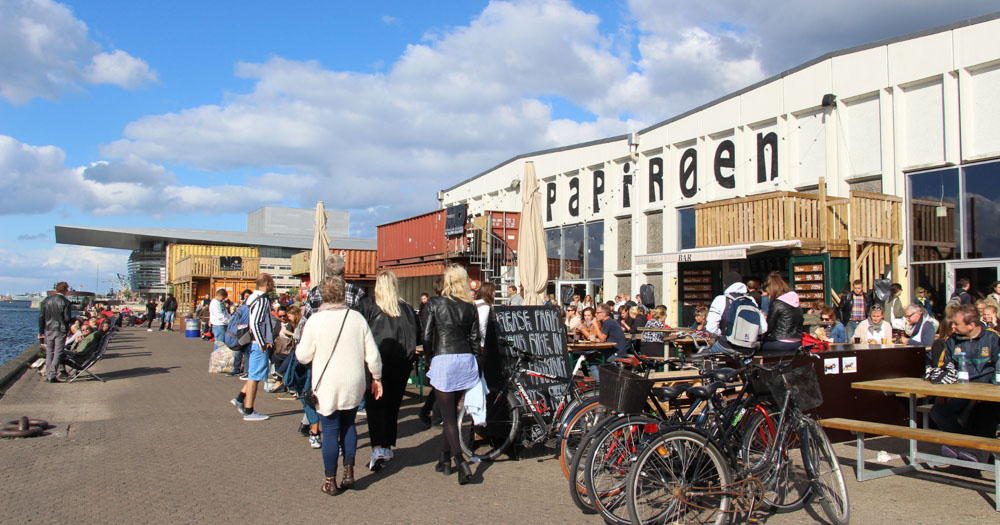
Papirøen (Paper Island)

ptcnn
Prepare to embark on a culinary and cultural adventure as you step foot on Papirøen, also known as Paper Island. This former paper storage facility has been transformed into a vibrant food market and cultural hub. Indulge in a cornucopia of flavours from all corners of the world, with an abundance of food stalls serving up delectable dishes to satisfy every craving. After treating your taste buds, immerse yourself in the artsy atmosphere, with galleries, exhibitions, and live performances captivating your senses. Papirøen is a hidden gem where food, art, and community intertwine in a joyous celebration.

Glyptoteket

Art enthusiasts, rejoice! Glyptoteket is a treasure trove of artistic marvels, housing an impressive collection of sculptures and paintings from around the world that’s right in the centre of Copenhagen. Step into this hidden gem and let the beauty of ancient Greek and Roman art captivate you. The museum’s atmosphere of antiquity and stunning exhibits make it a must-visit for those seeking inspiration and cultural enrichment. This is one of my favourite places in the city, just because I feel like I’m in a Roman painting or a regal palace – between the marble-filled rooms and the lush sunroom with leafy trees.

Østerbro

A cool neighbourhood within Østerbro.
Discover the tranquil beauty of Østerbro, a hidden gem nestled in the northeastern part of Copenhagen. This leafy neighbourhood offers a respite from the hustle and bustle, inviting you to unwind and embrace the local way of life. Immerse yourself in the peaceful surroundings of Fælledparken, a sprawling park perfect for picnics and leisurely walks. Explore the charming streets lined with boutiques, cosy cafés, and inviting green spaces. Østerbro embodies the Danish concept of “hygge,” where serenity and contentment take centre stage.

Unique things to do in Copenhagen:

Torvehallerne Market

Prepare to have your taste buds tickled and your senses dazzled at Torvehallerne Market! Welcome to this food lover’s paradise and immerse yourself in a symphony of aromas and flavours. It’s one of the best places to taste heavenly pastries to savoury open-faced sandwiches. Every bite is an explosion of culinary delight – seriously, prepare your stomach space (and wallets too). If you want to go eat where the locals eat, this is where Copenhageners gather to indulge in the finest and freshest produce, creating an atmosphere of foodie bliss.

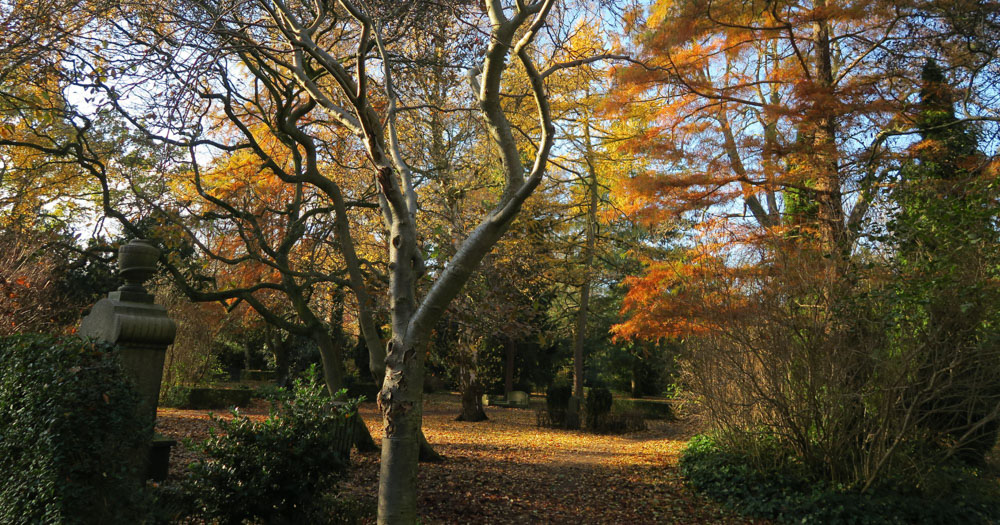
Assistens Cemetery

fcd34
In the heart of Copenhagen lies a surprising treasure, Assistens Cemetery. Far from being a gloomy place, this vibrant park celebrates life and embraces the Danish concept of hygge. During your trip to Copenhagen, make sure to rent a bike and see the city through this lesser-known spot. Amidst the beautiful tombstones outside of the old town, you’ll find locals picnicking, practising yoga (yep, even in a cemetery!), or simply enjoying a peaceful stroll. This is one of my favourite parks (or well, cemetery) in Copenhagen to take a bike ride through as well. It’s a place where serenity and joy intertwine, reminding us to cherish every moment.

Church of Our Saviour

Prepare for an uplifting experience at the Church of Our Saviour, a masterpiece of architecture and spirituality in central Copenhagen. Climb the spiral staircase of the church’s tower spire, and as you ascend, feel your spirits soar. At the top, you’ll be rewarded with panoramic views of Copenhagen, a breathtaking sight that will leave you in awe. This hidden gem combines architectural marvels with a sense of wonder and awe – giving you a new perspective on Copenhagen’s skyline as well as a place that not many people have explored.‍

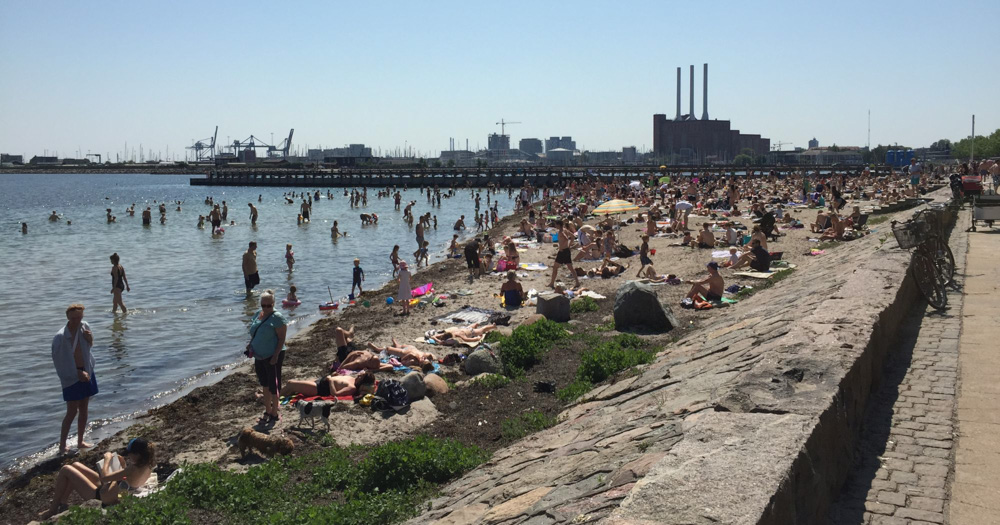
Svanemølle beach

mglvc
So it’s summer in the city – where would one go to take a break from this Scandinavian heat? Head to the beach! Not many people, and even some locals, know that there’s a beach in Copenhagen. Which makes Svanemølle beach the perfect place and a true Copenhagen hidden gem for you to discover. You can stroll by the waterfront promenade here, taking in the beautiful natural scenery. Bring your beach towl, pack some picnic snacks, and enjoy this strand of urban strand in the Østerbro district outside of the city centre.

Kastellet

Venture into the historic fortress of Kastellet, a hidden gem that seamlessly blends history and natural beauty. As you explore the well-preserved ramparts, you’ll encounter lush green spaces, charming windmills, and even a picturesque moat. Bonus if you’re visiting during autumn, as it’s where you can catch gorgeous foliage falling everywhere. It’s a place where past and present intertwine, inviting you to wander and imagine the stories that echo through the centuries.

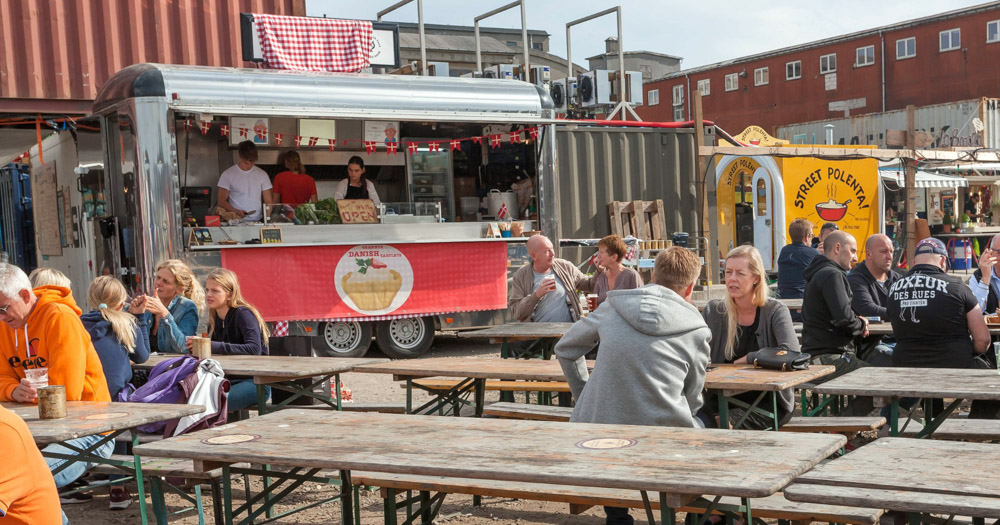
Reffen Street Food

73n3n
Prepare your taste buds for a tantalising journey through the vibrant world of Reffen Street Food! Tucked away in Copenhagen’s industrial-chic Refshaleøen district, this foodie paradise is a hidden gem waiting to be savoured. Picture yourself strolling through a bustling market, surrounded by mouthwatering aromas and a kaleidoscope of flavours from around the globe. Indulge in scrumptious street food creations, from sizzling Asian stir-fries to melt-in-your-mouth burgers. With live music adding to the lively atmosphere, Reffen Street Food is the epitome of culinary joy.

Notable food stalls to checkout:

Manila Street BBQ n’ Bao

Nordic Hotdog

Everest Nepalese Food

Indian Bites

Awasana

Grundtvig’s Church

Prepare to be awestruck by the architectural marvel of this lovely attraction that is Grundtvig’s Church. Nestled in the Bispebjerg district, this hidden gem is a beacon of grandeur. If you’re staying in the city centre, it may be a bit far on the Copenhagen metro to get to (which is relatively short ride compared to other European capital cities) but trust us, it’ll be worth the journey! You’ll get to step inside and marvel at the soaring vaulted ceilings, bathed in ethereal light streaming through the magnificent stained-glass windows. The quiet atmosphere embraces you, inviting you to pause, reflect, and find solace in its beauty. Grundtvig’s Church is truly a testament to human creativity and a hidden sanctuary that leaves a lasting impression.

Explore the green spaces

Copenhagen Botanical Garden and Fredericksberg Gardens

Welcome to a botanical wonderland where nature’s beauty flourishes in the heart of the city. While its one of the top attractions in the city (like Freetown Christiania) the Copenhagen Botanical Garden and Fredericksbergs Gardens are both underrated hidden gem that transports you to a realm of vibrant colours and enchanting scents amongst the local Copenhageners. Feel like you’re a part of the Danish Royal family as you stroll through lush greenhouses, where tropical plants and delicate orchids thrive. It’s a sanctuary of tranquillity, offering a much-needed escape from the bustling streets. The thing is, tourists don’t usually think about visiting this spot (unlike the amusement park or Frederiksberg) so you’re looking at one of the best local parks in the city. The grassy greenery here and beautiful fountain, along with its flower gardens upon the hectare of nature right in the center of Copenhagen adds quite a lot of charm to this great city. Come spring and summer, this is a place that really adds an extra sparkle to the city. Not many people think of it when they visit Copenhagen but nature lovers shouldn’t miss out.

kj7jp[……]

Read more